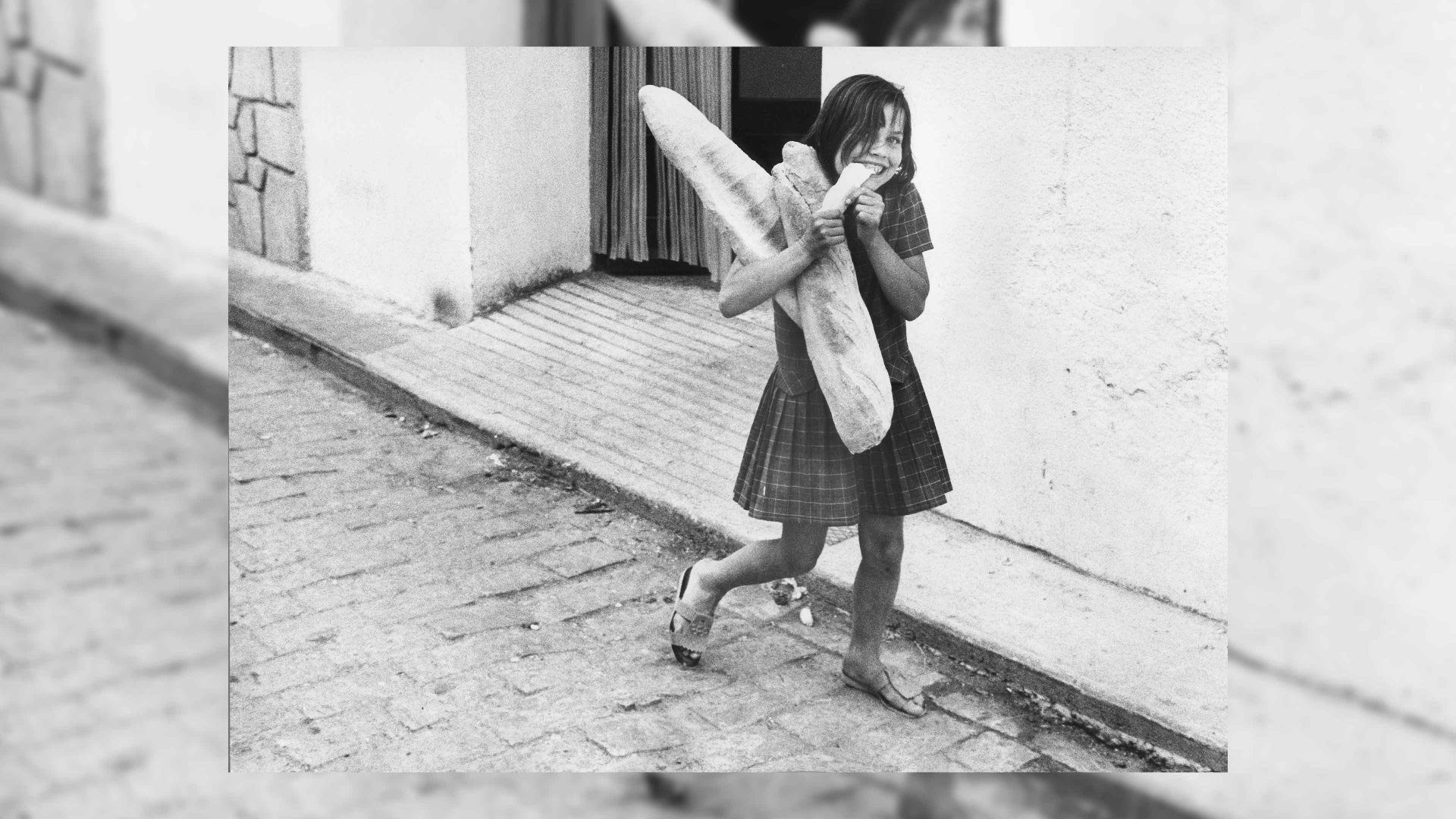
As the old French proverb declares, “Un jour sans pain, c’est un jour sans soleil” (“A day without bread, is a day without sun”). Smearing demi-sel butter on a freshly cooked baguette or being the first to rip the crusty tip off the end as reward for doing the boulangerie run are things of beauty that will last for ever.
Or will they? Though the baguette remains an iconic image of France – finally getting a Unesco listing for Intangible Cultural Heritage in 2022, with Emmanuel Macron declaring it “250 grams of magic and perfection” – its sales have been declining for years. Artisan bakers are being squeezed; on one side the young people eschewing bread for healthier options, on the other the older generation sneaking down to Lidl for a generic baguette that costs a euro less than the traditional offering.
In the years after the second world war, the French ate an average of 25 ounces of bread per person – almost three baguettes’ worth. Today, that figure has dropped again to 3.5 ounces, less than half a baguette a day.
In areas of rural France, the rhetoric can be one of doom and gloom. Take Pierre-Yves Mure from Maison Mure in Saint-Symphorien-de-Lay, a village in the Auvergne-Rhône-Alpes region. His bakery sits on the Route Nationale 7, a road that was France’s most famous highway in the mid-20th century, when it funnelled Parisians south to the Med for their summer holidays.
Mure’s shop is still a point of interest for nostalgic voyagers making the same journey, thanks to a gateau he created to celebrate the iconic route, but the future of his family business is grim. Having followed in the footsteps of his father and grandfather, he is now facing the reality that 90 years of history will die with him because neither of his sons wants to take up the reins when he retires.
He explains: “It’s complicated in France these days. To be an artisan, you have to work 15 or 16 hours a day, and Gen Z don’t want to do that.” And when it comes to the customers, his exasperation is evident. “In France, people don’t want bread any more,” he says. “They eat less and less of it, because of diets, diets, diets!”
Some bakers are more excited about change. Take Benoît Castel, a baker and pastry chef based in Paris’s trendy 20th arrondissement. Castel grew up in Brittany and the time he spent with his paysan grandparents who lived off the land, tending cows, churning butter and growing their own cereals, has left him with a deep appreciation for the raw materials he uses in his breads.
Castel says that, while the sales of baguettes made with refined flour are in decline, his more sustainable products are thriving. There’s increasing demand for his pain du coin, for instance, a “corner” or neighbourhood bread whose name plays on the fact it’s made using a sourdough starter that was fermented with quince (le levain du coing).
And then there’s his pain d’hier et de demain – “yesterday and tomorrow’s bread” – which is the embodiment of Castel’s sustainable ethos. The crusty-on-the-outside, moist-on-the-inside loaf is made using the previous day’s unsold bread, and while the zero-waste approach is time-consuming, Castel says they recoup the cost of the labour in other ways, using a third less flour than they used to.
Castel sees the same seismic changes as Mure, but says that many of them are for the better. “French people used to buy multiple baguettes in one day. Even if they didn’t eat all of it, they would throw the stale bit away, then go buy another. These days, people want bread that lasts a few days. It’s more expensive, but they don’t end up throwing it away, so the cost evens out.”
Suggested Reading
The secret history of the Paris bistro
Castel’s boulangerie is a far cry from traditional French boulangeries, where the curtain hides the sacred craft from the public. You can see one of his team pulling out fresh loaves on long-handled piles from the gargantuan oven. People buy filled sandwiches to take away, and at weekends the place thrums with people enjoying that most un-French of meals – le brunch.
Castel says: “Coffee shops are big in France now, and pastries are super trendy, with people wanting to post the best croissant in Paris on Instagram.”
What some view as a terminal decline, he says, are just changing times that must be navigated. In contrast to Mure’s insistence that artisan baking requires up to 16 hours’ work per shift, starting overnight, Castel says: “You don’t have to be a boulanger de nuit these days. Thanks to technology like controlled fermentation, the job is easier. You can choose when you work – here we start at 10am.
“I’m of the generation that worked 12 or 14 hours per day. Today, they don’t want to do that and good for them; the young generation has different values.”
Rachel Ifans writes the French travel Substack blog Cartes Postales