PICK OF THE WEEK
The Night Manager (iPlayer)
For lifelong devotees of John le Carré like me, the suggestion that his fictional universe might expand after his death in 2020 seemed – initially, at least – a bit heretical. But then his youngest son Nick Harkaway published Karla’s Choice (2024), a compelling new George Smiley novel, and we were off to the races (Harkaway is already working on a follow-up).
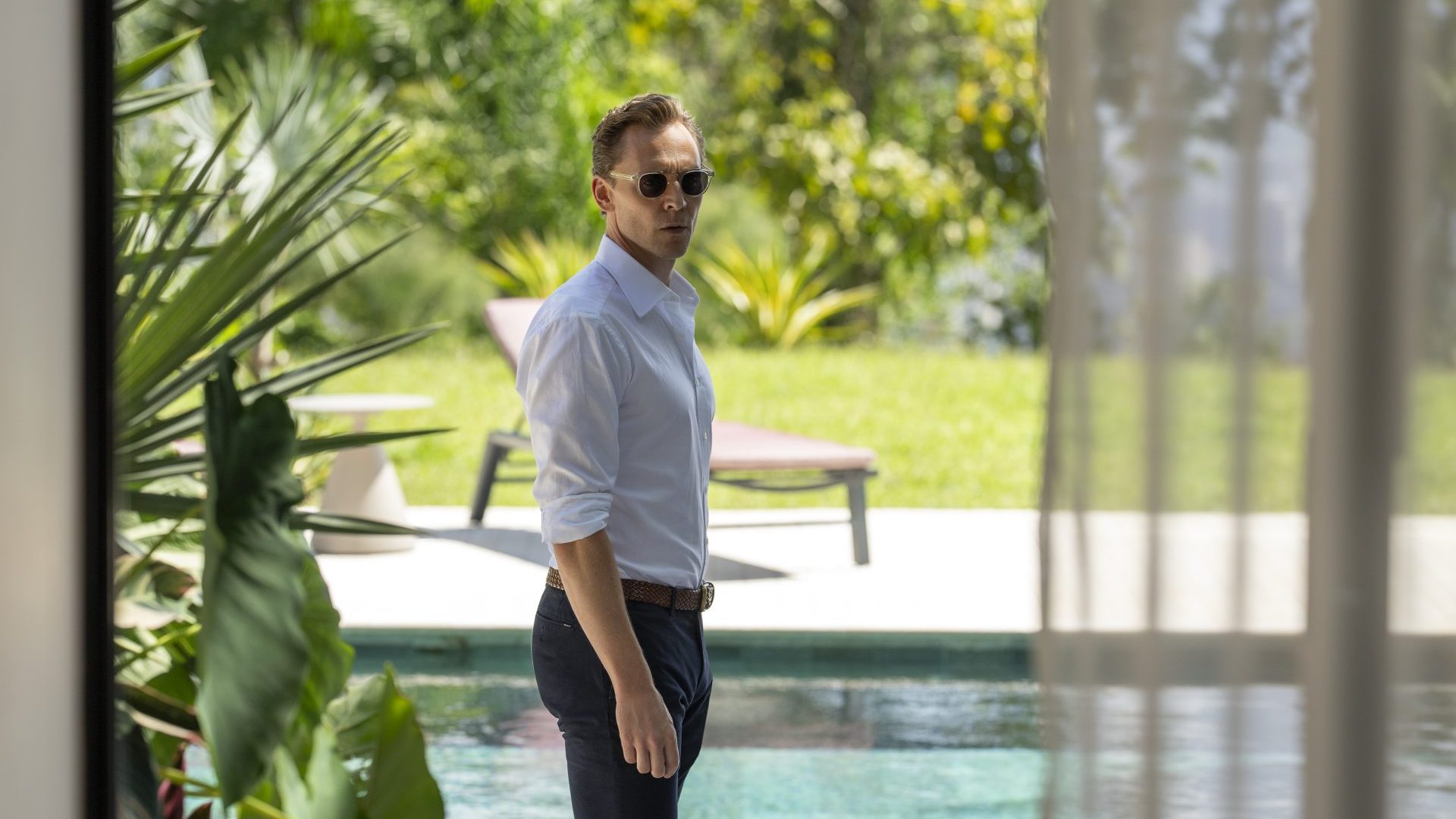
Now, ten years after the smash-hit first season, here come the further adventures of Jonathan Pine (Tom Hiddleston), the hotelier tasked by MI6 officer Angela Burr (Olivia Colman) to infiltrate the dark world of arms dealer Richard Roper (Hugh Laurie).
Before his death, le Carré gave his blessing in principle to a second lap round the track and screenwriter David Farr has done him proud. A decade has passed and Pine is now a full-time employee of MI6, granted a new identity as Alex Goodwin and living with a cat called Corky (in memory of Roper’s lethal henchman played by Tom Hollander).
He heads a nocturnal surveillance unit – the Night Owls – that keeps an eye on London’s hotels and casinos. By design, and with the approval of Mayra Cavendish (Indira Varma), the chief of MI6, this work is long on vigilance, short on adrenaline. “We’re watchers,” says a key member of his team, Sally Price Jones (Hayley Squires). “We’re not the show.” Which is true – until a face from Pine’s memory-holed past returns to haunt him and coaxes him back into the field.
In so doing, he ignores the advice of his patron and line manager Rex Mayhew (Douglas Hodge), back from season one. But Rex himself, Pine learns, has been covertly collaborating with businesswoman Roxana Bolaños (Camila Morrone), investigating illegal shipments to Colombia.
So it is off to Medellín – with a new legend as money-man Matthew Ellis – to make contact with weapons trader Teddy Dos Santos (Diego Calva). And guess what? Teddy is working with Roxana, too.
Even more than in the first season, Hiddleston anchors the whole enterprise, brilliantly conveying Pine’s damaged energy, moral conviction and addiction to the chase. He suspects treachery everywhere – and with good reason. It soon transpires that the bad guys are being helped by someone senior at the “River House”, MI6’s headquarters on the Thames. But who?
Thirty-three years after the original novel – le Carré’s first post-cold war book – it is pleasing to report that the saga of Jonathan Pine is in safe hands. Next up: Matthew Macfadyen as Smiley in the BBC-MGM+ collaboration, Legacy of Spies.
Suggested Reading

A euphoric Odyssey through 2026
THEATRE
High Noon (Harold Pinter Theatre, London, to March 7)
Fred Zinnemann’s classic western, released in 1952, is not an obvious candidate for theatrical adaptation. Yet Thea Sharrock’s ingenious production is gripping from its very first moments.
At the performance I attended, there was a spontaneous round of applause for Billy Crudup as he ambled onstage. Nobody could imitate Gary Cooper’s Oscar-winning performance as newlywed Will Kane, outgoing marshal of Hadleyville in the New Mexico Territory; and, to his credit, Crudup does not try. His Kane is more brittle, more reflective and more obviously flawed.
Likewise, Denise Gough plays his Quaker bride, Amy Fowler, with greater authority and autonomy than the 21-year-old Grace Kelly. Hers is the moral quandary at the heart of the tale: should she be true to her pacifist religious principles or support her husband, as the murderous Frank Miller (James Doherty), freshly released from prison, seeks vengeance from the man who put him behind bars?
High Noon has long been one of the great American fables, interpreted in many ways. Carl Foreman, writer of the original screenplay, was driven from the US before shooting began because he would not name names to the House Un-American Activities Committee. Against this real-life backdrop, the refusal of the townsfolk to help Kane against Miller powerfully dramatised the plight of the isolated man standing up for what is right but abandoned by his fellow citizens.
At the same time, Ronald Reagan also loved the movie, regarding it as a parable of indomitable American individualism. The Oscar-winning screenplay writer Eric Roth – trying his hand at theatre for the first time, aged 80 – remains true to the spirit of Foreman’s text but gives it an edge of profanity and contemporary resonance.
When the judge (also played by Doherty), preparing to flee town, tells Kane the story of a tyrant driven into exile but then welcomed back effusively, an orange spectre looms over the stage. When the bartender warns him that the brutal Miller has supporters in Hadleyville because “he says what people are thinking”, the years that separate the Old West from MAGA in 2026 melt away abruptly. Is this a land governed by laws or by men?
The theatrical setting also enables Sharrock to let rip with square dancing, the songs of Bruce Springsteen (I’m on Fire, Land of Hope and Dreams) and a real-time sense of urgency as we hear the whistle of Miller’s approaching train and Kane’s moment of destiny careering towards him. A terrific start to the theatrical year.
FILM
We’re Making a Film About Mark Fisher (selected venues)
As bad news about the future of cinema and moviemaking piles up – the Everyman chain issued a profit warning last month – it is thrilling to watch a film like this, developed on Instagram, made with no budget or studio support, but compelling in range, aesthetic vision and cultural ambition.
In addressing the life and legacy of the philosopher and theorist Mark Fisher, who died by suicide aged 48 in 2017, directors Simon Poulter and Sophie Mellor dispense with the conventions of a biopic and frame the film as a work in progress – the viewer is invited to participate in its evolution – and as a story narrated by “Professor Parkins” (Justin Hopper), the main character in M. R. James’s great ghost story Oh, Whistle, and I’ll Come to You, My Lad (1904).
As a member of the Cybernetic Culture Research Unit (CCRU) at Warwick University in the 1990s, alongside Kodwo Eshun, Stephen Metcalf, Sadie Plant and Nick Land (who has gone on to become a neo-reactionary guru for tech bros), Fisher was a pioneer of modern “accelerationism”: the notion that digital technology was advancing at an unstoppable speed and that we should lean in to its transformative consequences.
In particular, he believed that we live in an era of “capitalist realism”: not just an economic system but a framework of thinking and meaning in which, to paraphrase the critic and philosopher Fredric Jameson, “it is easier to imagine the end of the world than the end of capitalism”. Blogging under the alias “k-punk”, Fisher also wrote extensively about music – Joy Division, David Bowie, The Cure, Drake – television and movies.
The film includes clips of Fisher, extracts from his work, and interviews with writers Andy Beckett, Sophie Sleigh-Johnson, and Tim Burrows, the political scientist Jodi Dean and others, exploring the development of Fisher’s ideas from the CCRU days, via his growing interest in the persistence of the past, cultural loops and “hauntology”, to the later optimism that was inspired by the student protests of the 2010s and encapsulated in his idea of “acid communism”.
Nine years after his death, his ideas are, if anything, growing in their influence and relevance – which is why everyone should see this intelligent and intriguing film. For performance details, check here.
BOOK
William Golding: The Faber Letters – selected and edited by Tim Kendall (Faber)
Though William Golding was undoubtedly one of the greatest writers of the 20th century, he has fallen steadily out of fashion since his death in 1993 – remembered by most only as the author of his debut novel Lord of the Flies (1954).
This door-stopper collection of correspondence with his career-long publisher, brilliantly edited and annotated by Professor Tim Kendall of Exeter University, is, predominantly, an account of his long professional relationship and friendship with Charles Monteith – who, as a recent recruit to Faber, famously liberated Golding’s first manuscript, then unpromisingly titled Strangers from Within, from Faber’s slush pile.
The two men collaborated on a radical reworking and restructuring of the book that became Lord of the Flies and propelled a 43-year-old teacher to literary fame. It also established Monteith’s promise as an editor, who would go on to recruit Samuel Beckett, PD James, Ted Hughes, Sylvia Plath, Seamus Heaney and Jan Morris to Faber’s glittering list.
But it is principally his work with Golding for which he should be remembered: a collaboration comparable to Ezra Pound’s with TS Eliot, Maxwell Perkins’ with Thomas Wolfe, F Scott Fitzgerald and Ernest Hemingway; and Robert Gottlieb’s with Joseph Heller. After Golding won the Booker Prize in 1980 for Rites of Passage, he wrote to Monteith: “Three people have been of major importance and influence in my life and you are one of them. There is a way in which I am as a writer at least partly your creation”.
What these letters disclose, to fascinating effect, is that the aura of great literature blinds us to the sausage machine of its production: the psychological insecurities of the author, the to-and-fro of edited copy, the work on covers, the trauma of reviews (Golding always dreaded the moment “when the various hatchets fall”), the foreign sales, the promotional tours to which he was generally allergic.
In one funny exchange, Monteith even asks the author to write a 200-word “blurb” for his finest and most esoteric book, Darkness Visible (1979). Golding replies that “the basic difficulty is that I don’t know what the damn thing is about either”. He gives it his best shot, though: “I find myself making tiny mental beginnings. This great book. Seldom if ever. When the critics said. This majestic obscurity. Why doesn’t he just stop.”
Much of their correspondence is consumed by amicable gossip about their respective lives: weather, bouts of flu, travel, gardening, dinners at All Souls where Monteith was a fellow. A fascinating insight into the infrastructure that underpins the dazzling dance of creative genius.