

In a terrific week for movies, Park Chan-wook’s dark satire is the pick of the bunch. Inspired by Donald E Westlake’s novel The Ax (1997) – already adapted by Costa-Gavras as Le couperet in 2005 – No Other Choice transplants the story to contemporary south Korea, where veteran paper mill manager, Man-su (Lee Byung-hun, sensational) enjoys an idyllic life, barbecuing contentedly for his family.
Yet the soothing strains of the Adagio from Mozart’s Piano Concerto No. 23 – in the context of a film directed by Park – are a warning that his contentment is about to be ruptured. As his golden retrievers (Si-two and Ri-two) romp happily, Man-su gathers his wife Miri (Son Ye-jin), their son Si-one (Woo Seung Kim) and musically talented daughter, Ri-one (So Yul Choi), in a group hug and sighs: “I’ve got it all”. You can almost hear fate growling in rage at this moment of familial hubris.
Sure enough, the man who has it all is sacked by his employer of 25 years, Solar Paper, and forced back into the pitiless job market. In a support group for shell-shocked, out-of-work men, tapping their heads in unison, he is offered banal affirmations (“Losing my job is not my choice!”, “I am a good person!”).
As he is reduced to a position stacking boxes, Miri returns to work as a dental hygienist, the family’s beloved dogs are sent away to live with her parents, and economies are made all round: no more dance lessons, furniture put up for sale, even – shock, horror – the cancellation of Netflix. As Man-su realises that he may lose his childhood home, a plan hatches in his mind to regain control of his destiny.
First, he must tempt his rivals for a decent post to agree to a meeting – and to do that, he posts a fake recruitment ad in a trade magazine, insisting that no online applications will be accepted to ensure that there is no digital trail. Second, he decides to kill them.
What follows is comedy of the blackest kind, as Man-su switches from model citizen to coldblooded murderer. He has his father’s wartime pistol taken from the Viet Cong, but not much else to help him carry out this terrible work. There are plenty of pratfalls, moments of slapstick and macabre cartoonish sequences as he fumbles and stumbles, with clear echoes of Robert Hamer’s Kind Hearts and Coronets (1949) and Charlie Chaplin’s Modern Times (1936).
Yet at the heart of No Other Choice is an idea of steely seriousness: that modern men, faced with the emasculation of sudden poverty and loss of status, are capable of any crime that will restore them to what they consider their rightful place in the pecking order as a respected breadwinner. Beneath the veneer of civilised domesticity lurks a beast without morals or restraints. Though we might wish it otherwise, shame is more powerful than guilt.
No accident, either, that the dehumanising potential of automation and AI courses through the film like a shot of poison. In spite of the movie’s title – a refrain in the plot – Man-su clearly does have a choice to act decently. The trouble is, it never even occurs to him that this might be an option.
FILM
The History of Sound (selected cinemas)
For many years, I have laboured under the misapprehension that the beautiful folk song, Silver Dagger, had been written for Joan Baez by Bob Dylan. Not so. It is of a much older vintage, as becomes clear early in Oliver Hermanus’ deeply moving adaptation of a short story by Ben Shattuck.
In 1917, Kentucky farm boy Lionel Worthing (Paul Mescal) is a voice student at the New England Conservatory of Music, and, out drinking with friends, hears Across the Rocky Mountain, a ballad he knows well, being sung by David White (Josh O’Connor), who is studying composition. When Lionel sings Silver Dagger to David – “Don’t sing love songs, you’ll wake my mother/ She’s sleeping here, right by my side/ And in her right hand, a silver dagger/ She says that I can’t be your bride” – he is enchanted.
Suggested Reading
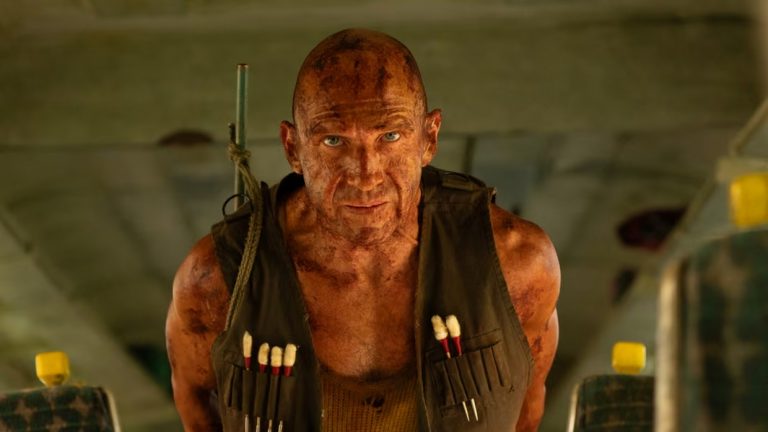

Is 28 Years Later: The Bone Temple our future?
The music they treasure ushers them towards romance as smoothly as a chord progression. Until, that is, the US joins the first world war, and David is conscripted. Exempted by his poor eyesight, Lionel tells his lover: “Write. Send chocolate. Don’t die.”
His return to his parents’ home in Kentucky – spartan and desolate – replaces the sunlit joy he has experienced with a chiaroscuro worthy of Vermeer. In 1919, David writes to tell him that he is back, teaching in Maine and wants Lionel’s help with a university-funded research project to collect folk songs. Reunited, they tour the backwoods of the state on foot, carrying an Edison phonograph and wax cylinders on which they will record the music that they hear.
As he showed in Living (2022), a remake of the Kurosawa classic Ikiru (1952), Hermanus is the cinematic laureate of emotional reticence. The depth of Lionel’s love for David is communicated in Mescal’s sad, sometimes fearful eyes. The most poignant illustration of David’s feelings is the care with which he quietly picks up feathers falling from Lionel’s pillow and packs them back into the seam.
This pattern of restraint is juxtaposed with the vivid sincerity of the songs they hear and commit to wax. Music is memory, an artefact in sound that captures a moment in time and space. But it is also a precious form of communication that transcends both. The ending of The History of Sound, a coda set many decades later, is both exquisite and devastating. And listen out for the truly unexpected use of Joy Division’s Atmosphere.
FILM
H Is For Hawk (general release)
When celebrated Daily Mirror photographer Alisdair Macdonald (Brendan Gleeson) dies from a heart attack, the life of his daughter Helen (Claire Foy), a Cambridge academic, is brutally capsized. Consumed by grief, she acquires a goshawk – notoriously difficult to train – and names her Mabel.
Based on Helen Macdonald’s memoir, which won the Samuel Johnson Prize in 2014, Philippa Lowthorpe’s compelling movie pares down its source material – a beguiling strand in the book about TH White’s experience of hawk training would have been one layer too many on-screen – and narrows its focus to the intense relationship between human and wild creature.
Helped by her falconer friend Stu (Sam Spruell), Helen spends hours in the wild and at her increasingly squalid home – now a hawk’s mews rather than a don’s bookish retreat – seeking to forge a bond with her new companion. Her mother (Lindsay Duncan) and best friend Christina (Denise Gough) fret that she is failing to deal with bereavement by fixating upon the hawk.
But the opposite is true. “Mabel’s not a distraction!” says Helen. Instinctively, she is enacting an ancient rite, a communion with nature red in tooth and claw. This is not grief counselling, or anthropomorphic friendship (don’t go expecting Mabel & Me). It is a mythical metamorphosis, freighted with psychic and physical peril.
The power of H Is for Hawk owes much to cinematographers Charlotte Bruus Christensen and Mark Payne-Gill (who handles the wildlife scenes). But Foy, who immersed herself in the skills of falconry, is the force carrying the movie: spiky, funny but remorseless in her quest for “an honest encounter with death”.
BLU-RAY
Only Two Can Play/ Carlton-Browne of the F.O. STUDIOCANAL Vintage Classics, January 26
Inspired by the 100th birthday of Peter Sellers last September, this ongoing series of 4K restorations continues to be a source of delight. Beautifully adapted by Bryan Forbes (who would go on to be one of Britain’s greatest directors) from the Kingsley Amis novel That Uncertain Feeling (1955), Sydney Gilliat’s Only Two Can Play (1962) stars Sellers as restless Welsh librarian John Lewis.
Living in cramped quarters in a boarding house with his wife Jean (Virginia Maskell) and their two children, he moonlights as theatre critic for the Aberdarcy Chronicle – “It’s hardly Kenneth Tynan country, really” – and is tempted by the possibility of promotion to a senior role at the library.
He is tempted even more by the glamorous Liz (Mai Zetterling), whose husband just happens to be chairing the appointment committee. They soon embark upon an affair, with many opportunities for classic bedroom (and automotive) farce.
Poised between the age of kitchen sink drama – there are shades of John Braine’s Room at the Top (1957) – and the sexual revolution of the 1960s, Only Two Can Play is a very funny slice of British social satire, enriched by Richard Attenborough’s turn as goatee’d beatnik playwright Gareth L. Probert, for whom Lewis feels nothing but contempt (angrily reciprocated).
According to Ed Sikov’s biography of Sellers, Mr Strangelove (2002), the actor and Amis were a mischievous menace on set, forcing everyone else to put up with “a battle of obscene jokes between the two able warriors”.
Directed by Roy Boulting and Jeffrey Dell, Carlton-Browne of the F.O. (1959) stars Terry-Thomas as the eponymous diplomat – head of the dormant Foreign Office Department of Miscellaneous Territories – who is surprised to be sent off to the Pacific island of Gaillardia, where the youthful new king Loris (Ian Bannen) faces a challenge from his uncle, Grand Duke Alexis (John Le Mesurier), hoping to replace his nephew with Princess Ilyena (Luciana Paluzzi).
Sellers steals the show as the pinguid prime minister Amphibulos, always looking for the next grift and bursting with malapropisms (“You will be standing pretty”, “Very friendly with all our cards under the table”, “the bull in the Chinese shop”). When he offers Carlton-Browne a bribe, Terry-Thomas dials it up to 11: “Me? The British Foreign Service?”
The sending up of the British diplomatic manners is reminiscent of Lawrence Durrell’s wonderful (and largely forgotten) comic fiction, especially Esprit de Corps (1957). Great fun – and a gentle reminder that Britain has long agonised about its place in the world.