
PICK OF THE WEEK
Hamnet (general release)
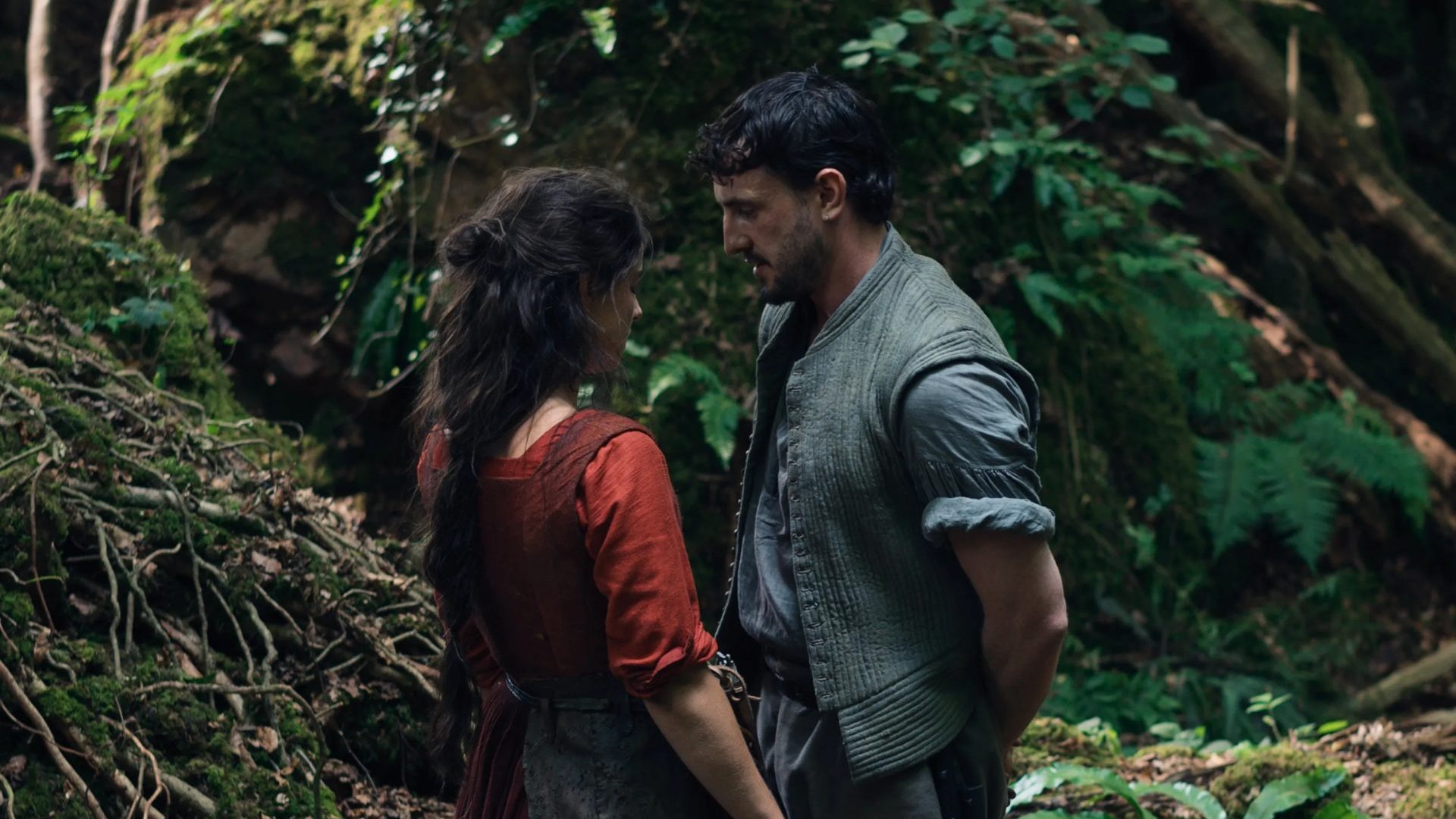
It is 27 years since John Madden’s Shakespeare in Love won the Oscar for Best Picture, beating the favourite, Steven Spielberg’s Saving Private Ryan. Chloé Zhao’s magnificent adaptation of Maggie O’Farrell’s 2020 novel may not match this particular feat (the nominations for this year’s Academy Awards will be announced on January 22). But it is a much better movie than the 1999 winner.
When William Shakespeare (Paul Mescal) meets Agnes Hathaway (Jessie Buckley), he is inarticulate and stumbles over his words; a paradox to which Zhao and O’Farrell return intermittently in their screenplay. The young Latin tutor would indeed go on to write the founding texts of modern English literature. But, in this telling, love, frustration and – above all – grief could render him almost aphasic.
Buckley is extraordinary as a woman at one with nature, supposedly the daughter of a witch, full of primal passion and mystical wisdom. After their second encounter, her suitor is inspired to write one of the most famous speeches in the language: “But soft, what light through yonder window breaks?/ It is the East, and Juliet is the sun”.
Her brother Bartholomew (Joe Alwyn) teases her about this “pasty-faced scholar”. But the attraction is irresistible. Once married, she and Will raise three children: Susanna (Bodhi Rae Breathnach) and twins Judith (Olivia Lynes) and Hamnet (Jacobi Jupe).
In the conventional framing of Shakespeare’s biography, his family life in Stratford was a sideshow to his triumphs in London. In Hamnet, the priorities are reversed: his home is where his heart lies and where inspiration flows. We see the three children playfully enacting the opening scene of Macbeth as the “Weird Sisters”. Later, Susanna recites Sonnet 12: “When lofty trees I see barren of leaves/ Which erst from heat did canopy the herd,/ And summer’s green all girded up in sheaves”.
In contrast, London is where Will has to go to achieve his consuming ambition as a playwright – especially after tragedy strikes the family. Consumed by grief, he retreats to the capital; and, Agnes says, to “the place in your head” where his art is forged.
Specifically, he is writing the great play with which he hopes to achieve some kind of catharsis. In one of the movie’s most powerful scenes, Mescal stares into the gloomy depths of the Thames and asks the question posed by Hamlet – “To be, or not to be” – but as a grieving father rather than a desolate son.
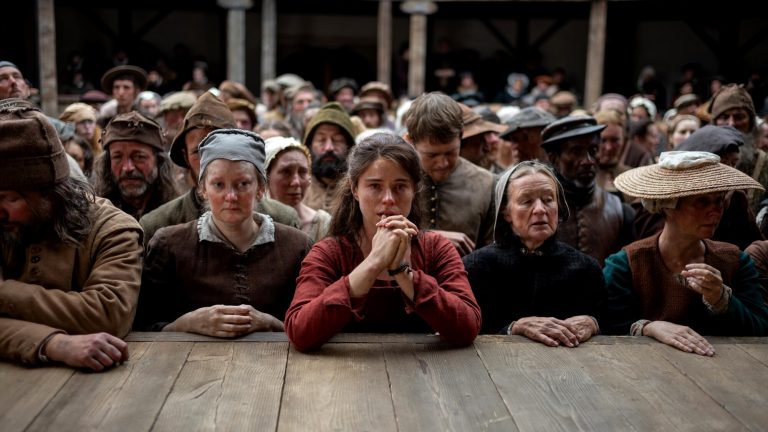
The final sequence, set in the Globe Theatre, makes arrestingly powerful use of Max Richter’s haunting theme On the Nature of Daylight. There is not a shred of sentimentality in Hamnet – which is why it is one of the most moving films of recent years.
Suggested Reading

Why Hamnet doesn’t get Shakespeare
STREAMING
A Thousand Blows (Disney+)
Steven Knight – the creator of Peaky Blinders and House of Guinness – scored a bullseye in 2025 with the first season of this underworld drama, set in the East End of London in the 1880s. A year later, the three main characters in the saga are back, all at a low ebb and confused about their respective destinies.
Mary Carr (Erin Doherty, brilliant) hopes to revive her all-female gang of thieves, the Forty Elephants. Her friend since their days in the workhouse, Sugar Goodson (Stephen Graham), has been drunk and “on the cobbles” for twelve months – consumed by guilt over the beating he gave his brother Treacle (James Nelson-Joyce).
Meanwhile, Hezekiah Moscow (Malachi Kirby) has a troubled conscience too, mourning his friend Alec (Francis Lovehall) and convinced that the death in the ring of an American boxing champion was his fault. He finds Sugar, who asks: “Is it you they sent to take me to hell – or is you just here to make sure that I’m dead?”
But Mary needs Sugar back on his feet if she is to reclaim her throne as queen of Wapping. And Hezekiah is unexpectedly offered the chance to train Prince Albert Victor (Stanley Morgan), second in line to the throne, who wants to take revenge in the ring upon a bully who made his life at school a misery. If the prince wins, Hezekiah will be rewarded with land in Jamaica.
In league with New York con artist Sophie Lyons (Catherine McCormack), Mary plans the daring robbery of a Caravaggio from a private collection – and, to gain access to high society, poses as a model for Sir Frederic Leighton (Richard Dillane), the real-life president of the Royal Academy. As always with Knight, the drama is a rich mix of history and fiction: the 1888 Matchgirls’ Strike figures in this season’s plot, as do Jack the Ripper’s murders and the rise of violent anarchism.
“We don’t get to quit!” Mary tells her close ally Eliza Moody (Hannah Walters) – which captures the infectious spirit of this series. More than enough to keep you going until the Peaky Blinders movie is released on March 6.
FILM
Giant (general release)
A far cry from tales of Victorian pugilism, Rowan Athale’s entertaining boxing biopic – not to be confused with James Dean’s final movie of the same title – is lifted by the strong performances of Amir El-Masry as former featherweight world champion, Prince Naseem Hamed, and Pierce Brosnan as his trainer, the late Brendan Ingle.
When, in early 1980s Sheffield, Ingle spots a young British-Yemeni boy (Hamed, played by Ghaith Saleh as a child) running away from bullies in a school playground, and displaying nimble footwork, his trainer’s instincts are triggered. The boy’s mother brings him and his brothers to the gym, hoping that Ingle will teach them how to defend themselves.
Though Hamed is only seven when he starts coaching him, their collaboration quickly gets serious as his innate talent and extraordinary bravado become clear. Ingle, full of Irish wit and hard-earned knowledge, nurtures this arrogance as a superpower, believing from the start that his student has what it takes to lift a world title belt.
Hamed’s brashness made him an icon of 1990s British cultural swagger and this is well captured in the scenes with promoter Frank Warren (Toby Stephens) who sees him as the personification of a new era in boxing. With his extravagant ringwear, trademark front somersault over the top rope, and unstoppable patter, Hamed captured the spirit of the decade as pointedly as Oasis, Euro 96 or the Young British Artists.
Yet this is really a movie about the Falstaffian tragedy of the mentor deserted. The very egotism that Ingle encouraged in Hamed is doomed to wreck their relationship, as the world-conquering boxer starts to resent his trainer’s use of the word “we” when describing his performance in the ring. As a devout Muslim, he sees his skills and accomplishment as God-given, and, as his successes multiply, feels less and less indebted to his trainer.
Brosnan’s furious despair as he grasps what is happening is both ridiculous (what did he expect?) and compelling (his heart is genuinely broken). The twist in the tale is that he, rather than the boxer, is the giant of the title; but a giant whose brutal fate is to be toppled, at the very moment that all his dreams come true.
BOOK
Flagrant, Self-Destructive Gestures: A Biography of Denis Johnson, by Ted Geltner (University of Iowa Press)
If you have seen Clint Bentley’s award-winning movie Train Dreams (2025), now streaming on Netflix, you may be familiar with, or aware of, the brilliant 2011 novella by the late Denis Johnson upon which it is based. Those who follow contemporary American fiction will probably know his classic collection of short stories, Jesus’ Son (1992).
David Foster Wallace cited Johnson’s Angels (1983) as one of “five directly underappreciated US novels” written since 1960. George Saunders, author of the Booker-winning Lincoln in the Bardo (2017), has acknowledged his debt to him. Don DeLillo, Zadie Smith, and Jonathan Franzen have also praised his work. Yet, remarkably, this is the first biography of Johnson, who died in 2017 aged 67.
To its benefit, Geltner’s book focuses upon the origins of Jesus’ Son and its prose poetry in the writer’s heroin and alcohol addiction – notably, the stories he heard in a dive bar in Iowa City called the Vine. At the University of Iowa’s writers’ workshop, his brilliance was never in doubt. Yet he was “often seen around town dragging a big plastic bag of his clothes behind him, searching for somewhere to spend the night”.
Not surprisingly, Johnson’s gritty stories of life on the fringe of society have encouraged comparisons with Raymond Carver. But his true north star was Leonard Gardner’s bleak social realist novel, Fat City (1969).
In sobriety, Johnson supplemented his income as a screenplay writer and war correspondent. During the first Gulf War, his colleague at Esquire, John Sack, reported back to the magazine that he had the talent to be “a modern-day Ernest Hemingway of war reporters…if he didn’t cry all the time”. In 2007, he won the National Book Award for Tree of Smoke, a Vietnam novel that caused him to fret that he was “appropriating the experience of other people who have been traumatised… I’m not sure I have a right to do that”. Some of the best material in the book is derived from Geltner’s interviews with Johnson’s son, Morgan, who found it “hard to kick the feeling that he was always seeking something that Denis was unable or unwilling to provide”. As so often, creative greatness leaves a trail of collateral damage in its wake. For those who aspired to follow him, Johnson, felled by liver cancer caused by undiagnosed Hepatitis C, had the following advice: “Collect and squirrel away in your soul certain odd moments when the Mystery winks at you”.