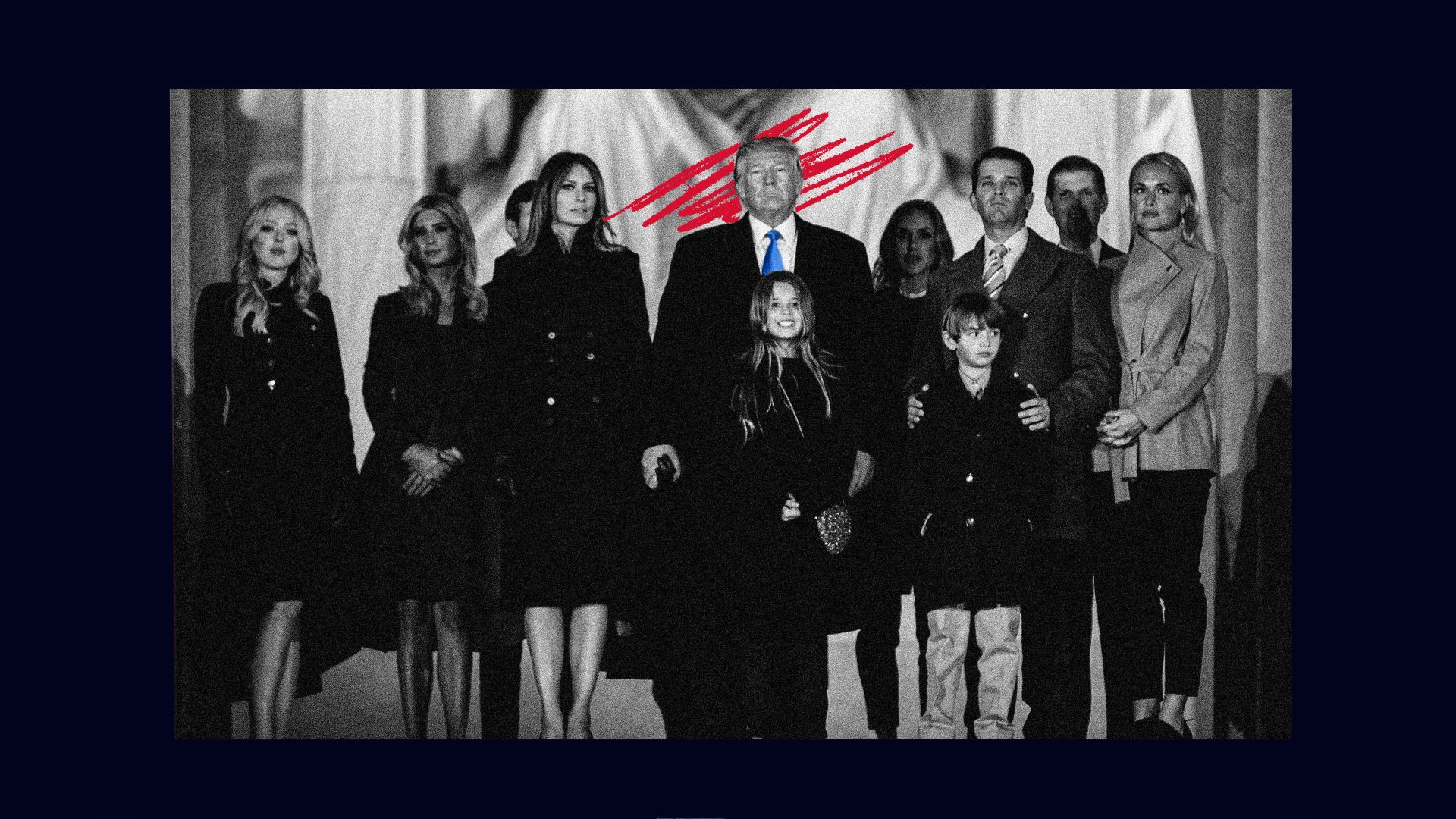
If you want to deepen your understanding of this mind-bending war, do watch Melania, now streaming on Prime Video. Yes, of course: Bret Rattner’s hagiographic documentary – for which the First Lady reportedly received $28 million – is an explosion in a platitude factory, a vacuous exercise in personal brand marketing. But take a closer look at everything that is happening around her, as her husband, his family and their entourage prepare for his second presidency.
In 2016, Donald Trump was stunned by his defeat of Hillary Clinton and not remotely prepared for office. When Raheem Kassam, former senior adviser to Nigel Farage, called on him to offer congratulations, the president-elect asked: “Is this a big deal?”
In 2024, it was a very different story. Twice impeached, found liable for sexual assault by jury and convicted on 34 felony counts, the re-elected Trump was not only politically experienced and battle-hardened; he felt vindicated by the American people’s fresh and unambiguous mandate.
In Melania, you see the new regime preparing to take office with a confidence and smoothness that is the polar opposite of the bedlam eight years before. Above all, you witness a dynasty preparing to resume what it now regards as its rightful position at the apex of the US polity. And this is of great relevance to the war that Trump is now waging.
I was recently told by someone who has known the president’s family for decades that his present conduct is inseparable from the broader ambitions which he nurses as a legacy-builder. “You have to understand: he’s not like [Rupert] Murdoch. He loves his kids and wants them to work together. I’m not saying he was a model father – but he doesn’t play divide-and-rule. What he wants to do is establish a huge global franchise in which the Trump brand will be so strong that it might not even need elective office.”
This rings true for several reasons. First, Trump has been musing openly about his mortality. I find journalistic speculation about his health and sanity uninteresting, as most of it is wishful thinking masquerading as amateur medicine. But his own growing preoccupation with the afterlife is intriguing.
“I want to try and get to heaven, if possible,” he said on Fox & Friends in August. “I’m hearing I’m not doing well. I am really at the bottom of the totem pole.” Yet, at the National Prayer Breakfast in Washington DC last month, he offered improved odds for his celestial prospects: “I really think I probably should make it. I mean, I’m not a perfect candidate, but I did a hell of a lot of good for perfect people.”
Second, as my MAGA source pointed out, the Trump children – with the exception of Tiffany, the only child he had with Marla Maples, who is not involved in the family’s public life – appear content these days in their respective places within the expanding empire.
After a breach with her father over January 6 – she aligned herself with Bill Barr, the attorney general, who could find no evidence of electoral fraud in 2020 – Ivanka has settled into a discreetly supportive role, less publicly so than when she held the official title of “First Daughter”. More significantly, her husband Jared Kushner, the architect of the Abraham Accords, has been as important as anyone in defining foreign policy and diplomacy in Trump’s second term; usually acting in concert with real estate developer Steve Witkoff.
Suggested Reading

What Ken Burns’s new documentary tells us about America
Meanwhile, Donald Jr has been the front-of-house political firebrand of the family, hosting his podcast Triggered with Don Jr., and roving the world on behalf of his father’s political and business interests. His younger brother Eric is more narrowly focused on the empire’s commercial objectives – though he did publish a book last year, pointedly entitled Under Siege: My Family’s Fight to Save Our Nation.
“Over the past ten years we stood tall,” he writes, “not just as individuals, but as a family. A family that refused to bend, refused to retreat into the background, and refused to let the soul of America be rewritten.” In the foreword, his father praises him fulsomely for doing an “INCREDIBLE job.”
Likewise, in Melania, Trump is heard on the phone to his wife, speaking with deep sentimentality about their son, Barron, who turns 20 on March 20 (don’t worry, he can’t run for president until 2044). The point being: Jesse Armstrong could write a brilliant satire about the Trumps, but it wouldn’t be like Succession. As in any oligarchic family, the president’s children have had their bouts of sibling rivalry. But their father is no Logan Roy.
I make this point not to sugar-coat his megalomania but to underline a truth too often neglected: a very powerful man who loves his children is much more dangerous than a man who doesn’t, precisely because he cares deeply about what happens to them when he is gone.
It is often said that this president wants to see the Trump name alongside Kennedy, Bush, Adams and Rockefeller in the annals of US political history. But I think his ambitions are far greater.
Which brings me back to Iran. One of the reasons that so many find Trump’s political and strategic behaviour impossible to parse is that they use the usual tools of analysis that apply in a conventional democracy. But one of this president’s defining characteristics is that he sees absolutely no distinction between public and private spheres. What everyone else calls corruption, he calls another day at the office.
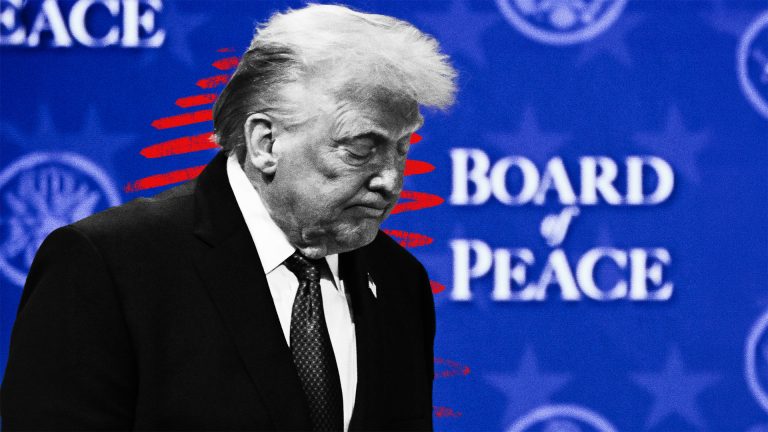
Look at the new Board of Peace: a privatised United Nations. Look at ICE: increasingly Trump’s private militia, whose annual budget is now greater than the defence expenditure of Spain, Australia, Brazil or Turkey. Look at the sweeping rights of immunity granted to the president by the Supreme Court in July 2024 and his brazen use of the pardon power to exempt his business partners and supporters from meaningful legal accountability.
Above all, look at the spectacular enrichment of the First Family in the past year and the extent to which that strategy of dynastic acquisitiveness has become indistinguishable from US foreign policy. In January, The New Yorker’s David D Kirkpatrick calculated that – very conservatively – the Trumps have profiteered, since last year’s inauguration, to the tune of $4.05 billion. The true figure is almost certainly much higher.
As so often, the president has been quite open about this. In an interview with the New York Times in January, he expressed regret at the restraint he supposedly urged upon his family during his first term. “I got absolutely no credit for it,” he said. “I didn’t have to do that. And it’s really unfair to them.” And then: “I found out that nobody cared, and I’m allowed to [my italics].” The final sentence shames Trump, of course; but it also shames Congress, the notionally impartial agencies of US law enforcement and federal regulators.
To understand the president’s strategy in the Middle East, remember his visit to Israel and Egypt in October to mark the Gaza deal: first to the Knesset in Jerusalem and then, no less significantly, to Sharm-el-Sheikh, where he convened what amounted to a trade fair, urging world leaders to invest in his grand plans for the region.
And what plans they are. In addition to $2 billion investment from Saudi Arabia’s sovereign wealth fund secured by Kushner in 2021 for his private equity firm Affinity Partners, the Trump Organisation already has licensing and development deals in Saudi, Qatar, the UAE and Oman. World Liberty Financial, the cryptocurrency startup co-founded by Donald Jr, Eric and Barron, is heavily dependent upon investment from the Gulf – particularly the 49 per cent stake bought by Aryam Investment 1 with the backing of Sheikh Tahnoon bin Zayed al-Nahyan, the UAE’s national security adviser – shortly before his country was granted access to advanced chips developed in the US.
None of this is a side-hustle or stealthy grift: it is the whole point. Trump does not approach geostrategy as a Kennan, a Kissinger or a Brzezinski but as a real estate developer from Queen’s. He has long believed (and correctly) that no lasting peace in the Middle East is possible while Iran is ruled by an Islamist theocracy that oversees a global terror network. But he sees its eradication not as an ethical imperative – the Iranian people and the wider world would be better off with the mullahs gone – but as the geopolitical equivalent of gentrification. How is a guy supposed to make an honest buck (or a few billion) for his family with these crazies in the backyard? Go figure.
Thus, we behold a dynasty with limitless horizons preying ferociously upon the vulnerabilities of the US republic and the flaws in the coding of the founding fathers; using the office of the presidency as the global HQ of a mega-brand.
Again, this is particularly relevant to this war and to its greatest conundrum. For it has to be asked: why is an arch-populist, who has built his political career upon intuiting and appealing to the American psyche, so flagrantly ignoring opinion poll after opinion poll that demonstrates the hostility of the voters to the war?
Suggested Reading
America hates Trump’s Iran war
It is conceivable that Trump is now totally detached from reality; that he has fallen prey to what behavioural scientists call the “hot hand fallacy”. First observed in basketball, this cognitive bias confuses past success with future performance. This president looks at (for example) his assassination of Quds Force commander Qasem Soleimani in 2020, last year’s attacks on Iran’s nuclear facilities, and the abduction of Venezuelan president Nicolás Maduro in January. He imagines that his hot streak cannot end.
But I don’t think this is a sufficient explanation for Trump’s behaviour. Or, rather, I see something more sinister at play in his sudden and apparently total indifference to public opinion. He is behaving like a president who no longer cares about elections, or at least about elections conducted freely and fairly.
As always, listen to what he and his proxies have done and said: last month, he called on Dan Bongino’s podcast for his party “to nationalise the voting”, a proposal totally at odds with the constitutional principle that states oversee elections; Steve Bannon has demanded that ICE agents “surround the polls come November”; in January, FBI agents seized ballots from the 2020 presidential race from Fulton County in Georgia.
During Trump’s exile, his intellectual outriders at Project 2025 and elsewhere pored over old, dormant or neglected statute law, looking for powers that they might reactivate. For the first phase of deportations, for example, they made cruelly imaginative use of the 1798 Alien Enemies Act.
To impose the sweeping tariffs announced on “Liberation Day” last year, the president invoked the 1977 International Emergency Economic Powers Act. When the Supreme Court ruled this use unlawful, the administration simply shifted to the supposed legal authority of the 1974 Trade Act.
As for the emergency powers required to repress dissent, Trump has often suggested that he might invoke the 1807 Insurrection Act (during the unrest following the murder of George Floyd in 2020, he was talked out of doing so by Barr, defense secretary Mark Esper, and chairman of the Joint Chiefs of staff, Mark Milley.)
In the case of elections, it will not have escaped the attention of his advisers that the administration has at its disposal a hugely powerful weapon in the Enforcement Acts of 1870-71. These laws were passed – ironically – to authorise federal marshals to prevent the intimidation of Black voters by the Ku Klux Klan and racist state officials.
In October 1871, President Ulysses S. Grant even used the military provisions of the new laws in South Carolina, proclaiming a “condition of lawlessness”. His attorney general, Amos T Akerman, declared that the time had come for the government to be “more national in theory.”
Now imagine those laws repurposed to the needs of MAGA; used by federal officials to deter voters unlikely to support Trump or fearful of arbitrary arrest by ICE at polling stations. Imagine enhanced federal oversight of elections, backed by militia muscle.
Would America still be a democracy? Officially, yes. In practice, it would have embraced what Steven Levitsky and Lucan Way have called “competitive authoritarianism”: a system, like Russia’s, in which democratic processes still notionally proceed, but only in the service of a new Caesarism.
This president has no interest in anything so limited as a “Trump doctrine”. He wants a Trump imperium, and one that will be his monument. In this respect, war is, as always, an accelerant. It is crystallising trends, intentions and political pathologies that were only dimly apparent before February 28.
The selection of Mojtaba Khameini, son of the late Ayatollah, as Iran’s new supreme leader, makes this – explicitly – a conflict between two dynasties. It may yet hasten the downfall of the Trump family and its breathtaking dream of international dominion, legal impunity and unprecedented power. It may do just the opposite.
This president, after all, is nothing if not a gambler.
Place your bets.
 Most popular

How Epstein used sex as a weapon
Iran’s war strategy – to create chaos
Morrissey returns.. and heaven knows he’s mythical now
What Ken Burns’s new documentary tells us about America