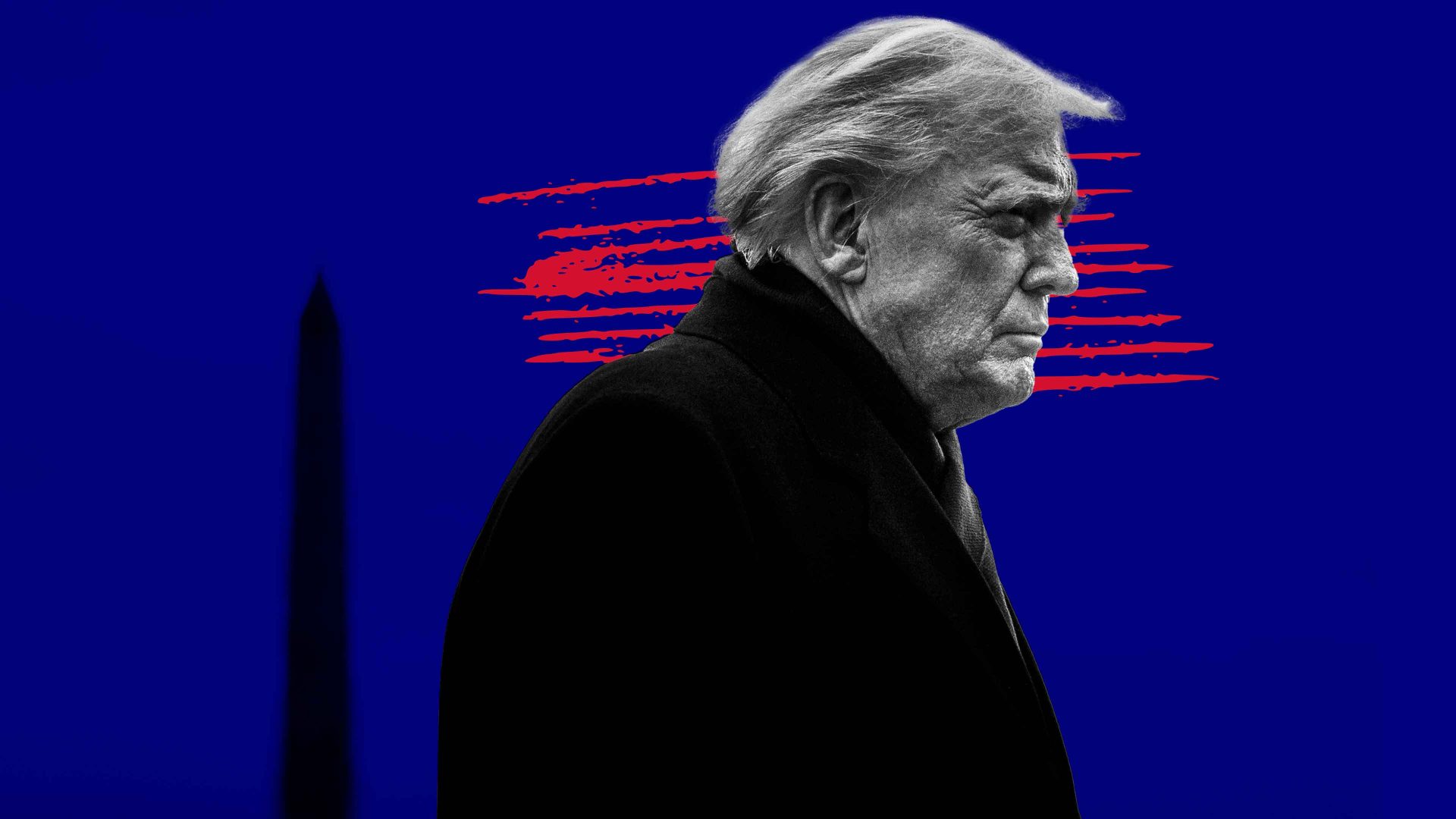
Donald Trump does not have a plan. But he does have a narrative. The distinction matters profoundly if we are to make sense of the extraordinary, shocking and unashamedly brutal conduct of his administration since the abduction of Nicolás Maduro and his wife, Cilia Flores, on January 3.
For those whose frame of analysis was formed between the end of the cold war in 1989 and the populist surge of 2016 – and has not been updated – the defenestration of Venezuela’s president and the extrajudicial murder of 37-year-old Renee Nicole Good by ICE agents in Minneapolis on January 7 are as inexplicable as they are appalling.
Moral outrage is essential. Tim Walz, the outgoing governor of Minnesota and defeated Democratic vice-presidential nominee, was quite right last week to channel the famous words of Joseph N Welch, the chief counsel for the United States army, at the McCarthy hearings in June 1954: “Do you have no decency?”
But to confront the global right wing movement that Trump personifies will require more than righteous fury. It compels us to understand and get the measure of the hypermodern peril we face.
What the 45th and 47th president symbolises is a fundamental shift in how politics and foreign policy are conducted. We have moved from the age of strategy and spin to the age of spectacle and power.
Keir Starmer is a wretched remnant of the former: he announces what he insists are coherent plans, sometimes daily, and tries desperately to improve what he and his generation still call “communications”. But this is the politics of the past.
Trump has no interest in policy. Those who seek geopolitical coherence in his stated intention to “run” Venezuela and to annex Greenland – not to mention Canada – are looking for a black cat in a dark room that isn’t there. It is certainly true that, like a greedy jackdaw, he is repurposing old laws and principles to suit his immediate needs. In the course of two centuries, the Monroe Doctrine, declared by president James Monroe in 1823, has often been invoked and adapted from its original defensive character, not least by Theodore Roosevelt and John F Kennedy, for whom it was a basic point of principle in the Cuban missile crisis.
As Jay Sexton, author of the definitive account of the doctrine, wrote in 2011: “Herein lay the great paradox of the Monroe Doctrine: its anticolonialism and idealism – its enlightened call for a new world order premised upon nonintervention, republican self-government, and an open world economy – justified and empowered an imperialist role for the United States in international affairs”.
Yet, grotesquely rebranded the “Donroe Doctrine”, this geostrategic rule has been refurbished and transformed into something entirely personal and private – a licence for Trump to do exactly as he pleases in the American hemisphere.
“I don’t need international law,” he told the New York Times last week, as though the postwar rules-based order was similarly an option on the table rather than a legal system to be respected. “My own morality. My own mind,” he explained. “It’s the only thing that can stop me.”
As the driver of a narrative, Trump intuitively grasps that, to compel attention and compliance, a political story must have two core features. First, it must achieve emotional resonance, grip its audience and keep social media ablaze with updates. It must have twists and symmetries and what showrunners call “Easter eggs” –references and call-backs embedded in the plot.
The overthrow of Maduro is not only a grab for oil riches but a throwback to a previous storyline, in which Trump declared – with no basis in fact – that the 2020 election had been stolen from him by voting machines designed in Venezuela (he reposted claims to this effect on Truth Social last week).
How horrifically apt, too, that Good was shot dead only a mile from the location of George Floyd’s murder by police in May 2020 (the president has always believed that the “lunatic Left” and Black Lives Matter should have been ruthlessly repressed in the unrest that followed).
To understand this president and his entourage, think of a cross between a Mafia meeting of the Five Families and a television series writers’ room. Trump thrives on plot beats, pace, twists, suspense, drama, action, jump scares, cliff-hangers.
One moment he is sending Delta Force and 150 US military aircraft to abduct Maduro; the next he is joking about his trademark dance and whether the (disabled) Franklin D Roosevelt could have matched him; the next he is telling poisonous lies about Good, accusing her on Truth Social, within hours of her death, of “violently, wilfully, and viciously” running over the ICE (Immigration and Customs Enforcement) agent who killed her; and the next he is musing to four New York Times reporters in the Oval Office that he “probably should” take GLP-1 medication.
These dissonances – these abrupt shifts in focus and tone – are not an error. They are the whole point.
For the second core feature of a 21st-century political story is its relentlessness. Like Tupac Shakur, Trump insists: “all eyez on me”.
Suggested Reading
The lesson of Maduro’s abduction: Europe must unite, or die
Whether the audience is laughing, cheering or seething is much less important than its rapt attention. In this respect, the only US politician who has a comparable ability to command the limelight is New York City mayor Zohran Mamdani – and, relative to the president, he is a novice.
As has been lethally clear in the past fortnight, the age of spectacle and power is one of permanent danger. Like many storytellers, Trump has no idea where his narrative is going, a clear plot arc in his head, a season finale up his sleeve. But he does have a sense of the narrative’s constituent parts and how they interact. And this is where reality bites.
As Orwell warned in Nineteen Eighty-Four, war is the basis of tyranny. In the forbidden pages of Emmanuel Goldstein’s The Theory and Practice of Oligarchical Collectivism, Winston Smith reads: “The war, therefore, if we judge it by the standards of previous wars, is merely an imposture… War, it will be seen, is now a purely internal affair.”
About 130,000 US troops were committed to the invasion of Iraq in March 2003. Only 15,000 are presently within range of Venezuela. This is what “America First” warfare means: maximum leverage over a conquered nation and its resources, with minimum engagement by the US military.
Likewise, Trump’s ambition to seize Greenland is driven by hubris and the dynamics of global theatre rather than the logic of geopolitics. As he put it to the New York Times: “Ownership is very important… Because that’s what I feel is psychologically needed for success”. Just as he insisted that his own name be added to the signage of the John F Kennedy Center, he wants to be the first president since Gerald Ford signed a covenant with the Northern Mariana Islands in 1975 to expand US territory (Greenland is more than 4,500 times as big).
Though this deranged notion threatens the entire Nato edifice – Greenland is part of the kingdom of Denmark, a key member of the alliance – it is not conflict with Europe that Trump seeks. I don’t think that prospect alarms or seriously crosses his mind. What he is really after is the establishment of a war mentality at home.
This is where spectacle and power converge. In a chilling interview with CNN’s Jake Tapper last Monday, Stephen Miller, Trump’s increasingly influential deputy chief of staff, was quite brazen about the administration’s view that might and right are inseparable.
“We live in a world, in the real world, Jake, that is governed by strength, that is governed by force, that is governed by power,” he said. “These are the iron laws of the world since the beginning of time.”
This is the connective tissue between the Venezuela raid, Trump’s warnings to Colombia, Cuba, Greenland and the Iranian regime, and the Minneapolis execution. His export of violence is on the same continuum as the operations in the last year of the National Guard and, especially, of ICE.
Hence, in his statement at Mar-a-Lago, a few hours after the Caracas raid, the president shifted almost immediately to his domestic law enforcement record: “Maduro sent savage and murderous gangs, including the bloodthirsty prison gang, Tren de Aragua, to terrorise American communities nationwide… They were in Colorado. They took over apartment complexes. They cut the fingers off people if they called police. They were brutal. But they’re not so brutal now.”
He went on to pat himself on the back for the deployment of troops in Washington DC, Memphis, New Orleans, Chicago and Los Angeles. “We got no credit for it whatsoever, but that’s OK,” he said. “It doesn’t matter. We don’t need the credit.”
This was a complaint. But it was also a warning, not least to the media in the room: that his power is no longer to be judged in conventional democratic terms, in opinion polls, in airtime on news bulletins, in headlines, even at the ballot box. What matters to him is that his will prevails, that he and his kleptocratic dynasty are feared and that the nation complies.
Suggested Reading

MAGA is now a holy war
In his concise manual, On Tyranny: Twenty Lessons from the Twentieth Century (2017), Timothy Snyder devotes a chapter to the rule: “Be wary of paramilitaries”. As he puts it: “When the pro-leader paramilitary and the official police and military intermingle, the end has come.”
The killing of Good last week shows that this “end” is not far off. Under Trump’s One Big Beautiful Bill Act, signed into law in July, more than $170bn will be allocated to ICE over the next four years – more than the FBI, DEA (Drug Enforcement Administration), ATF (Bureau of Alcohol, Tobacco, Firearms and Explosives), Bureau of Prisons and US Marshals combined.
To put it another way: ICE’s annual budget is now more than Spain, Turkey, Brazil or Australia spend per annum on defence. Add in to the mix that more than 30% of its employees are military veterans and that thousands of recruits are being fast-tracked through training to get them on to the streets, and you see that what was founded in the wake of 9/11 as a border-control agency is becoming, at pace, a private militia that owes its allegiance to Trump.
When vice-president JD Vance said last Thursday that ICE enjoyed “absolute immunity”, his literal meaning was that its masked officers could not be prosecuted by state authorities. But his furious tone suggested a deeper meaning: that this increasingly violent paramilitary group is beholden to the president and to the president alone. Its agents are, in the language of the mob, made men.
As I have written before, the logic of the case points towards the invocation of the 1807 Insurrection Act. Last week, Trump told the New York Times that “I haven’t really felt the need to do it”. Rarely have the words “so far” loomed so menacingly over a sentence.
Yet an even more sinister ambition underpins everything that this president does. It is almost nine years since Kellyanne Conway, then a senior aide to Trump, introduced the idea of “alternative facts” to mainstream political discourse. Now, in 2026, her successors are going much further. They are forging an entirely new version of reality, in which the Trump regime not only speaks flagrant lies to US citizens and the wider world, but dares them to do something about it.
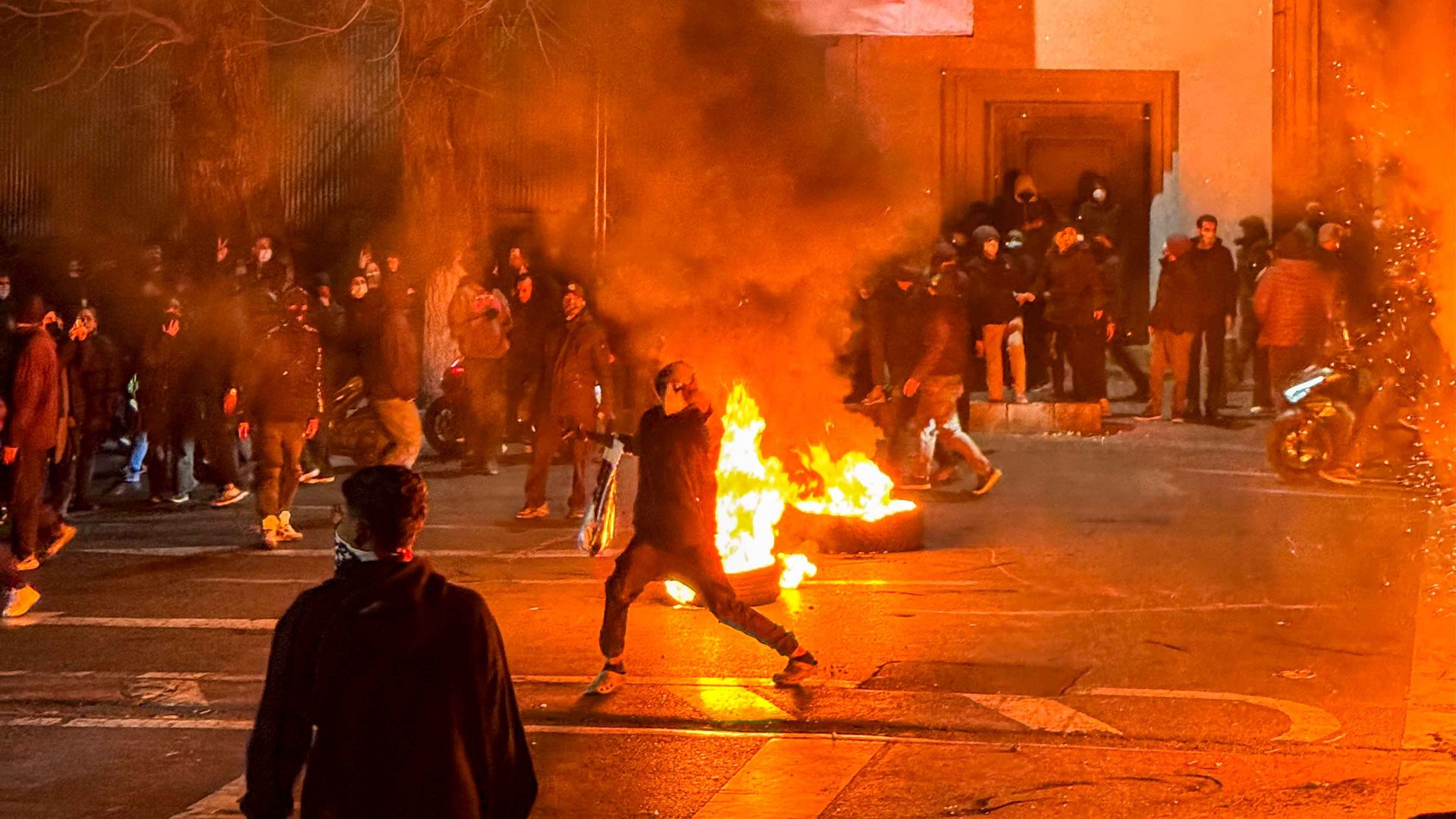
Riots? That’s precisely what he wants. A third impeachment, after a strong Democratic performance in the midterms? As he showed in the 2024 presidential campaign, Trump thrives in the dock. He would love nothing more than another round of congressional investigation: to portray himself, ludicrously, as both strongman and victim.
Again, it was Walz who identified the correct allusion; and again, from Orwell: “The Party told you to reject the evidence of your eyes and ears. It was their final, most essential command.” Just as MAGA defames the police officers who defended the Capitol on January 6 – Mike Johnson, the speaker of the House, has refused to put up a plaque saluting law-enforcement agencies for their valour five years ago – so Trump and his acolytes promote brazen falsehoods about the murder of Good by an ICE officer entirely at odds with the clinching video evidence from multiple angles.
This is Trump’s own final command: that you believe his story, though it is obviously false. He has other heads of government in a state of panic, wondering how far this will go, how meaningful conventional diplomacy still is, and what levers are left to pull to influence a man so determined to reshape everything he sees in his own image – by force if necessary.
Like Winston, the world now lies on a bedframe and Trump, like O’Brien, has his hand on the dial, insisting that we all accept that “2+2=5”. It is not enough to humour him. We must really assent to his madness.
Winston tells O’Brien that “the spirit of Man” will defeat him. Will it?