“In all ages, whatever the form and name of government, be it monarchy, republic, or democracy, an oligarchy lurks behind the façade.” So wrote Ronald Syme in his classic work of 1939, The Roman Revolution.
The great ancient historian was right, too. From the tribal elders of early agrarian society, via the Ephors of Sparta and the Borgias in Renaissance Rome, to the robber barons of the Gilded Age and the Politburo of the Soviet communist party, the few have always ruled over the many. The only variable has been the transparency with which they have done so.
It is tempting, therefore, to file the tawdry transactions, narcissism and sexual depravity of the global elite described in the Jeffrey Epstein files under “historical business as usual”. Tempting, but wrong. What we observe in this cache of more than 3m documents – queasily rich in detail and scope – is a new form of globalised power and influence.
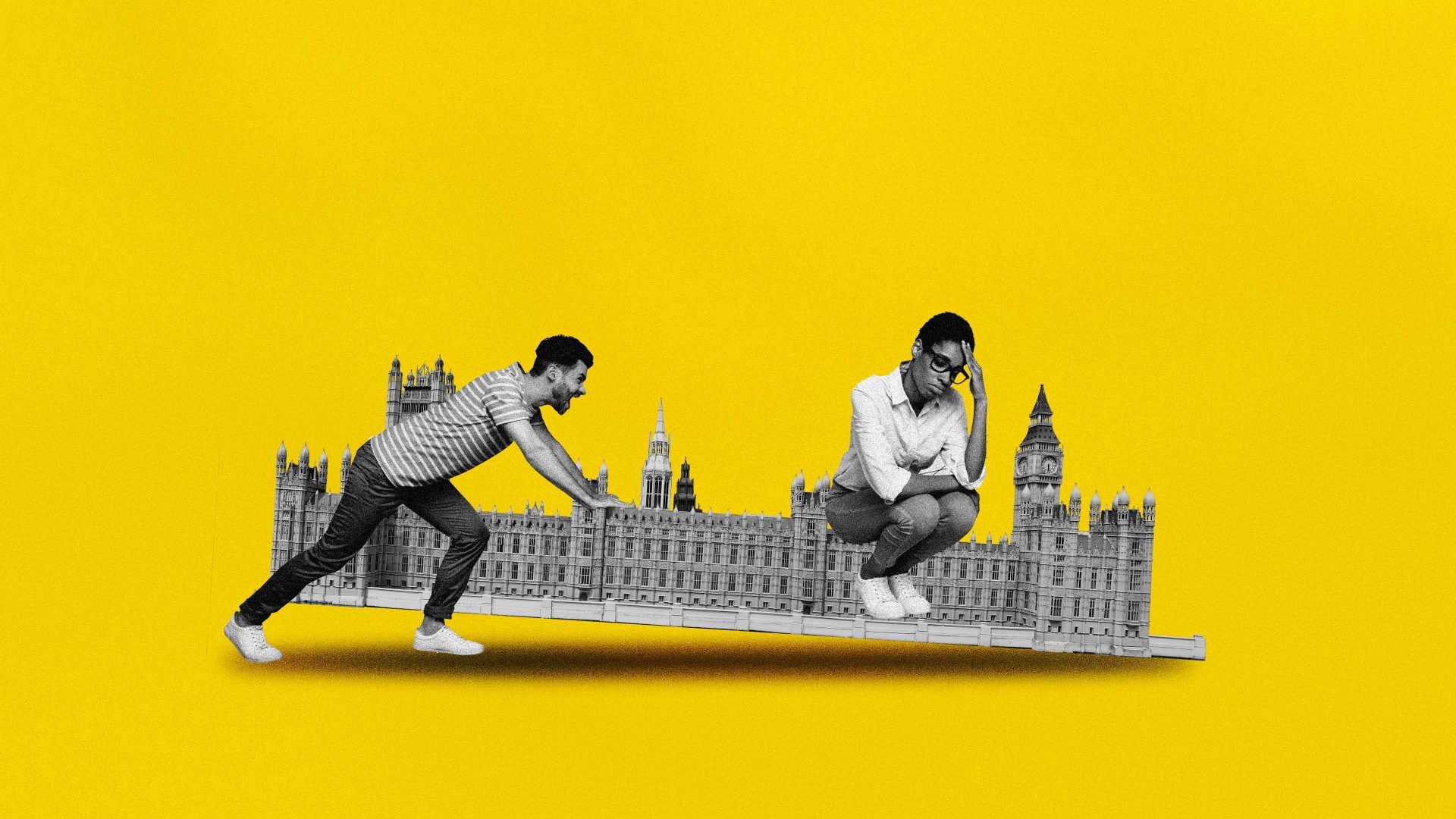
The sheer moral squalor of the individual stories is horribly hypnotic: witness the convulsed state into which British politics has been plunged by the alleged misdeeds of Peter Mandelson, and Keir Starmer’s wilful blindness in appointing him US ambassador. But, in our justified disgust at the trees, we should not lose sight of the forest.
A century ago, the narrator of F Scott Fitzgerald’s short story The Rich Boy issued a memorable warning: “Let me tell you about the very rich. They are different from you and me… They think, deep in their hearts, that they are better than we are because we had to discover the compensations and refuges of life for ourselves… They are different.”
Again, this has always been true. But the new breed of the very rich is differently different. The planetary oligarchy for which Epstein acted as concierge, fixer and pimp is unlike any of its forebears. He and his associates sought not only to rule the world, but to hack its operating system; to soar over its surface at 35,000ft, both literally and figuratively.
Membership of most elites has involved, to a greater or lesser extent, an assumption that rules are there to be bypassed, that patronage trumps meritocracy, that limits upon sexual behaviour are for little people. But what Epstein intuited was that the hyperconnected plutocrats of the 21st century expected much more than their historical counterparts.
They sought escape velocity from all laws, all restraints, all limitations upon their wealth and behaviour. Epstein was their energetic enabler: a paedophile and serial rapist whose own riches and vile sexual tastes compelled him to seek complete secession from anything approaching normal life, with its pesky constraints and inhibitions.
This much we know already: that in the 2020s a global super-elite is halfway to owning absolutely everything. A mere 1.6% of humanity controls 50% of all wealth, while 40.7% possesses only 0.6%. According to Oxfam, the combined wealth of 3,000 billionaires surged by 16% in 2025 alone to $18.3tn.
In 2023, private jets emitted more greenhouse gases than all the flights departing from Heathrow. On present trends, the world’s governments will lose $5tn to tax evasion in the next decade.
To what end? Today’s super-rich are by no means satisfied with a yacht, a plane, even an island. They seek to be distinct in quite different ways, defying actuarial forces, even mortality itself.
In Homo Deus: A Brief History of Tomorrow (2015), Yuval Noah Harari writes that “humans are in fact trying to upgrade themselves into gods”, but that the amazing new advantages of health tech will not be distributed democratically. As new therapies and “concierge medicine” grow ever more exorbitantly expensive, there will arise, Harari predicts, “an algorithmic upper class owning most of our planet.”
The corollary to physiological differentiation – health as a positional good – will be the increasing seclusion of the super-rich in stockaded luxury, away from social responsibility and anything approaching community ties. Billionaires such as the tech oligarch Peter Thiel – in whose Valar Ventures Epstein invested $40m – have already pursued “seasteading”: the formation of sovereign mobile microstates on seaborne platforms.
Suggested Reading

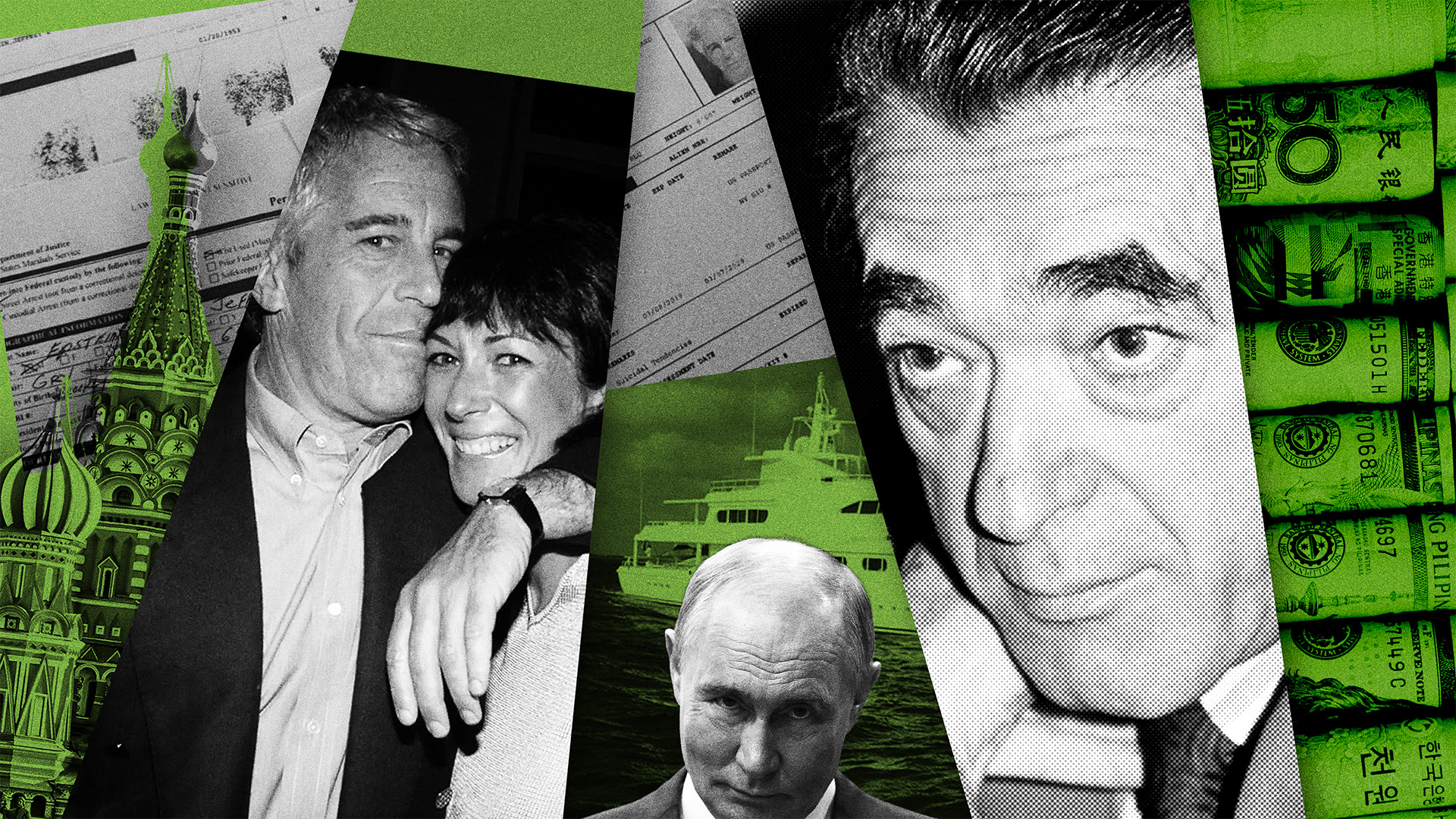
Epstein, Robert Maxwell and the Kremlin
As Douglas Rushkoff shows in Survival of the Richest: Escape Fantasies of the Tech Billionaires (2022), the financial and industrial moguls whose companies are wrecking the environment and collaborating with unstable autocracies are also building themselves lavish bunkers in preparation for catastrophe: “they have succumbed to a mindset where ‘winning’ means earning enough money to insulate themselves from the damage they are creating by earning money in that way.”
In the 2008 financial crisis – a key episode in the Epstein files, not least for Mandelson – can be detected the origin of much that has gone wrong since. Many firms went under, including the investment bank Bear Stearns, where Epstein was made a limited partner aged only 27. Yet, to a grotesque extent, it was ordinary people who paid the price.
In the US alone, about $16tn was wiped off total household net worth. Across the western world, as banks pocketed huge bailouts and then resisted meaningful regulation, austerity measures hollowed out public services and social amenities.
Meanwhile, digital technology has turbocharged the rise of a new gig economy, and a “precariat” that lives not from pay cheque to pay cheque but from hour to hour. In many western cities, property ownership is something of which the young can only dream.
Automation and AI are destroying entry-level jobs. Increased longevity is sharply driving up the cost of health and social care – at a rate that public subsidy cannot or will not match. The social contract is, to put it mildly, buckling, and populist nationalist parties everywhere are reaping the political rewards. Especially among the young, the nihilistic belief that democracy changes nothing is tightening its grip.
The Epstein story is a monstrous parable of this socio-political emergency. Indifferent to the world of rage and division that his cohort of friends and clients was nurturing, the financier and sex trafficker understood that networks now mattered more than institutions; and made it his mission to be at the hub of a colossal spider’s web of influence, money and the sexual abuse of women and girls.
To describe him as a hoarder of kompromat and blackmailer is accurate – but lets him off too lightly. Yes, there were cameras everywhere in his properties: on the island of Little Saint James, with its occult library and bizarre temple; at his palatial New York home on East 71st St; at his Paris apartment on Avenue Foch.
His emails are studded with none-too-subtle threats of disclosure. “You and I had ‘gang stuff’ for over 15 years,” he wrote in an undated draft letter to his former benefactor, the retail tycoon Leslie Wexner.
In 2015, he similarly menaced the billionaire investor Leon Black: “There is little I won’t do for you, or at least try to do as a friend, and a great deal that I have already done (both known and some things that will need to remain unknown.)” Wexner and Black deny any impropriety.
A stomach-churning email in 2014 from an Epstein friend (name redacted) reads: “Thank you for a fun night… Your littlest girl was a little naughty.” Another unnamed email correspondent asks if Epstein and Woody Allen are in Paris “For les pedophile convention?” Epstein replies: “I think pedophilee is the plural.”
Humour – if that is the word – hardly gets more macabre. But humour was essential to the debased, misogynistic ethos of the Epstein network. Though he does hint at blackmail in some of his messages, the stronger theme is one of complicity and a brotherhood defined by shared secrets. In a world of hyper-surveillance, secrecy – the secrecy that confers impunity – is among the greatest luxuries.
And here we really are at the heart of darkness. Why did these men commit such despicable sexual crimes, or turn a blind eye to those who did? For many reasons, no doubt, but prime among them: because to do so, to treat women and girls as disposable commodities and (they assumed) to get away with it, was, in their eyes, an expression of absolute power. On Mount Olympus, there is no human resources department.
“Epstein was a reckless sex criminal.. Well below the radar, we can be sure that there are many other networks like his, managed with greater sophistication”
As the German sociologist Georg Simmel wrote in his seminal 1906 paper The Sociology of Secrecy and of Secret Societies, “the strongly accentuated exclusion of all not within the circle of secrecy results in a correspondingly accentuated feeling of personal possession… what is withheld from the many appears to have a special value.”
Look at Bill Clinton’s grin, Noam Chomsky’s smugly avuncular features, Andrew Mountbatten-Windsor’s leer, Mandelson’s needy smile: whatever they were up to with Epstein, legal or otherwise, the secrecy was the point. The veil of clandestinity was what gave them all the dopamine rush that made them feel special and different.
Again, there is nothing new about the existence of secret societies and their association with enhanced status. What is new is the nature, accrued power and increasing detachment of these groups. Epstein was not Hugh Hefner, and his island was not the Playboy Mansion. His operation was so very much worse.
What he grasped was something deep, sinister, and socially destructive: that a tiny group of astonishingly wealthy and powerful men had, without drawing up a collective plan or a formal conspiratorial charter, decided that a new chapter in the history of humanity was at hand.
Suggested Reading
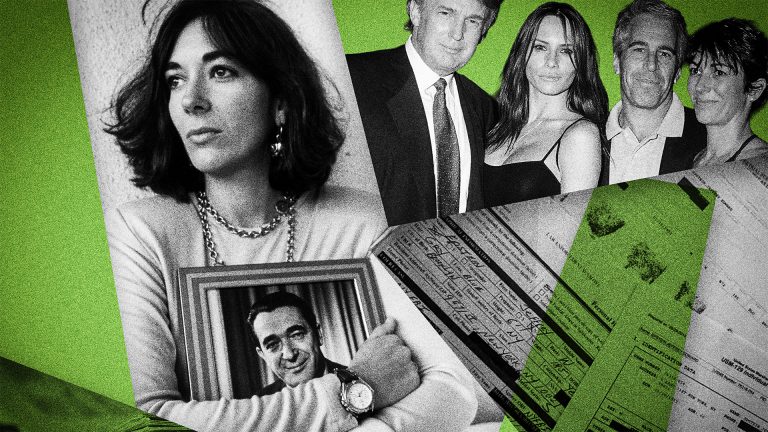
A world dragged headfirst into the Epstein Sewer
For this patriarchal super-elite, liberal democracy turns out to have been a phase rather than a terminus. Thiel’s famous declaration in 2009 that “I no longer believe that freedom and democracy are compatible” is the philosophical foundation stone upon which the rest of them have built.
The “Dark Enlightenment” polemicist Curtis Yarvin, whom the US vice-president JD Vance has named as an inspiration, proposes a new form of monarchy, in which a sovereign executive governs in collaboration with a tiny elite that is comparable to a joint-stock corporation.
In Regime Change (2023), the political theorist Patrick Deneen (another favourite of the vice-president) argues for a “common-good conservatism” overseen by a system of “aristopopulism”. This would require, in Deneen’s phrase, a “self-conscious aristoi” to run the show: a concept of which Epstein and his gang would surely approve.
If all this sounds absurd, think of Donald Trump’s “Board of Peace”, expected to hold its first meeting in Washington this month. Ostensibly established to oversee the end of the conflict in the Middle East, this body’s true strategic purpose – to privatise the international order and supplant the United Nations – is becoming increasingly clear.
Look at the new geopolitical landscape: the rise of autocracy on the crest of the populist wave; the decay of the international rules-based order and its replacement by a multipolar world in which the US, China, Russia, India and Europe vie for position; the blurred boundaries between the transnational power of the plutocrats and the sovereignty of the state.
Go back to that toe-curling interview between Rishi Sunak and Elon Musk at Lancaster House in November 2023. Sunak may have been prime minister, but Musk was in charge. When he and his fellow tech overlord Marc Andreessen became embedded in Trump’s transition team at Mar-a-Lago, they were routinely said to be kowtowing to MAGA.
But power was flowing both ways. And both men will be around long after Trump has left office; as will Mark Zuckerberg, Jeff Bezos, Larry and David Ellison, Sam Altman and Jensen Huang. Watch Alexander Karp, CEO of Palantir Technologies (which he co-founded with Thiel), and ask yourself how many heads of government (if any) this corporate titan truly fears.
It will no longer do to dismiss concerns about the new nexus of power and money as “the politics of envy”. In 1998, Mandelson himself best expressed the post-cold war doctrine that great personal wealth and social justice were entirely compatible. “We are intensely relaxed,” he said, “about people getting filthy rich as long as they pay their taxes.”
How innocent those words now seem; how grimly apt that Mandelson should have been entangled in the scandal that showed, beyond doubt, that the world is very different now; and how chilling it is to realise that the ghastly brotherhood revealed in these files is only a small part of the problem.
Because it is. In the end, Epstein was a reckless sex criminal who got caught and – for all his connections and manipulation of the legal process – could only postpone the day of reckoning for so long.
Well below the radar, we can be sure that there are many other networks like his, managed with greater sophistication by men who are smarter, have more self-control and have learned the lessons of his very public demise.
What counts now is that we see the Epstein files as much more than a museum of sin, a freak show of entitlement. They should be understood as an instruction to act; to recognise how close the social contract is to total collapse; and to have the collective courage to change what needs to be changed – before it is too late.