When I was a trainee reporter, there was a joke in the Times newsroom that the definition of a constitutional expert was “a historian who would give you their home phone number”. The late Queen’s finances; the failure of royal marriages; the relationship between church and state: all offered expansive opportunities for public controversy.
Since the arrest of Andrew Mountbatten-Windsor last Thursday, the experts have again been sleeplessly producing what Saul Bellow called “crisis chatter”. On one side, eager republicans declare that this could be the big one; on the other, royalist sages insist that there really is nothing (much) to see here.
Yet the framing of such moments in the history of the monarchy as “constitutional crises” – or not – risks concealing their deeper meaning: as manifestations of truly magmatic social change, many strata below the nation’s institutional crust.
In recent days, like many others, I have been reminded of the death of Diana, Princess of Wales, in August 1997, and its astonishingly intense aftermath. As extraordinary as the week between the fatal car crash in Paris and her funeral undoubtedly was, I think that this may prove a much more significant point of inflection; and not only for the monarchy.
Why did the death of Diana evoke such powerful sentiment and subject the royal family to such fierce pressure? Partly because, long before the era of social media, the princess had personified and pioneered a cultural revolution defined by celebrity and emotionalism.
When she shook the hand of an Aids patient in 1989, she gave hypermodern expression to the primal myth of the “royal touch” and its healing power. Meanwhile, decades before Instagram and TikTok, her glamour and global media power short-circuited old-fashioned institutional authority. When she died, sites associated with her were transformed into medieval grottoes of flowers, candles and offerings: what Private Eye called the “cellotaph”.
In his brilliant book Herd: How to Change Mass Behaviour by Harnessing Our True Nature (2007), Mark Earls explores the mass contagion of public grief after Diana’s death as evidence that “we are a super-social species”, “a ‘we-species’ with an illusion of ‘I’.” In today’s context of digital virality and online tribalism, that analysis looks genuinely prophetic.
Those who expressed rage as well as grief in 1997 were giving voice to a very deep resentment: a feeling that the institutional repression and stiff-upper-lip against which Diana had rebelled had become pathological, epitomised by the reluctance of the royal family to return to London from Balmoral or to fly the flag above Buckingham Palace at half-mast.
Tony Blair intuited what was happening and advised the Queen adroitly – saving the monarchy from itself, so to speak. In describing Diana as the “people’s princess”, he signalled his personal enthusiasm for politics to be conducted with greater empathy and sensitivity to modern mores. Some around him even spoke of the “therapeutic state”.
But not all emotion is benign. The heightened sensibilities of that unforgettable week were a warning of more savage divisions to come, as the country developed a taste for polarisation, for irreconcilable difference and for the attribution of blame. A thread twitched furiously between the funerary rituals of 1997 and the breaking of the nation over Brexit in 2016.
The arrest of the former Prince Andrew is also entangled with profound and powerful shifts in popular feeling. In essence, the story of the past 20 years has been one of diminished accountability: the opening of a dangerous gap between public confidence in our systems of governance, justice and responsibility and the apparent immunity assumed by, or awarded to, specific elites and protected groups.
As I wrote in TNW 471, the financial crisis of 2008 dramatised on a global scale the conviction that an oligarchy of the super-rich was exempt from consequence while ordinary people paid a hefty price for the transformation of 21st-century capitalism into a grotesque planetary casino. In the convulsion of social injustice and austerity that followed was born the mighty wave of populist nationalism that surges to this day.
The connective tissue of our age has been a deepening belief that, contrary to the promise of liberal universalism and meritocracy, some are above the law and excused from the normal rules of consequence and liability. In the #MeToo movement of 2017 and the rise of Black Lives Matter after the murder of George Floyd in 2020, one saw the justified fury of women and Black people that they had been failed by a system that claimed to enforce equality before the law and rights in the workplace but did neither.
In scandal after scandal – Hillsborough, the Post Office, contaminated blood, Grenfell, Covid fraud – it has taken far too long for even basic justice to be done. Within nine days of ITV’s broadcast of Mr Bates vs the Post Office in January 2024, Rishi Sunak had passed emergency legislation exonerating wrongly convicted postmasters. But why did it take a television drama to compel rudimentary standards of redress in the public sphere?
Why, for that matter, did Boris Johnson think that the country could possibly tolerate the obscenity of “partygate”? Why did Keir Starmer resist a national statutory review into the grooming gangs scandal until an independent audit by Baroness Louise Casey forced his hand last June?
Survivors and their families have been neglected and gaslit by the authorities, sometimes for decades. Is the prime minister really surprised that he has been nicknamed “two-tier Keir”?
The release of the Epstein files – it would take one person 16 years to read them all, even in redacted form – is a rare instance of a moment when the word “seismic” is fully justified. In this country alone, fresh disclosures about the relationship between the late paedophile financier and Peter Mandelson (who was, in turn, arrested on Monday) nearly brought down the prime minister.
Now, the arrest of the former prince on suspicion of misconduct in public office has embroiled the monarchy in an international scandal that leads everywhere and infects everything. At the time of writing, Mountbatten-Windsor still lives on the King’s Sandringham Estate in Norfolk; is still eighth in line to the throne; still (technically at least) one of the counsellors of state who are empowered to perform certain duties of the King when he is indisposed or abroad.
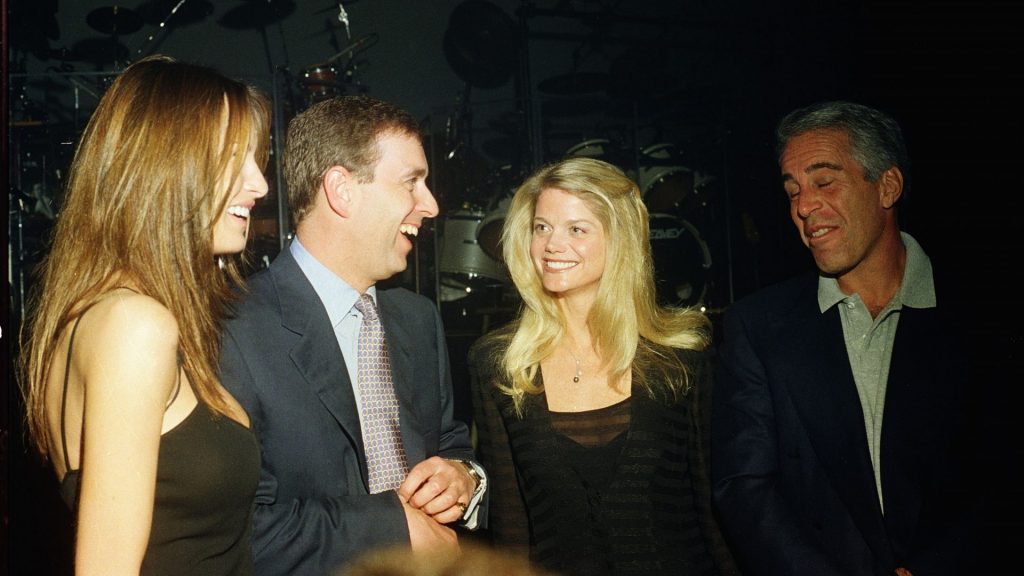
How can this possibly be? To date, only one person – Ghislaine Maxwell – has been convicted of crimes related to Epstein’s criminal empire. Hundreds, probably thousands, of survivors await justice. Virginia Giuffre, who alleged that she was forced to have sex with the prince when she was 17 (allegations he denies), died by suicide last April, aged only 41.
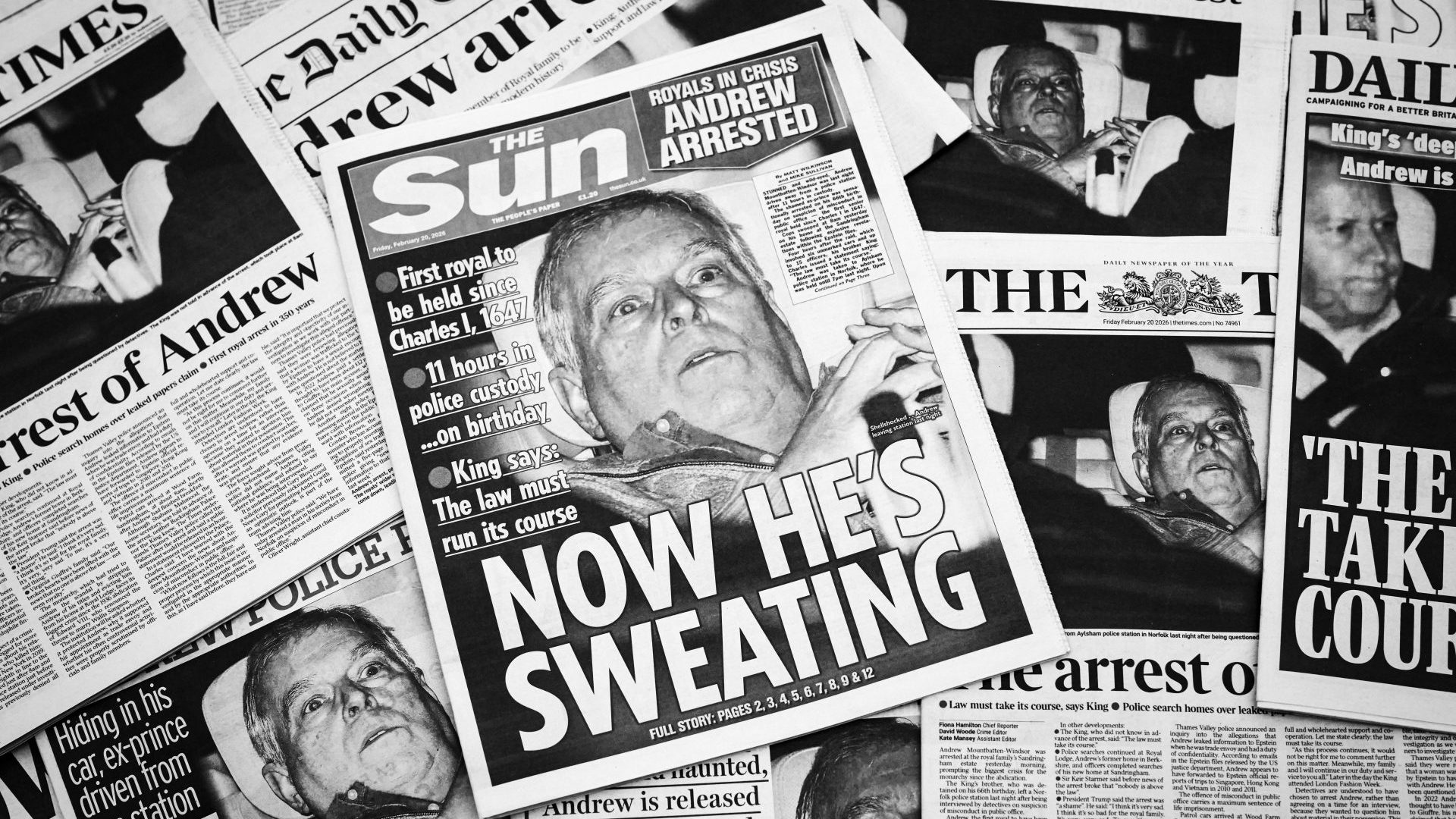
Until the unforgettable photograph taken by Phil Noble of Reuters late on Thursday evening – the image of the slumped, broken Mountbatten-Windsor in the back seat of his car – he appeared to be in a state of bovine denial, still waving to tourists when he was at the wheel. The behaviour of a moral simpleton, certainly; but also an indictment of the institutions and structures that have protected him for so long.
We live in an age of instant mythology, served up with implacable speed on our screens. It would be idle to deny that this is a calamity for the monarchy: the first arrest of a senior member of the royal family since Charles I was imprisoned by Oliver Cromwell at Hampton Court Palace in 1647.
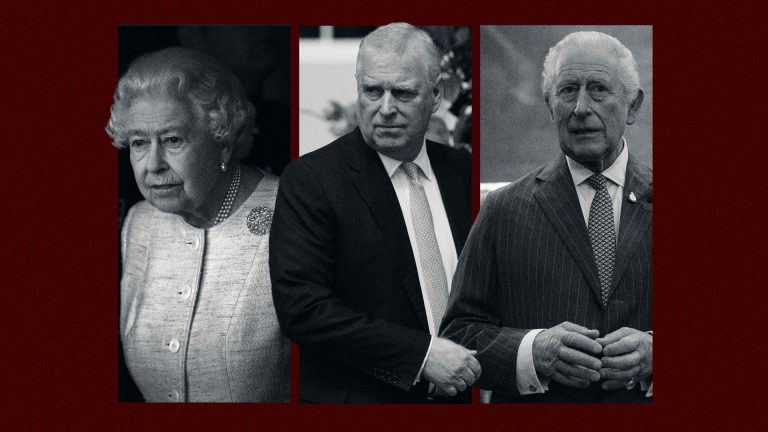

Wherever the police investigation leads, it will be radically insufficient for the king simply to disown his disgraced brother further. To stand a chance of surviving this body blow, the monarchy will have to become transparent to an extent that both parliament and the Palace still resist.
Walter Bagehot’s famous injunction in The English Constitution (1867) that “we must not let in daylight upon magic” has been a dead letter since the Abdication Crisis of 1936 at the very latest. From now on, it has to be daylight all the way.
According to Erskine May’s guide to parliamentary practice, “reflections must not be cast in debate upon the conduct of the Sovereign, the heir to the throne, or other members of the royal family.” Well, that has to go, for a start.
So too does the indefensible moat of secrecy that still shields many aspects of the royal finances from public scrutiny. How outrageous that, four years after the out-of-court settlement of Giuffre’s civil lawsuit against the former prince, we still do not know officially who paid the reported sum of £12m.
It is assumed, of course, that the late Queen, who doted on her second son, bailed him out. But assumption, constrained debate and respectful discretion are luxuries the Crown can no longer afford or expect. It will take more than the usual institutional Polyfilla to fix this.
Bagehot’s mid-Victorian analysis remains resonant in one particular respect. As an early student of social science and psychology, he understood that “imaginative sentiments” were more important than formal structures in explaining the survival – or demise – of institutions; that all systems of power and law nestled within and depended upon a social contract.
This is as true today as it was in 1867: much more so, in fact. The age of deference is a distant memory. We live in a season of conspiracy theories, maps of meaning that take as their premise the principle that no elite or power structure can be trusted and that all who seek authority do so to pursue their own, often nefarious interests.
The disclosure of the Epstein files – even in their redacted form, with as many as three million additional items held back – has made it impossible to sneer at such theories ever again. Suddenly, the deranged rantings of Alex Jones on his Infowars channel seem closer to the truth than the official narratives of mainstream media.
This is nothing like good news for liberal democracy. A society that suspects the worst and finds out that it is, at least in some respects, absolutely right to do so is not likely to trust any conventional principle of election, due process or equality before the law; it will be more inclined than ever to embrace populism and authoritarianism.
In this context, the best guide to our age is not about our age at all. In The Revolutionary Temper: Paris, 1748-1789 (2023), the great historian Robert Darnton shows that the French Revolution was not simply the product of material want or radical intellectual ideas but of emotion, everyday gossip and slow-building opposition to les grands.
Suggested Reading
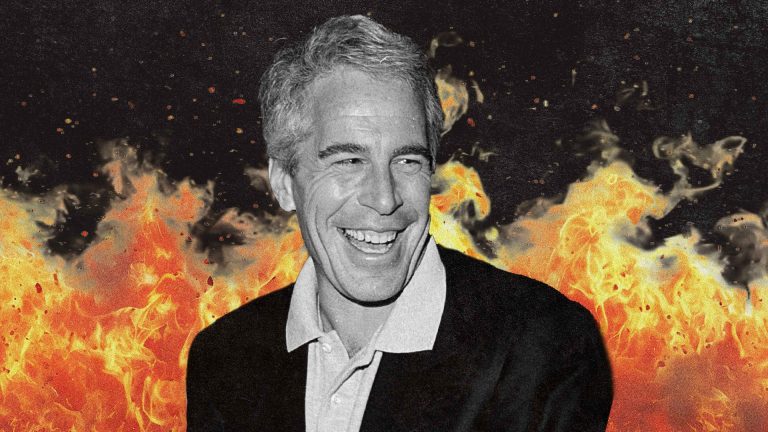

The God delusions of Jeffrey Epstein’s secret brotherhood
Like digital media today, the popular literature of libelles – “scandalous attacks on ministers, royal mistresses, and the king himself” – undermined faith in the holiness of royalty and, crucially, the presumption that the business of politics was le secret du roi.
With uncanny symmetry, one of the uprisings in Paris that prefigured the revolution itself, in 1749-50, was sparked by dark allegations that the police were abducting children for ransom or trafficking to Tobago and Mississippi. According to one rumour, the kidnapped were being bled to death to provide a bloodbath for a prince suffering from leprosy.
As Darnton puts it, “Paris functioned as a gigantic echo chamber of ‘public noises’.” Consumed by the “revolutionary temper”, the insurrectionists “experienced reality as something that could be destroyed and reconstructed, and they faced seemingly limitless possibilities, for good and for evil, for raising a utopia and for falling back into tyranny.”
A terrible warning is embedded in these words. Yes, there is an opportunity now for the powerful to renounce what Democratic congressman Ro Khanna has aptly called “the Epstein class”; to speak candidly and without hesitation about the failures of accountability that have scarred the political and social landscape for so long; to act with urgency and contrition to make decrepit, malfunctioning systems of law and redress work efficiently and speedily; to show, in other words, that the arrest of a former prince was not a token sacrifice to appease the mob but the beginning of a vigorous and long overdue process of reckoning.
If that opportunity is not seized then, as psychologists say, nothing is safe and everything is possible. The French Revolution was followed by terror, tyranny, brutal nationalism and Napoleon, in his own words, finding the crown “in the gutter”.
In this country, royalty has long supplied the punctuation marks that express the spirit of the age. So it has proved once again. But this time, I am not sure that any of our elites – royal, political, media – has fully grasped how deep-seated, seething and perilously unmoored the public’s anger truly is. I wonder, indeed, if they are equal to the challenge.
Such moments can yield great progress. But they can also spawn precisely the opposite. The walls of Jericho are trembling. Which way will they fall?