

It was always going to be a group effort. We talked about it with our waiter while having dinner, on election night, waiting for the polls to close. We were sitting on the empty terrace of this trendy restaurant in Budapest but, our new friend told us, the whole place had been completely packed for lunch. We knew he wasn’t lying, because half the menu items were unavailable even at 7pm.
The culprits, he told us, were Hungarians living abroad. Somehow they’d all descended on the capital this weekend, in order to oust Viktor Orbán, and they needed feeding too. The waiter had been happy to oblige, even though he was running on no sleep at all. He was still registered to vote in his home village and had been there in the morning, then travelled back up to Budapest to get on the early shift. It was the first time he had been old enough to vote, he said, and he didn’t want to miss his chance. The stakes couldn’t have been higher.
He was right, of course. Viktor Orbán was prime minister of Hungary for 16 years and, in that time, managed to reshape the country entirely. You could call him authoritarian; illiberal; populist; a strongman; a crook. All of those would fit. Mostly, he was successful. Because his party, Fidesz, kept winning two-third majorities in parliament, his government was able to keep rewriting the rules so they would keep winning.
They tinkered with election law again and again. They decimated independent media. They made sure that all major national institutions would stand behind them. They changed the constitution several times and made sure that they and their cronies would only ever get richer.
There was one point, in 2022, when people wondered whether the Orbán years might come to an end, with something looking like an opposition beginning to take shape. Instead, Fidesz got its supermajority again, and it really felt like that was that. Hungary had become Orbán, and Orbán Hungary. Hope just doesn’t die that easily, though.
On Sunday, nearly 80% of Hungarians flocked to the voting booths, more than at any time under Fidesz. They came from abroad and they travelled across the country if they needed to. They turned up and put their faith in the leader of the Tisza party, Péter Magyar, a figure once associated with the very party he was now seeking to defeat: and they won.
“For a couple of hours I couldn’t even believe what had happened, at the emotional level,” Luis Prado told me on Monday morning. “It was like having been hit on the head with some kind of soft, pillowy hammer.”
Luis and I met for coffee on Saturday to talk about Hungarian politics. A long-term Spanish transplant to Budapest, he adores the place, and is still amused by its sometimes chaotic ways. In fact, he turned up late to our meeting, because JD Vance had hidden his car. Well, in a manner of speaking.
The American VP was in town to try and shore up support for Orbán, and all vehicles had to be moved from the neighbourhood in advance. Because Luis was away at the time, the city’s authorities did it for him. When he returned and asked them for the car’s location, he was given an address where, it turned out, the car wasn’t.
He’d spent the morning trying to recover it and, by the time we met, was getting ready for the possibility that he may have to stalk the streets of the capital, in the hope of recognising his car. In the meantime, he was happy to talk.
“All the appearances of democracy in Hungary are window dressing”, he told me. “The actual working of the system can only be understood if you consider that the country has been taken over by a clan that has a mafia-like structure and has mafia-like incentives, and suddenly everything becomes quite clear.”
Though he moved countries a decade ago, it took him a little while to realise the extent of the damage that Orbán had done. Really, the epiphany came from his social life, or lack of it. “Even in the good economic times, I would meet someone and six months later they were in Germany,” he complained. “And I would think, ‘well, that’s a pity’, but it happened several times; everyone I met who seemed interesting now had better things to do abroad.”
He wasn’t wrong. Across Europe are thousands and thousands of clever, interesting, well-educated Hungarians, all of whom felt that their home country had little to offer. They moved away to study or work and, as time went on, realised that there would be little point in returning to a place where the odds would be stacked against them.
Suggested Reading
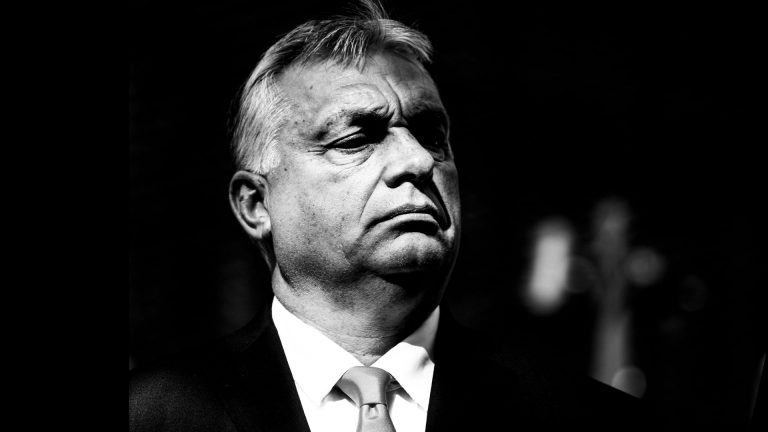
Viktor Orbán, the man who broke Hungary
Edit is one of them. Hungarian by birth, she grew up in Pécs, a small city near the Croatian border, then moved to London in her twenties. In 2013, she attended her high school’s ten-year reunion. There, she learnt that two of her classmates wouldn’t be attending, as they were at the wedding of Ráhel Orbán, the prime minister’s eldest daughter, who was marrying another one of her former schoolmates.
That night, she found out that those two young men had somehow done remarkably well for themselves. One was running a glitzy restaurant in a nice bit of Budapest; the other was working with Orbán’s son-in-law, and had become responsible for “changing the lights for whole villages and towns in the south of Hungary”. Somehow, he just kept winning all those EU tenders. “And I was like, these two?” she said with a laugh. “No offence, but…”
That her former classmates had probably become millionaires before turning 30 was shocking to her. “I was like, ‘hey, this is weird. I don’t think this should be happening’.” It took a bit longer for the scales to fully fall from her eyes but, in 2022, she ended up queuing for four hours to vote in the Netherlands. This time, she went a step further. Because she just didn’t trust the Hungarian state with her ballot, she travelled back to Hungary for the weekend in order to vote in person.
We met for coffee on the day before polling day in the capital. She was getting ready to travel down to her hometown where she would vote, then take a nine-hour overnight coach to Munich, where she now lives, in order to be back at her desk by Monday morning. Sadly, this meant she was unable to take part in the celebrations that exploded across Budapest on Sunday night.
Thanks both to efficient counting and the sheer scale of the victory, it became clear by 9pm that Péter Magyar had won, and, with over 133 seats in Parliament, would be able to use his supermajority to start turning the tide on the Fidesz years.
“I don’t think I’d ever seen you that happy!” a fellow guest told our Hungarian host at the party we went to after dinner. “Well,” she said, “you didn’t know me over 16 years ago…” Champagne corks popped, flutes were downed in a few gulps, and we took to the streets.
To everyone’s surprise, Orbán conceded early – before 9.30pm – and cheers erupted from all corners of Budapest’s centre. One small but mighty party was organised by the centrist Momentum Movement. On the large screen was the prime minister glumly telling his supporters that it was over, and the defeat was “painful”. In the crowds were dozens of people giving him the finger.
Everyone there was young and ecstatic. Between chants that roughly translate to “it’s over! it’s over!”, two university students told me that they’d never known anything but Orbán. They kept looking at each other and everyone else, smiling, looking a bit shell-shocked. Some other kids walked past carrying Hungarian flags. Following them meant going to the techno rave implausibly taking place just by the Parliament building.
As green, white and red lights were projected onto the grand old building, thousands of people danced to gnarly, loud electronic music. It looked absurd and cathartic, in roughly equal measures.
In any case, the real action was about to take place just across the Danube, at the Tisza rally. Getting there technically only meant taking the metro for one single stop. In practice, it required navigating an ocean of loud, drunk, dancing, chanting people, all of whom had had the same idea. Stuck waiting on the escalator, some teenage girls kept singing a slogan which, in Hungarian, meant something along the lines of “filthy Fidesz!” Boys banged their fists on the walls and the metal surfaces of the station and against just about any surface they could find.
On the train, nose to nose with strangers of all ages, everyone sang again, moving from tune to tune so seamlessly that it felt impossible to ask for translations. As the doors opened, everyone rushed out, trying to run up into the open air, and make sure they could find a spot to watch Magyar’s speech.
“We did it!”, the new prime minister eventually said, having walked onto the podium, with Hungary’s gleaming parliament behind him. He and Tisza and the three or so million people who’d voted that day had done it. Orban was out. “Never before in the history of democratic Hungary have so many people voted”, he said “and no single party has ever received such a strong mandate”.
Suggested Reading
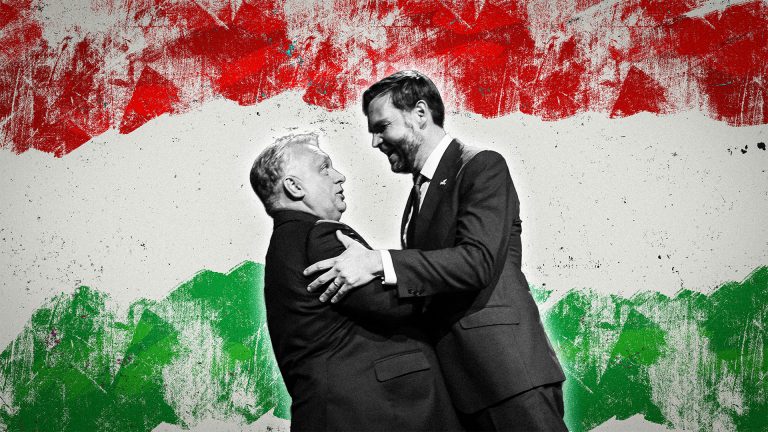

Hungary dares to dream – but Orbán has a trick up his sleeve
In the crowd, people cheered and they sang “we’re not afraid!” and they chanted “Europa! Europa!” like it was a mantra. Some people had brought a large inflatable zebra with them and another one had a plushie of the animal – both of them references to the footage, released last year, revealing that Orban had zebras grazing on his countryside estate. The story was a minor one, in the grand scheme of things, but it was also symptomatic of everything that had gone wrong in Hungary. Mere scraps for thee; exotic animals for me.
It was one of the many – many – reasons why Matt left the country to settle in the UK ten years ago. The corruption was such, he told me on Sunday, that you could “either work for a company that’s politically connected, or for a company that’s at a huge disadvantage. It’s always at the back of your mind. As much as I like politics, and I enjoy thinking about it, that’s a terrible way to live”. Still, he went back to Hungary to vote in 2018, and in 2022 – and again this month.
“I’m not under any illusions that Tisza will be a saviour and sort everything out, and solve all the issues that 16 years of Fidesz has created,” he said, “but I think they can lay the groundwork for a functioning parliamentary democracy.” If this sounds too measured and dour, then rest assured that he still celebrated properly on Sunday night, and woke up on Monday feeling “very happy and extremely hungover”.
He probably wasn’t the only one. As Magyar’s speech ended, the speakers started blaring out We Are The Champions, and everyone sang along. For hours after that, and well after midnight, the streets of Budapest were full of people walking either home or towards more parties, singing and shouting and carrying Hungarian and European and LGBT flags and drinking fizzy wine straight from the bottle and grinning at each other. Cars drove past and beeped their horns and cyclists did their best with their little bells.
It’s impossible to know what will happen to Hungary in the weeks, months and years to come. There is still so much we don’t know about Péter Magyar, his people, his intentions and his ability to make meaningful change happen. Orbán spent well over a decade pulling tricks from his sleeve, and he may yet prove to be a nuisance, haunting Parliament like a poltergeist.
All of that can wait, though. For now, Hungarians both at home and across the world can afford to take a breath, and congratulate themselves on a job well done. The rest of us really ought to thank them too; in a world replete with bad news, any morsel of joy and hope can go a long, long way.
 Most popular

The truth about Trump’s Iran downfall? The worst is yet to come
Here's what Zelensky really thinks of JD Vance

Rejoining Europe: the policy which could ironically unite Britain

So you want to have a child. Why?