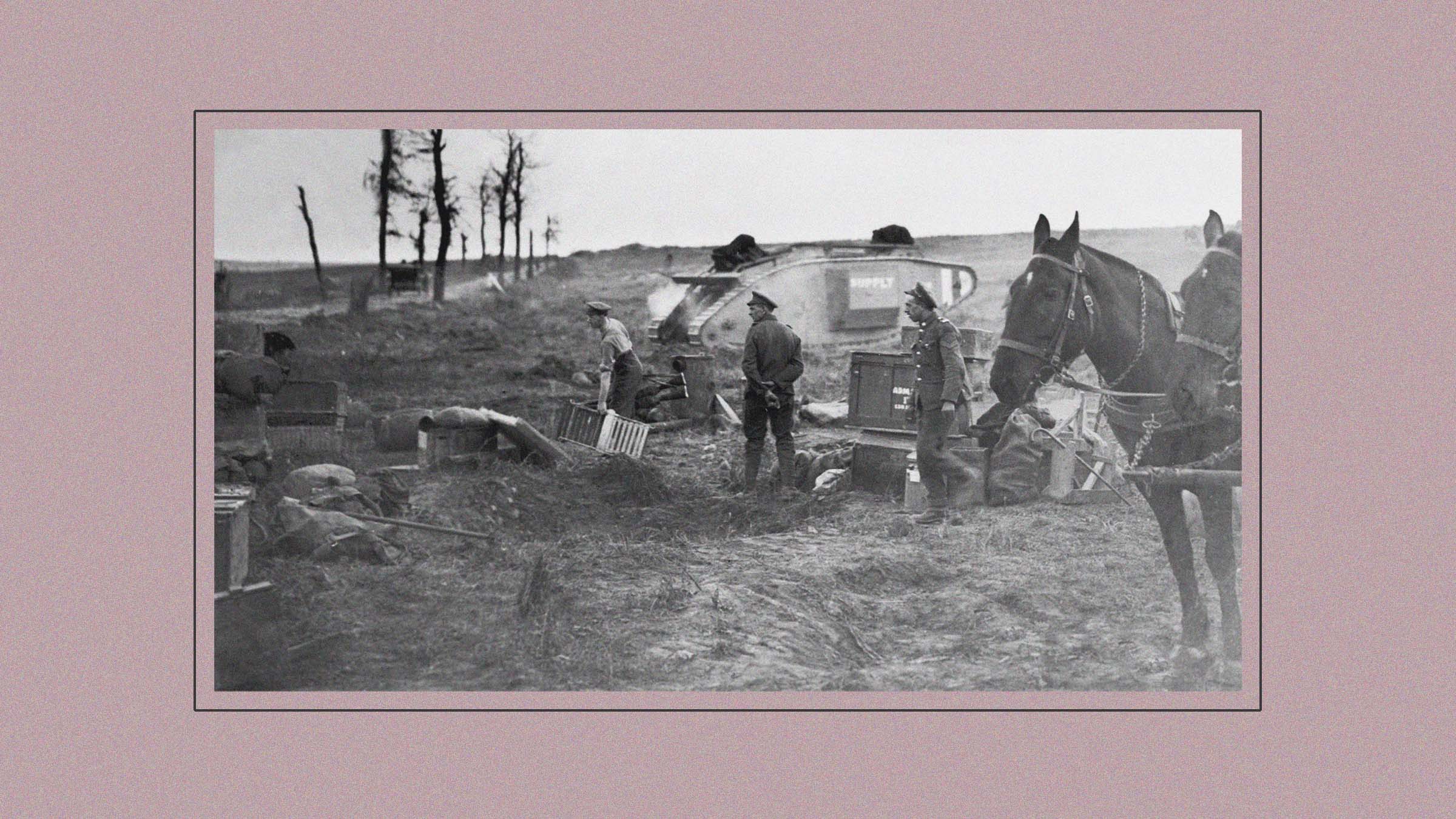
It started by accident, as these things often do. I picked up Geoff Dyer’s The Missing of the Somme in a charity shop last year, mostly because I’d recently read and adored Out of Sheer Rage, another of his books. Somehow I trusted him to make the great war, a topic I’d never been interested in at all, reasonably interesting.
In the end I wept as I read it, and talked about it with friends in the way people discuss their newfound belief in God. Still, I can think of the image, painted so vividly, of the first few times the two minutes of silence were observed on November 11 after the Armistice. I can picture the suffocation of it, the grief reaching for those standing with their heads bowed, together and alone.
A few months later, I realised that his book had awoken an unexpected appetite in me. I knew so little about the world wars, because I just loved skipping school as a teenager and, even when I felt like attending, would usually sit at the back reading the NME. For a long time I both didn’t really care and, to my slight shame, didn’t really care that I didn’t care. History had never been my thing.
The Missing of the Somme had made me ravenous, though. It’d made me desperate to learn more about what happened, but also to find out about the texture of people’s lives while the wars were happening; about what living through those decades felt like. I picked up The Radetzky March, Joseph Roth’s masterpiece, and was floored by it.
The novel chronicles the lives of this family over the 19th century and the beginning of the 20th; as the Trottas slowly stumble and fall, so does the Austro-Hungarian empire to which they were tethered. It transported me into a fast-dying world, and I watched it disappear in front of my eyes. I needed more.
I read Christopher Isherwood’s Goodbye to Berlin, on the last days of the Weimar Republic, and I read Antonio Tabucchi’s Pereira Maintains, taking place in Salazar’s Portugal at the end of the 1930s. It took a lot more time and effort but, eventually, I tackled Ian Kershaw’s epic To Hell and Back, about Europe from the beginning of the first world war to the end of the second.
I moved from fiction to non-fiction and from 1917 to 1941 then back again, and am yet to feel sated. Some of what I’ve read has threatened to cleave my soul in two, but I just can’t stop. I also can’t believe I knew so little about all this, though I am, in a way, glad I chose not to listen at school. This shame over my own ignorance is what led me down this path in the first place, and I feel much better equipped to deal with it all now than I would have been at 15.
Suggested Reading
British teens need to copy the French and get out on strike
I also want to go out into the street and grab people by the shoulders, and try to convince them to do as I’m doing. Our times are odd and awful in a myriad of ways, but they matter specifically because the era of world wars is now moving out of our grasp for good. Most people who even remember the early 1940s have now died; whoever is left will be gone in the next decade.
Once that living memory leaves us for good, what took place in the last century will begin to feel remote enough to be foreign, and harder for us to learn from. It’s an inexorable process, but we ought to at least try to slow it down in its tracks. I feel entirely changed by what I’ve learned over the past year, and think many would benefit from going on a similar journey.
It would also help curtail the influence of ghouls using those painful memories for their own ends. What happened doesn’t belong to them, but to all of us. That’s worth remembering.