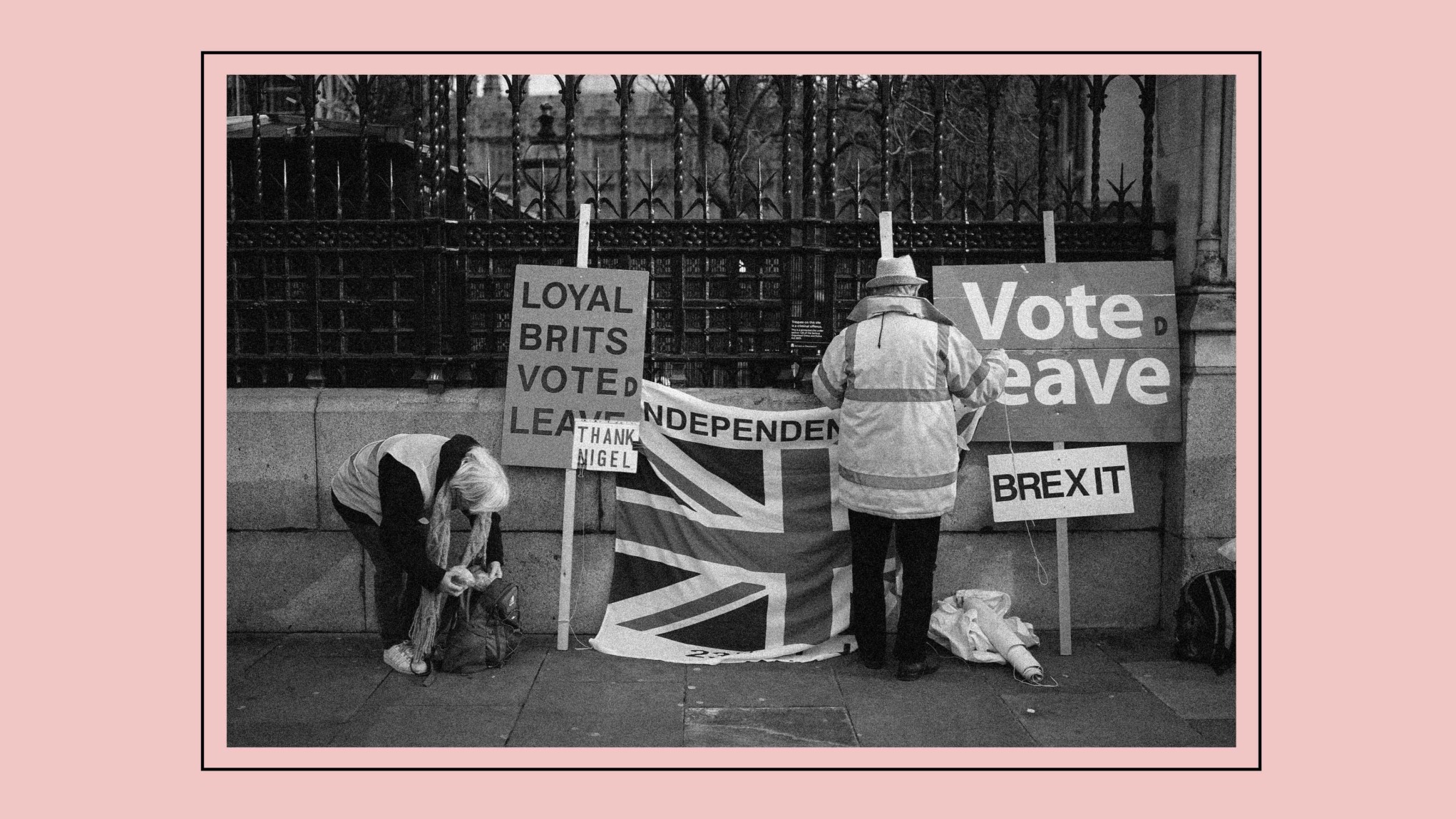
If the Germans have a word for everything then surely they ought to be able to describe, in one elegant jumble of vowels and consonants, the idea of feeling both excited and terrified about the future at the exact same time. Then again, the Germans have never exited the European Union then thought, a decade later, that maybe it had been a mistake after all.
I wept as Britain voted to leave the EU in 2016 and, over time, got myself used to the idea. I thought that we would perhaps join again in my lifetime, but refused to hold on to the hope that it would occur anytime soon. Most of my adult life, I assumed, would simply have to be spent outside the grouping I was born into. Then along came Andy Burnham.
No one really expected him to reach Downing Street, and then he did. No one really expected him to mention the B-word, especially so soon, but he did. As things stand, it is plausible that Britain will once again turn towards Brussels in the next decade; perhaps even earlier.
Of course, I’m delighted. Not everyone who voted for Brexit was evil but, even with the benefit of hindsight, it would be hard to argue that malignant forces weren’t the victorious ones when the results came on the morning of June 24, 2016. That Burnham looked at recent polling, saw that the tide of public opinion had turned, and decided to do something about it should definitely be celebrated.
Still, I find it tough not to scan the horizon and fret about the clouds gathering in the distance. There is currently a majority of people willing to join the European Union again, sure, but a lot of that lead may ebb and flow depending on the details of the deal, and what the media ends up focusing on. I’m just not as certain as others it would be a done deal.
Perhaps most importantly, the long term is what worries me most. A deep ugliness descended on British political discourse in 2016, and we’re yet to fully recover from it. Since then, the once-split Conservative Party has become a pro-Brexit machine, and sits some way to the right of where it was 10 years ago.
Twitter has been bought by Elon Musk, a man who has made it clear that he can and will use his influence to tip the political scales in his side’s favour. GB News exists, and pumps out propaganda day after day after day. The Reform Party was launched and now has multiple members of parliament. To its right, Restore keeps making inroads on boomers’ social media.
The ecosystem simply isn’t what it was then, and every ghoul mentioned above will try their hardest to make sure that Britain stays out of the EU. There is, crucially, no telling how low they would be prepared to go in order to do so.
Suggested Reading

Britain, why have you betrayed me?
Now, that doesn’t mean that the prime minister should retreat and give up on his plans. Are he and his government really, truly ready to fight tooth and claw to protect all of us, though? That’s what keeps me up at night.
Burnham has so far done a better job than Keir Starmer at trying to stamp out the populist right, but a new referendum would require more of a backbone than he’s shown so far. He will need to be on the side of immigrants, minorities, and anyone else targeted by fascists and those who indulge them, even if it damages his electoral coalition.
More broadly, everyone on our side of the debate needs to realise, sooner rather than later, that things may get rather darker before they get light again. Luckily, the Democrats over in the US have shown us very recently that those fights, tough as they might be, are worth it. You just have to be ready to face them head-on.