Saturday Night Live UK was widely expected to fail — and yet, as I wrote with pleasant surprise, the British took what was assumed to be a uniquely American format and, somewhat improbably, rose to the occasion.
Now, the reverse has been attempted. And, I’m afraid to report, it has gone rather less swimmingly.
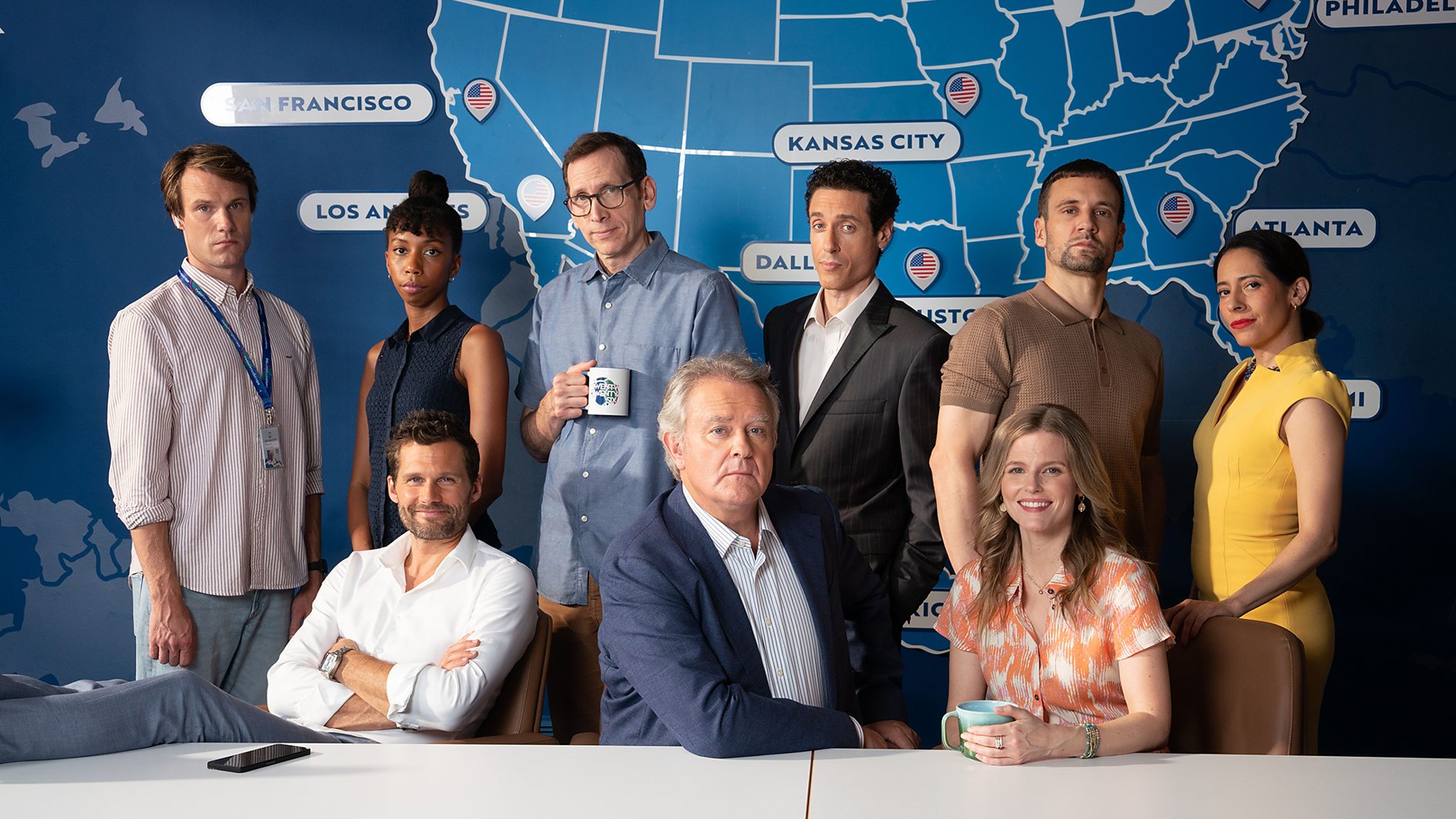
Twenty Twenty Six takes the distinctly British comedy of W1A and transplants it to Miami. Hugh Bonneville returns for a third stint as the quietly overwhelmed bureaucrat Ian Fletcher, now director of integrity for the 2026 World Cup.
He was formerly head of deliverance at the 2012 Olympics in the original series, Twenty Twelve, then head of values at the BBC in W1A, where he competed with meaningless corporate jargon, pointless meetings, and bafflingly inept coworkers.
But while the characters in W1A infuriated you with their complete incompetence, this was always hilarious to watch. The arrogance, ineptitude, and general absurdity of the new (largely American) cast in Twenty Twenty Six make you want to turn off.
That sounds harsh, but put simply, the dialogue isn’t as sharp, the characters aren’t as well drawn, and the jokes don’t land. At times, you’re almost willing the show to be funny.
W1A was never especially biting — it wasn’t expletive-ridden like The Thick of It or quite reached the awkward brutality of The Office — but its gentler, more whimsical satire suited what it was parodying. The BBC, for all its flaws and recent PR disasters, still has something faintly Paddington Bear about it, a well-meaning, if bumbling, institution. When you are parodying a greedy corporation like FIFA, however, you’d think there’d be a little more venom.
That’s not to say everything is lost. The corporate inanity that W1A captured so well are still present: the meaningless job titles, the walls plastered with slogans like “You Are We”, and the endless, circular conversations that say nothing at all. And David Tennant’s narration remains a highlight — he is still just as good as spitting out word salads, pinpointing the ridiculousness of it all. He’ll explain something by saying it’s happening “for reasons that have nothing to do with anything”, or note that someone is simply “ready to be somewhere other than he is”.
So perhaps the issue isn’t just the writing. Perhaps — and this may be unfair — Americans just aren’t as funny when grappling with British material.
Take, for example, the perfection that was The Thick of It: its spin-off film, In the Loop, transplanted the cast to Washington DC and, despite many strong supporting American characters (most of whom were actors from the brilliant Veep), it was simply not as good as the original series.
Twenty Twenty Six suffers much the same fate, only more so.
Suggested Reading

The UK Saturday Night Live is an unexpected hit – and this is why
The clearest example comes towards the end of the first episode, when I was more than ready to throw in the towel — only for a familiar face to appear. Will, played by Hugh Skinner, returns as the hopelessly posh, perpetually agreeable intern (whose entire conversational range seems to consist of “Yeah, no worries, yeah, cool.”) and within moments the show produces its first genuine laugh.
The scene of him trying to onboard with the office’s ‘system’ in the second episode — a painfully recognisable conversation for anyone who has started a new job in the past few years — is easily the funniest sequence so far. Though, it has to be said, that’s a fairly low bar.
Most of the characters feel exaggerated without being especially funny, and in some cases, it’s not entirely clear what the joke is meant to be. The social media team is a low point — their scenes veer toward unwatchable, combining grating performances, inaccurate, annoying Gen Z dialogue, and bad gags.
Perhaps this is because a PR team is supposed to be insufferable – but W1A itself proved this wrong with the fantastic character of Siobhan Sharpe (played by Jessica Hynes), head of Perfect Curve PR. She was vacuous and annoying, but consistently funny.
I have only watched two episodes, but I think the most damning indictment of Twenty Twenty Six is that I feel no impetus to watch another. The hinted romance between Fletcher and the head of sustainability has failed to engage, I have no goodwill towards the new characters, and the strongest moments rely on hangovers from the original series.
If I do keep watching, it will be for one reason only: more of Will. And at that point, you might as well go back and watch Twenty Twelve or W1A.
Twenty Twenty Six is streaming on iPlayer
 Most popular

Trump has devastated Iran – and damaged himself


Here's what Zelensky really thinks of JD Vance
A Green wave is ready to wash away Labour London – and this is why

Exclusive: New Ofcom chair appointed – but will he fix Musk and GB News?