Admit it, you also thought the UK version of Saturday Night Live was going to bomb. It’s in our British nature to brace for the worst, unlike our perpetually upbeat counterparts across the Atlantic.
And, to be fair, we had our reasons.
As someone who was once part of a university sketch group (a fact I’ve worked hard to suppress), I remember the uniquely intestine-knotting horror of a joke dying in real time. That drawn-out, arse-clenching silence. Or worse, the polite half-laughs.
I’m also a long-time devotee of the original Saturday Night Live — much to the confusion of my parents, who find American humour about as funny as the jokes inside Penguin wrappers. I spent my teenage years watching sketches that aired decades before I was born, so I’m well aware of how high the bar is.
I didn’t even watch the UK’s debut episode live. I was convinced it would be awful, in part due to my absolute lack of faith in Sky Comedy and also due to my instinct (informed from experience) that sketch comedy often falls flat when coming out of a British mouth – we just don’t have that same American confidence that can carry a bad joke. And I didn’t want to watch talented comics, like Al Nash, Jack Shep and Ania Magliano, who I’d enjoyed for years, suffer through a very public misfire.
But after the cold open went viral, and other cynics like me, waiting with bated breath for it to crash and burn, were openly admitting on social media that it was not the trainwreck we had anticipated, I rushed to watch it.
Reader, how wrong I had been.
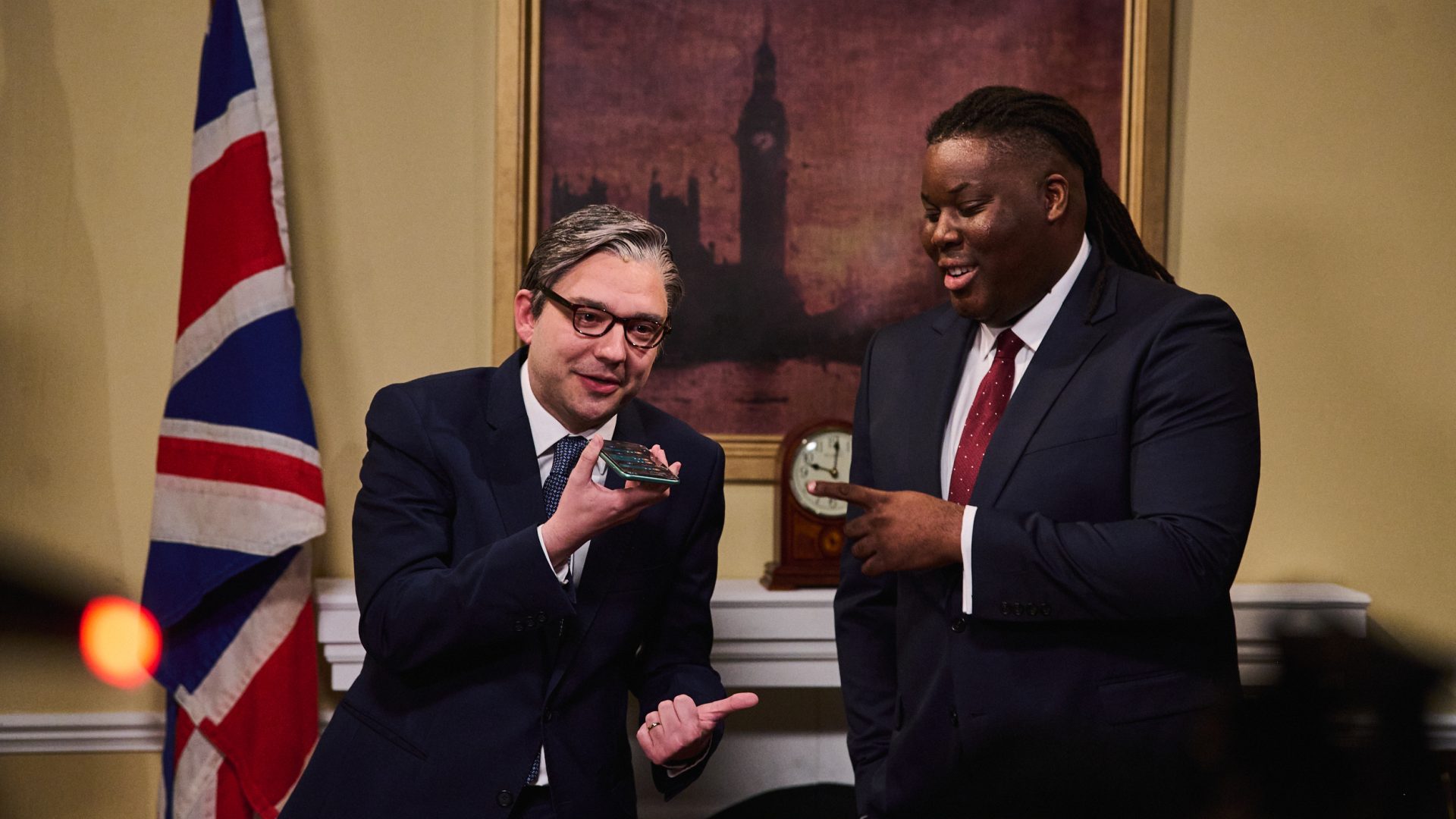
The show was strong from start to finish, stronger I’d wager than its US counterpart has been in recent years. Its cold open, centred around an eerily accurate impression of Keir Starmer taking advice from a Gen Z aide on managing his “special situationship” with Donald Trump via voice notes, sounded like the sort of idea I’d normally dismiss out of hand. But the cast carried it well, especially when Starmer began on a tangent about the TV show Friends. (It’s funnier than it sounds, I promise!)
The sketch spread quickly online and even made headlines after Trump himself shared it on Truth Social — the president seemingly pleased that Starmer was portrayed as trembling, timid, and overly deferential, while missing the fact that he was very much the butt of the joke too.
Trump, of course, has never been shy about his disdain for SNL in the US, – he once described it as “totally biased, not funny and the Baldwin impersonation just can’t get any worse.” The show is famous for its political parodies; Will Ferrell as George W Bush, Darrell Hammond as Bill Clinton, and the first host of SNL UK Tina Fey as the chilling Sarah Palin.
But in recent years, many have begun to note that it has become too political, and that the tone of the show has shifted. As an extremely amateur SNL historian I’d say this diagnosis rings more true for the era of the first Trump presidency, where it often felt like the writers’ sole goal was to upset and provoke the Orange Manbaby. That gets no complaint from me on an ideological level, but to quote comedian Drew Gooden, who provides an excellent analysis on this very topic: “comedy with an agenda is not comedy”.
For me, whileI love SNL for keeping a record of the political zeitgeist using some of the best American comedians of this century and the last, these types of sketches have never been the ones that randomly enter my brain and make me smile years after seeing them. Instead it’s the absurd, escalating, slightly unhinged ideas that spiral into brilliance.
Suggested Reading

There’s nothing clever about comparing Trump to Idiocracy
My favourite SNL era, the late 2000s to mid 2010s, was marked by too many legends to put in one place, but I will try: Bill Hader, Fred Armisen, Kristen Wiig, Jason Sudeikis, Andy Samberg, Amy Poehler, and, of course, the best writer they ever had, John Mulaney. An embarrassment of riches.
The best sketches are rarely political. Meet Your Second Wife, where contestants are introduced to their future spouses — who all get progressively younger until one is a literal foetus. Diner Lobster, a 2018 parody of Les Mis which warns against ordering seafood from a crap restaurant. Steve Martin’s 1978 song about King Tut. Papyrus, from 2017, with Ryan Gosling as a man haunted by the font used in the Avatar credits. I digress, but the point is that in the sheer nonsense of it all – these sketches are the lifeblood of SNL.
Which is why the UK version’s biggest success, so far, is that it seems to understand this.
They may not be what gets the most attention, but they are the core of the show – and I truly hope they don’t let the repost from Trump go to their heads and forget it. We all remember how terrible the remake of Spitting Image was – unfortunately, British politics (and politicians) are simply too dry to get a whole show of jokes out of.
Yes, its cold open was political — as tradition dictates — but everything that followed leaned gleefully into the ridiculous. There was a fake advert for a skincare cream so effective it will get your husband accused of being a nonce, called Underàge. A dream dinner party sketch where the reanimated historical figures spend the whole time figuring out what to order – featuring a hilarious impression of Princess Diana. A deliciously dark and witty Weekend Update.
And my favourite sketch, a parody of the film Hamnet, where Shakespeare keeps returning from London trendier and, to use LGBT Gen Z, “c*ntier”, each time. Honourable mention goes to the instant classic by George Fouracres, who I had not heard of but now adore, as he looks like a young Bob Mortimer: “What kind of Irish is your Grandad?” It’s pure Shooting Stars.
And this is what I should have remembered before preemptively dismissing it! British comedy IS sketch comedy: Monty Python, Mitchell and Webb, League of Gentlemen! So perhaps I too will take a lesson from our glass-half-full American cousins, and hold off on sneering — especially at a country that’s been getting this right for decades.
 Most popular

Screen scandal: How Ofcom lets GB News get away with it
GB News Scandal: Read our dossier of their flagrant Ofcom breaches

Iran has killed off Reeves’s fiscal rules. Here’s how to radically rewrite them
Trump’s Iran war is becoming a fundamentalist Christian crusade