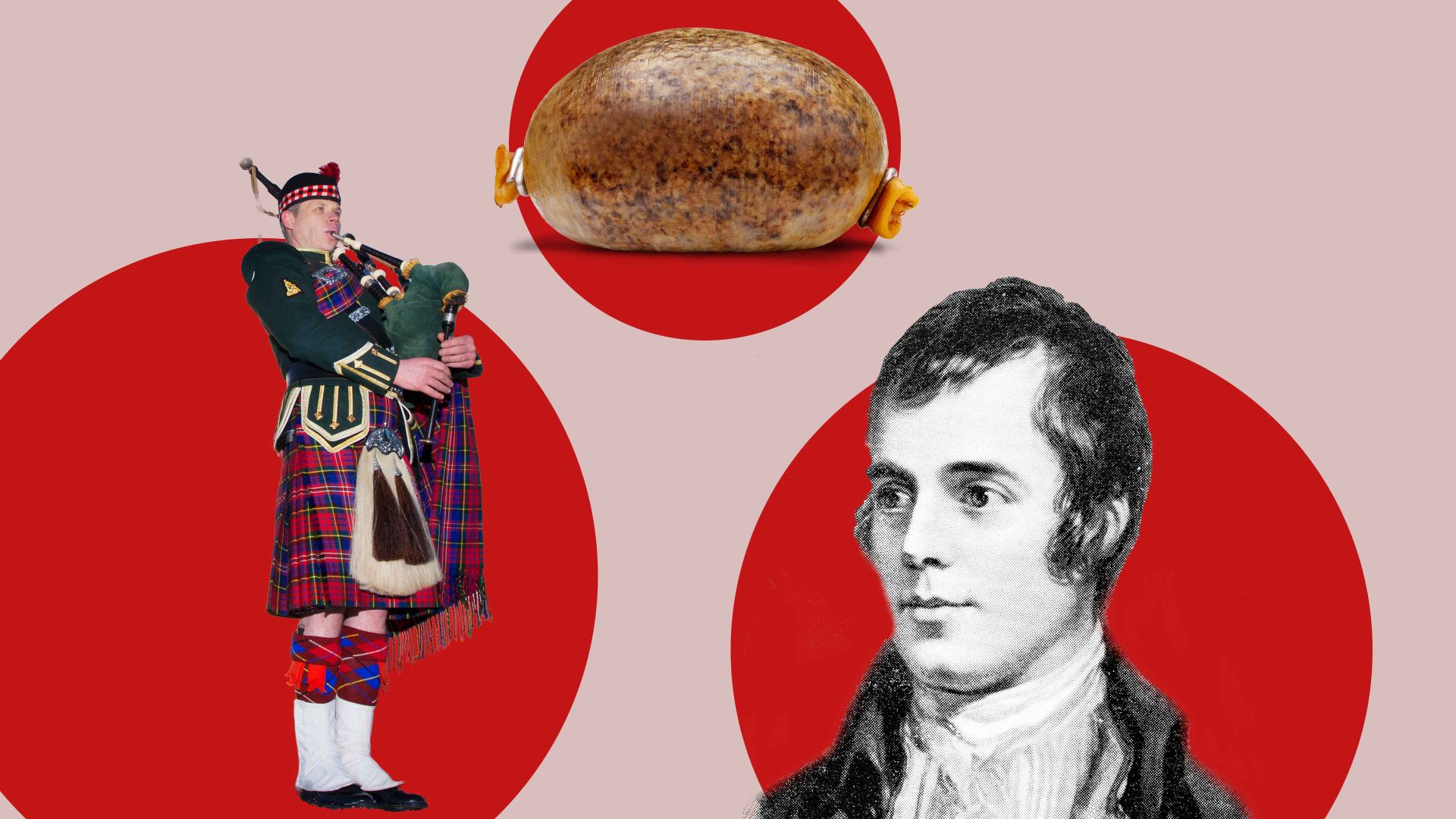
1. Patriotic Scots, and also people who just like haggis or whisky, commemorate Burns Night every January 25. In honour of Scotland’s national poet – at what is, let’s be frank, otherwise a low point of the year – they gather with friends to eat a traditional supper of haggis, neeps and tatties while reciting the great man’s work.
2. Robert Burns – or “Rabbie Burns”, as he’s sometimes known in the Scots dialect which he favoured – was born in Alloway, Ayrshire, in 1759. Although he’s remembered as a poet, lyricist, and mainstay of the Scottish Romantic movement, he also tried his hand as a farmer (it didn’t go well), as a “flax-dresser” (something in the linen industry), and as an exciseman (which is at least slightly ironic, since it would have meant taxing the sort of stuff people now drink in his memory).
3. In 1786, Burns also accepted a job helping to manage a slave-run sugar plantation in Jamaica which, hmmm. Thankfully for his modern reputation, he changed his plans after publication of his first collection – Poems, Chiefly in the Scottish Dialect – made him a literary superstar, aged just 27.
4. There’s one example of his work you’re familiar with, even if you don’t realise it: Auld Lang Syne, which the Guinness Book of World Records recognises as one of the three most frequently sung songs in the entire English language. (The others are For He’s a Jolly Good Fellow and Happy Birthday.)
5. It’s not just popular in English, either. 友谊地久天长 – which as you don’t need me to tell you, is pronounced “Youyì dì jiu tiāncháng” and means “Friendship Lasts Forever” – is a mainstay of Chinese New Year’s Eve parties, graduation ceremonies and other celebrations.
6. Other examples of Burns’s influence include the title of John Steinbeck’s classic 1937 novel, Of Mice and Men, from a line in the poem To a Mouse (“The best laid schemes o’ mice an men / Gang aft agley”); and that of JD Salinger’s 1951 novel The Catcher in the Rye (from another poem, Comin’ Thro’ the Rye). Bob Dylan, meanwhile, has claimed his greatest source of inspiration was Burns’s A Red, Red Rose.
7. The work you’re most likely to hear over the Burns Night Supper though is the Address to the Haggis, spoken directly to the savoury pudding of sheep’s innards (don’t ask), minced with onion, oatmeal and seasonings, traditionally – though not so often these days – encased in the animal’s stomach. It is, despite these unpromising ingredients, delicious, and should ideally be served alongside neeps (known down south as turnips or swedes) and tatties (potatoes), both mashed.
8. A stuffed wild haggis can be seen in Glasgow’s Kelvingrove Museum, a cuddly, but unfortunately mythical, highland beastie with long brown hair. Some tellings suggest such creatures have legs longer on one side than the other, to enable them to move faster round mountains – which I’m sure they would, if they were real.
9. Finally, the first Burns Night was held by a small group in Greenock in July 1801, to commemorate the fifth anniversary of the great man’s death. The following year, it was moved to January 29, four days after his birthday, which surely raises questions about quite how good these so-called friends really were. But the tradition then established caught on nonetheless – and the Greenock Burns Club calls itself the Mother Club to this day.
Suggested Reading

Nerd’s Eye View: 11 things you need to know about talking animals
January 25, 1759
Robert ‘Rabbie’ Burns born in Alloway, just south of Ayr
July 21, 1796
His death at the tender age of 37
Jul 21, 1801
First Burns night supper held in Greenock