
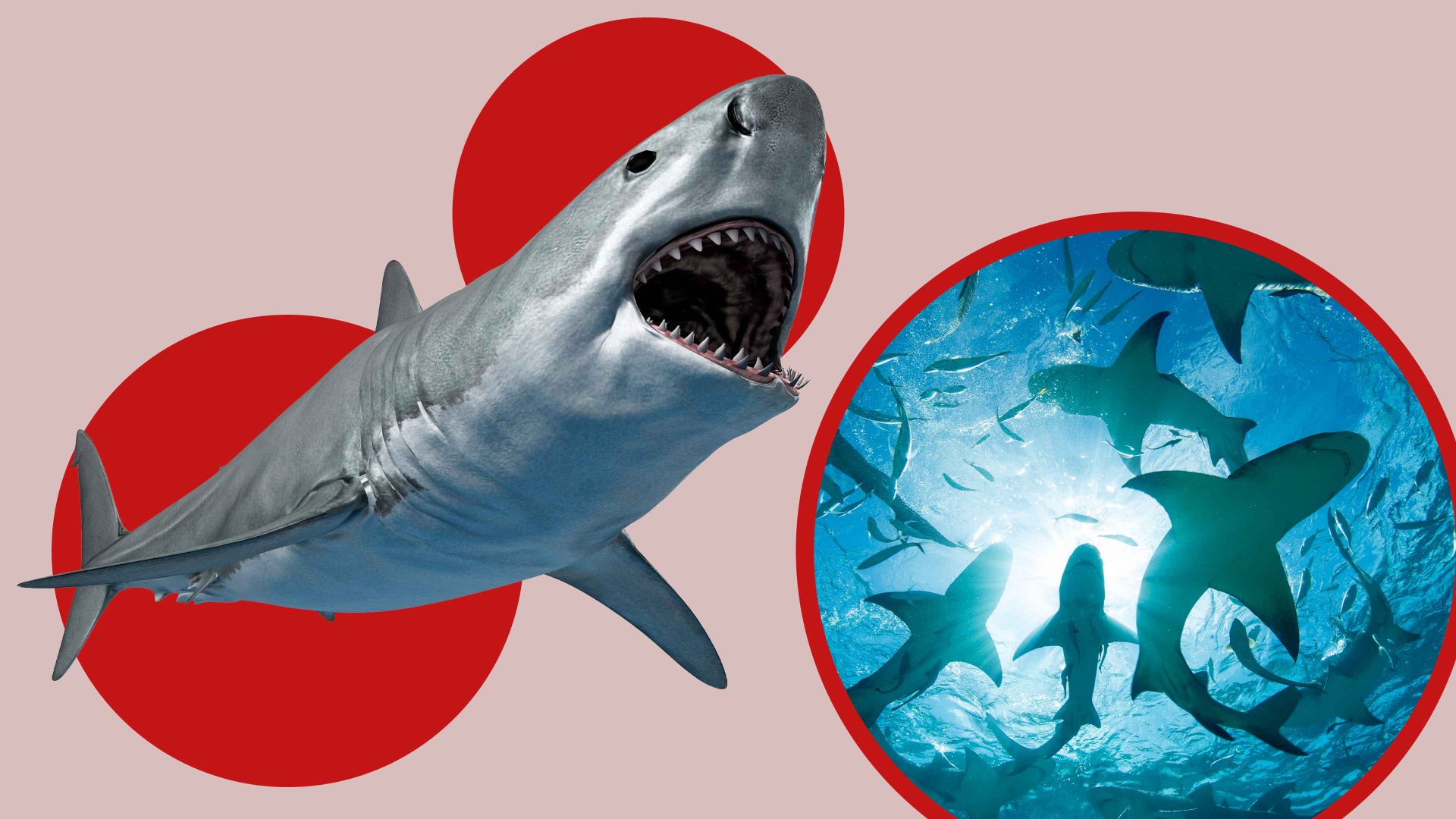
1. Sharks have multiple rows of teeth, which move forward on a sort of conveyor belt and – luckily for the sharks, though perhaps not for those nearby – grow back when lost. That means a shark can run through literally tens of thousands of teeth in its lifetime – a brilliant innovation that could really sort out the NHS dentistry crisis.
2. They not only have incredibly good eyesight, but also a sensory organ we don’t have. The black spots on their face, known as ampullae of Lorenzini, allow them to spot electrical fields. More bad luck for their prey.
3. It’s a measure of how well adapted sharks are to life in the world’s oceans that they’re one of the oldest still extant species on Earth. The first evolved around 400 million years ago, nigh on three-quarters of the way back to the Cambrian explosion (the point when most non-microscopic forms of life first appear in the fossil record). That makes them older than dinosaurs and – this is really unnerving – trees.
4. Despite that, we don’t really have fossils, because their skeletons are not made of bone but cartilage. We know they were there because of fossilised shark teeth, plus the odd vertebra.
5. It’s not quite true that sharks have to keep moving forward or they will suffocate: some species do, but some can simulate the movement by opening and closing their mouth, thus pushing seawater over their gills.
6. Their skin apparently feels similar to sandpaper – though how anyone got close enough to find that out is an open question.
7. Some of the odder sharks include the goblin shark (bright pink), hammerhead shark (sticky-out eyes to give a wide field of vision), and cookie-cutter shark (a jaunty name for something that leaves a distinctive pattern when it bites you).
8. Sand tiger sharks gestate multiple embryos at once. The first to hit a certain size will eat the rest. Lovely.
9. One of the largest and most famous shark species is the great white. It can grow up to five metres long and two tonnes in weight, a full quarter of which can be liver. (This helps store energy for lean times and also, in the absence of a swim bladder, provides buoyancy.) They’re also unusual in being warm-blooded, enabling them to move faster.
10. Despite being apex predators, they are sometimes eaten by orcas. Bummer.
11. Britain’s largest native fish species is the basking shark. It’s about the size of a double-decker bus – pretty impressive, when it mainly eats plankton.
12. In fact, despite occasional tragic incidents, sharks actually kill remarkably few people – an average of around six a year worldwide – and you’re more likely to die falling into a hole you’ve dug in the sand than you are to die in a shark attack. In fact, there are plenty of recorded incidents of sharks biting people then spitting them out.
13. Much of the credit for our overestimation of the threat they posed must go to Steven Spielberg’s 1975 cinematic classic Jaws, whose producers briefly considered training a real great white shark, presumably before anyone pointed out that this was the sort of thing that could plausibly go wrong.
14. The animatronic shark they used instead was not, despite what Jez from Peep Show thought, named Jaws: Spielberg actually named it “Bruce”, after his lawyer.
15. Certain Pacific island cultures recognised sharks as gods, or possibly the reincarnation of their ancestors. Sure. Why not.
16. Of the over 500 species of shark, 143 – nearly a third – are recognised as under threat. More than a dozen are classed as critically endangered.
Suggested Reading


Nerd’s Eye View: Eight things you need to know about removing a mad king
410 million years
Age of the oldest shark-like teeth in the fossil record
380 million years
Age of the oldest species that would be immediately recognised as sharks
Over 12m
Approximate length of the whale shark, the largest species of shark (and fish), which can weigh up to 20 tonnes
5-6
Number of people killed by sharks in a typical year, from around 70-80 unprovoked bites