1. The idea of a fixed link beneath the Channel – the first dry route between Britain and the continent since the drowning of Doggerland more than 8,000 years ago – goes back a surprisingly long way. French mining engineer Albert Mathieu-Favier proposed a two-level road tunnel as far back as 1802, complete with oil lamps and an artificial mid-Channel island for the changing of horses.
2. Alas, 1802 was not a great time for Anglo-French relations, thanks to the whole Napoleon thing, so the idea was shelved. As late as 1883, actual exploratory work was abandoned because of military fears that a tunnel could assist in a potential invasion.
3. A century later, such fears had been rendered out of date, less because of peace in Europe or the entente cordiale than because of the invention of aerial bombardment. So in 1986, Britain and France signed the Treaty of Canterbury, paving the way for the new tunnel and placing the land frontier in the middle of the Channel.
4. Rejected ideas for the new link included the “Channel Expressway” road tunnel; a 35km suspension bridge (5km spans, roadway in a tube) named “Eurobridge”; and “Euroroute”, a 21km tunnel between artificial islands, connected to the land by bridges, in a manner not dissimilar to the Swedish/Danish link across the Øresund today.
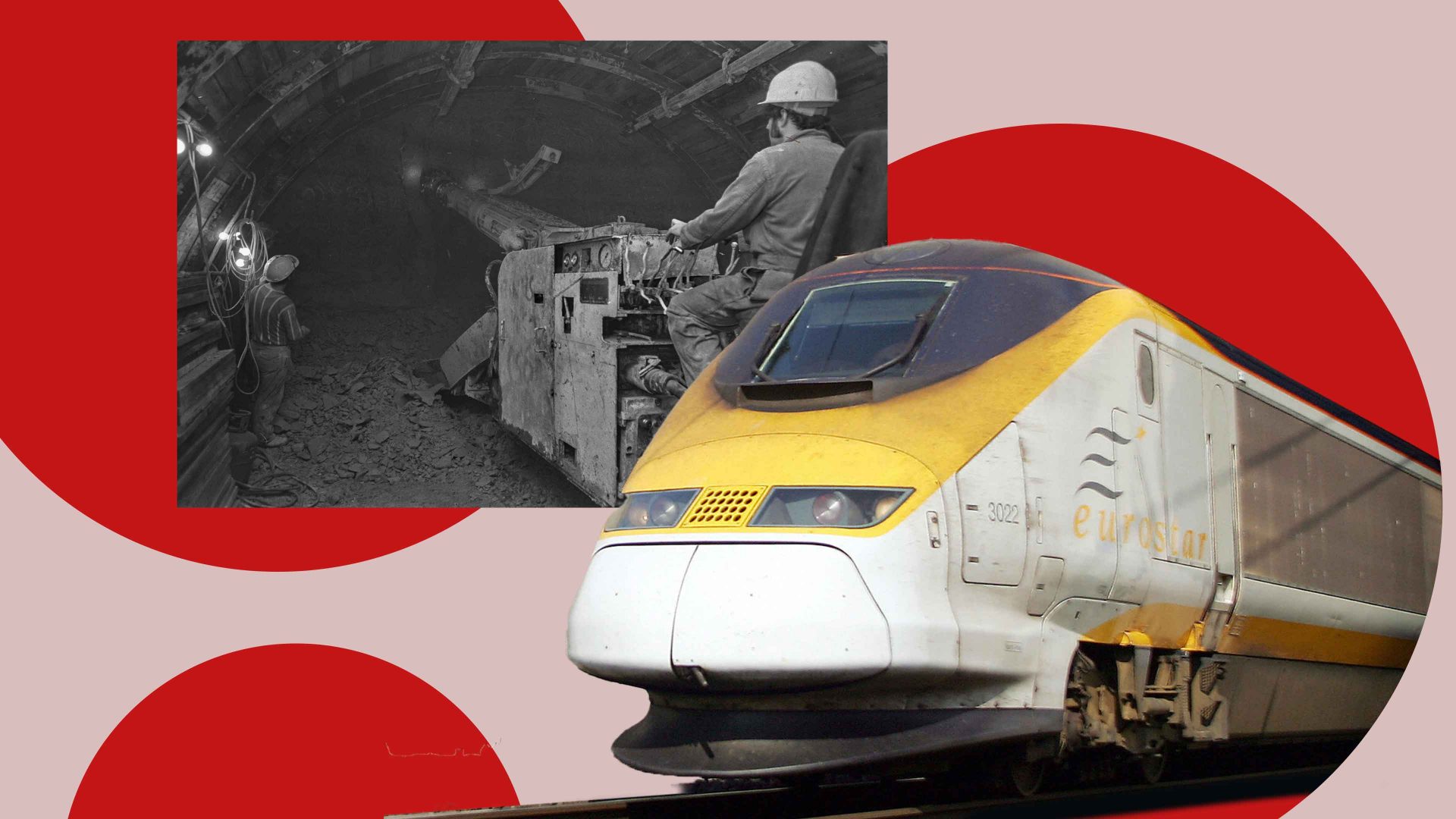
5. The new tunnel was dug simultaneously from both ends, with the first breakthrough between the two happening on October 30, 1990. The event was re-staged for a media photoshoot, a month later; the first “person” to symbolically cross the Channel was a cuddly Paddington Bear.
6. The first actual passenger trains ran in November 1994: from breaking ground, the project had taken just five and a half years to complete.
7. Today, the tunnel is used by freight trains; LeShuttle services, which carry road vehicles; and Eurostar high-speed passenger services, whose London terminal moved from Waterloo to St Pancras International in 2007.
8. At present they speed through three other “international” stations that are not served by international trains. Two of these – Ebbsfleet International and Ashford International – were once, but have lost their services due to changes in demand since the pandemic and Brexit.
9. The third, however, has never been served by such trains at all. Stratford International was once expected to be the London stop on regional Eurostar services to the Midlands, north and Scotland; night trains could have run to Plymouth or Cardiff, too.
10. It never happened, thanks to a combination of rail privatisation and the onset of cheap flights. There’s a sad-looking “Manchester International Depot” in Longsight for the same reason.
11. Another issue is that British immigration law requires passports to be checked before boarding, and the physical space at St Pancras limits the speed of such checks.
12. Proposals to expand services to extra destinations in Europe have sometimes floundered for the same reasons: stations on the continent have thus far declined to make the infrastructure investments necessary to persuade the Home Office they are safe destinations for trains from London.
13. The result is that, although there’s capacity in both the tunnel and the platforms, the tunnel has never reached its full potential, and announcements of new cross-Channel services come around a lot more often than the services themselves.
14. Although the 50.5km Channel Tunnel is the longest undersea rail journey in the world, by the way, it’s only the third-longest rail tunnel. The Seikan Tunnel between Honshu and Hokkaido is 53.9km (though its undersea section is significantly shorter than the Chunnel’s). The Gotthard Base Tunnel tops the lot at 57km – though there the barrier is not the sea, but the Alps.
Suggested Reading

Nerd’s Eye View: 16 things you need to know about sharks
May 6 1994
First official passenger train
November 14 1994
First publicly-accessible passenger train (that is, one not carrying the Queen); freight and lorry shuttle services had already begun
50.5km
Length of the tunnel
75m
Greatest depth
5 years, 5 months
Total construction time