“The Establishment is largely unchanged. Nothing changes in this universe. They continue to live in their big houses, shop in the malls, eat in smart restaurants.” In My Neighbour, The Dictator, a captivating memoir of her teen years in Suharto’s Indonesia after the military takeover of 1965, Tari Lang shines a fresh light on the banality of evil.
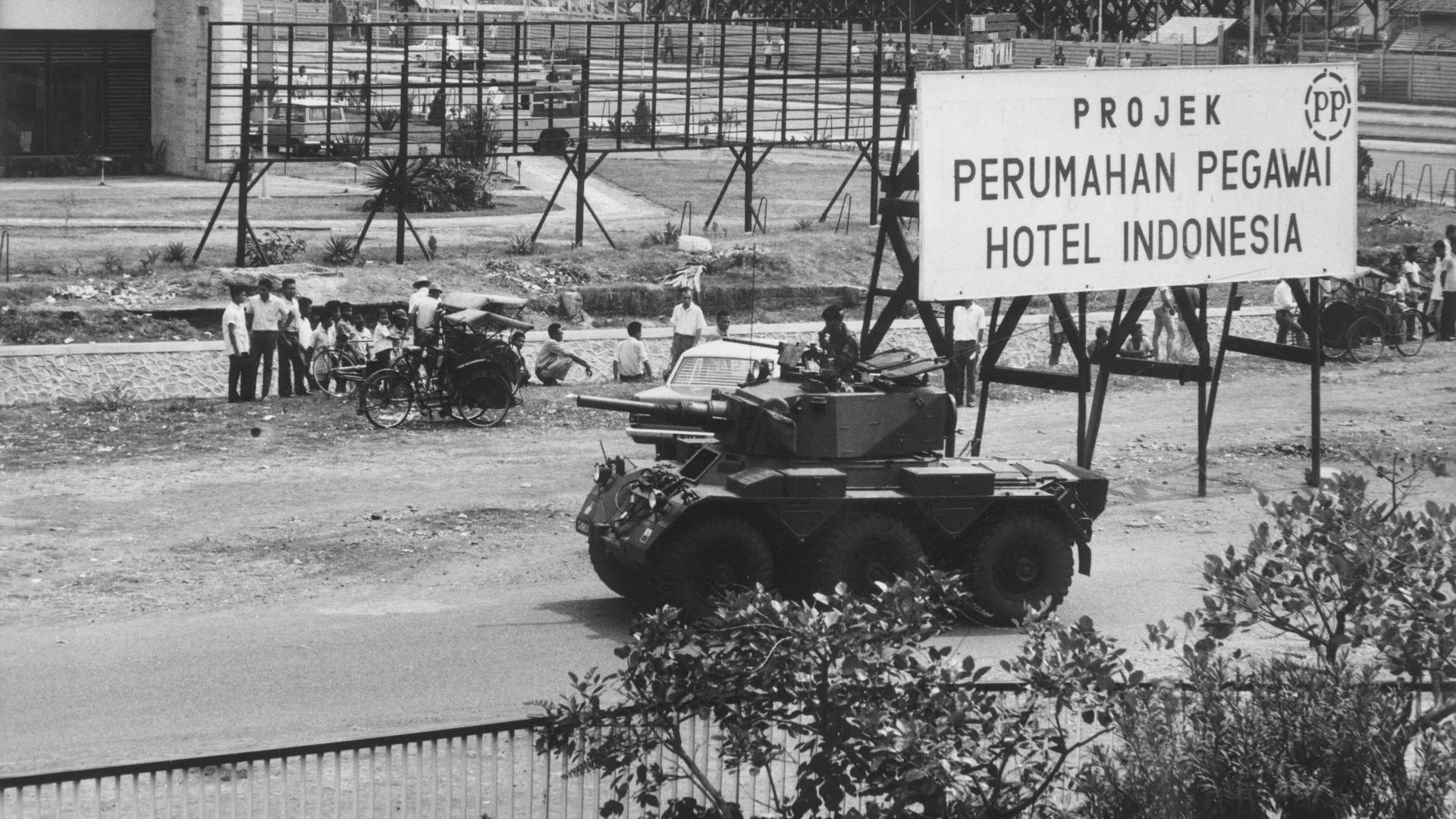
She was 14 when the tanks came to the front door and the soldiers came for her parents. Her father spent most of the next 13 years in jail, her mother a shorter time, for being “left wing”, which they were, and for being subversive, which they weren’t. (He was a deputy minister in the Ministry for Maritime Affairs; she was an official in the Foreign Ministry).
All the while, the Americans, Brits and the rest of the west were happy to turn a blind eye. After all, this was a fight against the Reds. Meanwhile, over more than three decades, Suharto’s regime killed over half a million people. Some were executed; some were “disappeared”. Many more were beaten and broken. This memoir serves as an important reminder that most people are eminently adaptable to authoritarianism.
Lang’s upbringing was anything but conventional. She was born Tari Budiardjo in Prague to a British mother and Javanese father, a Jew and a Muslim brought together by the naive optimism of early Soviet-era communism. Her mother then moved to a country that she knew nothing of, but quickly became a focal point of Jakarta’s intellectual, international set.
“My mother was defined by the campaigns she ran, the injustices she fought, and the confrontations she sought with those in power,” Lang writes. “Any interest she might have had in traditional family life, money or power, dissipated into thin air.”
With both parents imprisoned without trial, this 14-year-old was left in the hands of servants and aunts, having to bring up her younger brother on her own. She divided her time between home, her Catholic school, where the girls talked about fashion, makeovers and music, and delivering packages to activists hiding in safe houses in kampung, traditional villages.
It was hard to distinguish members of the underground movement from informers, “so we need to tread gingerly. We must trust no one.” Inevitably, she too was rumbled and thrown into jail, before her mother (in one of the periods when she was free) harangued guards to secure her release.
Lang spent much of her time visiting her parents, held in separate facilities. The jails were so overflowing with political prisoners that the authorities were always building makeshift holding camps. She would recognise certain people “intimidated into fear, faces full of laughter and confidence reduced to bruises, soldiers looking down on squatting prisoners, always with truncheons or guns in their hands”.
Suggested Reading

Germany wants answers from Andy Burnham
None of this was reported in the domestic media, and very little reached the wider world. “The shutdown was so immediate, so efficient, we hardly noticed it,” Lang writes, and in words that echo today, she talks of “the power of images, the power of controlling the news, hand in hand with the power of the gun”.
Lang was allowed to move to the UK, where she completed her education. Her parents were eventually released after her campaigns and settled in Britain too, but the strain of all the time imprisoned and apart took its toll. They split up shortly after.
Decades later, Lang and her husband, Brian, are paragons of the British establishment – he was CEO of the British Library and rector of St Andrews University, she a doyenne of Scottish cultural institutions. Until publishing the book, she had rarely talked publicly about her “other” life.
As for Suharto, with the economy ailing and corruption rampant, he eventually stepped down in 1998 and died in 2008. The country is now run by his former son-in-law, who in November last year awarded him the posthumous status of national hero. Very much in keeping with these Trump-Putin times.
My Neighbour, The Dictator by Tari Lang is published by Monsoon
John Kampfner is the author of the bestseller Why the Germans Do it Better, Notes from a Grown-Up Country