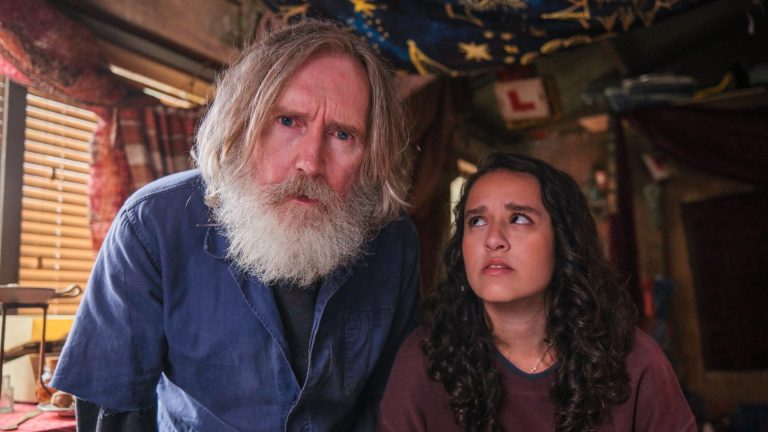
Alan Bennett once observed that most institutions are actually for someone other than their ostensible recipients. (I think he was peeved at a hotel receptionist.) Hospitals are for doctors and administrators and not for patients. Schools are for teachers and administrators and not for students. Film Festivals are for sponsors and administrators, critics and publicists, and not for their films. If all the film festivals in the world disappeared tomorrow, cinema would be fine.
I was thinking about this as I watched the closing ceremony of the 76th Berlinale Film Festival. The most contentious and controversial film festival I have ever attended ground to an exhausting, shambolic conclusion with flags waved and shouting from the auditorium.
The trouble (if you haven’t been following) centres around the festival’s reaction to the Israeli action in Gaza following the monstrous attack of October 7. There have been a notable lack of statements of solidarity – in sharp contrast to its reaction to the Russian invasion of Ukraine. In 2005, the festival itself was attacked in the Bundestag and by the mayor of Berlin when No Other Land, which shows the destruction of a Palestinian community in the occupied West Bank, won the documentary prize, and two of its four directors Basel Adra and Yuval Abraham – a Palestinian and an Israeli – called for an end to occupation and the dismantling of what they called an apartheid state. The mayor called the ceremony anti-Semitic; festival director Tricia Tuttle rebuffed the criticism.
This year, the first flare-up happened when jury president Wim Wenders offered either a meditative or mealy-mouthed response to the question about the festival’s response to the plight of Palestinians, essentially saying that cinema is “the opposite of politics.”
Arundhati Roy pulled out. An open letter signed by 81 former attendees and prizewinners, including the likes of Tilda Swinton and Javier Bardem, called on the Berlinale to support the Palestinian cause and to work against the censorship they believed was taking place. Stars were asked where they stood on the letter.
Ethan Hawke bristled at what he perceived as an agenda. Channing Tatum claimed he’d not heard about anything, as a pro-Israel journalist shouted down the question. The team behind Uchronia premiered their film about Queer antifascism with a banner that read “Fuck off Wenders, Cinema is Political.” Tuttle, an American former director of the London Film Festival, issues a rebuttal. And everyone insisted this was a safe place to speak as long as we didn’t speak about this.
In the final ceremony, Chronicles of a Siege won the best debut film prize and director Abdallah Alkhatib, wearing a keffiyeh and holding a Palestinian flag said: “We will speak about politics before cinema. We will speak about resistance before art; about freedom, before duty, and about a human being before culture. The long-awaited day is coming.”
He added that Palestine would remember those who remained silent. As shouts erupted in the auditorium, host Désirée Nosbusch was visibly upset as she twisted herself into a pretzel, assuring everyone this was a safe place to speak, but please…
Wenders then came out to give a speech, introducing it by sitting on the corner of the sofa with his fellow jury members and saying: “We need to have a talk”, like a parent who was not angry, just very, very disappointed. The bulk of the speech was essentially a call on “activists” and filmmakers to be allies, and for the language of cinema, the internet and politics to be used in a way that was compassionate. It was avuncular, considered and patronising.
We had just witnessed a filmmaker, Alkhatib, who is undoubtedly also an activist and whose activism is at the core of his art. Wenders never once uttered the words “Gaza” or “Palestine” or “Israel.” It was like the “Don’t Mention the War” episode of Fawlty Towers, post-head injury.
Winning for her short film Someday, a Child, Marie-Rose Osta declared: “If this award means anything at all, except that it’s going to make me a very happy person, let it mean that Lebanese and Palestinian children are not negotiable.”
Thank God for films, though. Films have a way of answering their locations, the way art can reach out of its context and challenge not only spectators but also the filmmakers that make them, the festival directors, jury presidents.
Suggested Reading


The Berlin Film Festival’s cowardly retreat over Gaza
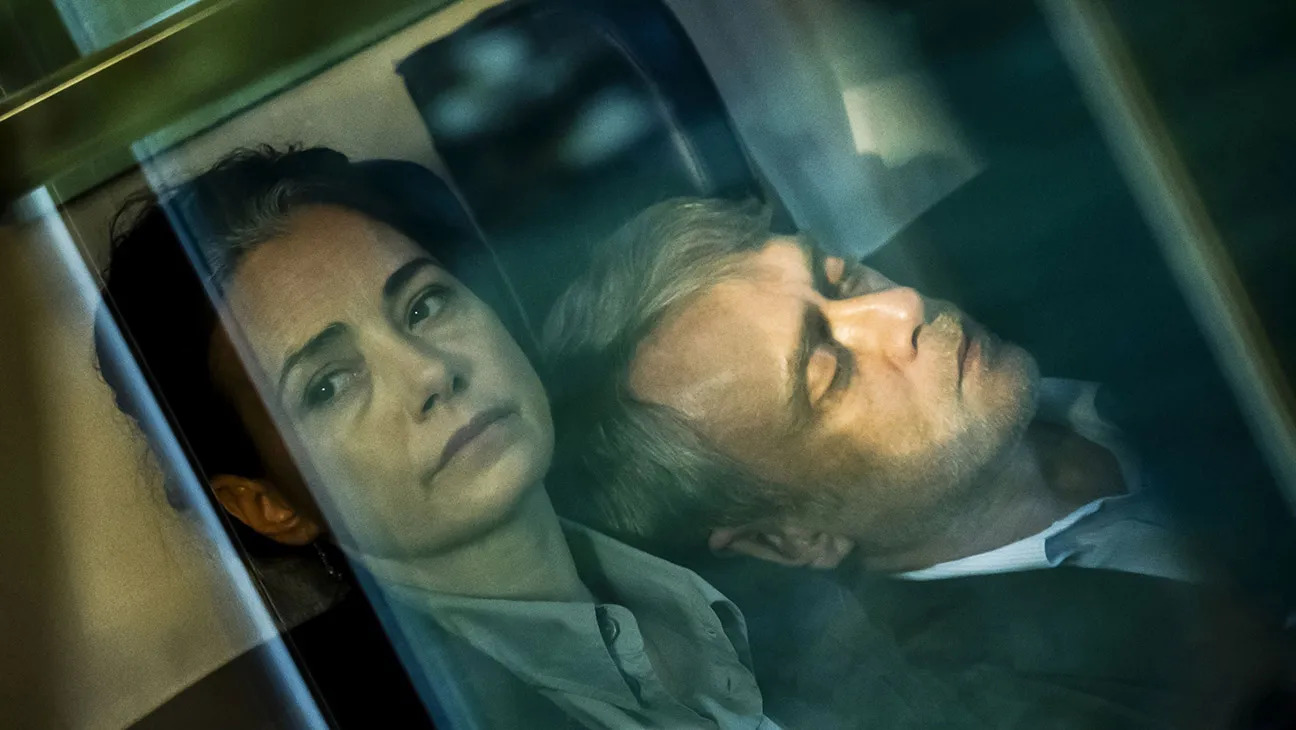
Think about how Chinatown is the best depiction of the nexus of corruption and sex, directed by that corrupt individual Roman Polanski. Or how Triangle of Sadness punches Cannes in the face even as it wins the Palme d’Or. So it was with the Golden Bear this year, which was awarded to Yellow Letters, a film by Teacher’s Lounge director İlker Çatak.
In a daring innovation, Çatak casts two German cities to play two German cities: Berlin as Ankara, Hamburg is Istanbul, with screening titles declaring such intermittently.
Derya (Özgü Namal) and Aziz (Tansu Biçer) are comfortable and middle class. He’s a playwright and lecturer; she is a celebrated actress, appearing – as the film opens – in her husband’s latest play. They’ve been complacently critical of the government without their opposition ever impinging on their lives.
Aziz tells his teenage daughter that theatre can change the world, to her snorts. encourages his students to learn dramaturgy by witnessing first-hand the “theatre of the State” at a demonstration taking place during class time. Derya passes on a photo-op with a local politician.
But the government is tightening its authoritarian grip, and such gestures are no longer to be tolerated. A court case is brought against Aziz, and he loses his job at the university; the theatre will no longer perform his plays and Derya is fired. Moving from Ankara/Berlin to Istanbul/Hamburg, the family experience a drop in financial security and comfort.
Aziz must work as a taxi driver, and they have to put up with help from their families, which nobody wants to do. And their daughter is beginning to act out, revealing an old-fashioned patriarchal strain in both of them.
Suggested Reading


The Gaza war comes to the Berlin film festival
The dilemma is so acutely relevant to the last ten days of the Berlinale, one can’t help wondering what the jury was thinking. It’s as if their mouths didn’t know what their eyes were seeing.
This is a film about what costs you are willing to pay in order to speak out for what you believe in. When do you decide to remain silent? What red line will you refuse to cross? What compromise will you make?
As artists, Aziz and Derya want to be celebrated, adulated, paid. They also want their daughter to go to private school and that’s expensive. If Derya does a (non-)political soap opera that will get them out of their hole financially, but the show also promotes values of materialism and apathy that she deplores.
Yellow Letters is the film which the Berlinale needed. It doesn’t denounce Aziz and Derya – it has a compassion and understanding for them – but it also shows the limits of a bourgeois mouthing of platitudes which has no stomach for the actual fight.
I have been very vocal in my position on Gaza here, but I have not paid any price – so far – for these statements. I’ve sacrificed nothing. I’ve not been tested the way Aziz and Derya are. The Berlinale has been and it largely failed, but its failure and its struggle is instructive. Anyway: Free Palestine.
John Bleasdale’s novel Connery is published by Plumeria
 Most popular

Iran war: It’s time for Europe to become a superpower


Yet another Brexit prediction turns to dust

Attacks on Iran: this is going to spread


Dear Matt Goodwin, why are you such a bad loser?