I fucking hate awards season. I was trying to come up with something Wildean and sophisticated, but honestly: why bother? I hate the red carpet. I hate the “who wore what?” I hate the talk of favourites and snubs. I hate the speeches, the “roasts”, and most of all I hate that goddamn shite of the glambot camera.
We are now in the belly of the beast, with the Baftas and Oscars looming large, but it actually begins in November with the Gotham Awards, the Governors Awards and the People’s Choice Awards. In December, we have the Los Angeles and the New York Critics Awards, as well as the National Board of Review. The Independent Spirit Awards are in there somewhere, but I can’t remember when.
January hots up with the National Society and Critics’ Choice Awards as well as the Golden Globes, the Screen Actors and Producers Guilds and Trifecta Awards. February and March is clogged with everything from the Baftas and Directors Guild of America Awards, to Nickelodeon Kids’ Choice Awards, Writers Guild and finally the Academy Awards, also known as the Oscars. Funny story: the Oscars got its name from Oscar Wilde, who personally helped me craft the first sentence of this piece.
Then in April, every single film that we see throughout the year is written, cast, filmed, edited and scored just in time for the Cannes Film Festival in May, which sets off the festival season (which actually started in February in Berlin). The festival season is basically the awards season but with more subtitles, and by the time we get to Venice and Toronto International Film Festivals – both of which are seen as great launching pads for awards hopefuls – we are in time for awards season beginning in November, which, as I’ve already established, I blinking well hate. Flipping heck, as my mum would say.
“But isn’t it all just a lot of fun?” a courageous reader might offer. To which I would reply “no”. Yet the wordcount demands I elaborate.
Far from being a celebration of the cinematic arts or whatever flummery the hosts mouth about dreaming with our eyes open, and bringing the world together in peace and harmony, watching awards ceremonies just reminds me of the old Marxist maxim: “The ruling ideas of any epoch are the ideas of the ruling class.”
So the films that win the Oscars are the films of the ruling ideas of the ruling class. The ridiculous misnomer of the Academy only serves to underline the hopeless middlebrow nature of the choices.
We address racism, but from the point of view of white people in films like The Help, Driving Miss Daisy or Green Book. Not Spike Lee, or Jordan Peele. Homosexuality from the point of view of straight actors and directors in Brokeback Mountain, Dallas Buyers Club and Philadelphia.
Let’s look at divorce from the point of view of the husband in Kramer vs Kramer. Or the midlife crisis from the point of view of the husband played by Kevin Spacey in American Beauty.
We see history as the Biography of Great Men – Braveheart, Amadeus, Gandhi, Oppenheimer – and war from the point of view of how upsetting it is for Americans to kill people in poorer parts of the world – The Hurt Locker, American Sniper, Platoon and The Deer Hunter. There are exceptions, but for every Moonlight there’s a plethora of Crashes; for every Unforgiven there are several Oliver!s. And 2001: A Space Odyssey wasn’t even nominated for Best Picture the year Oliver! won.
And then there are the moments. James Cameron remembers the tragedy of the Titanic by asking for a moment’s silence, and then breaks it himself, shouting “I’m king of the world”, quoting from his own movie. John Travolta introduced Idina Menzel like he was trying to cheat at Scrabble. David Letterman thought it was a joke to repeat Oprah Winfrey and Uma Thurman’s first names a few times because… funny.
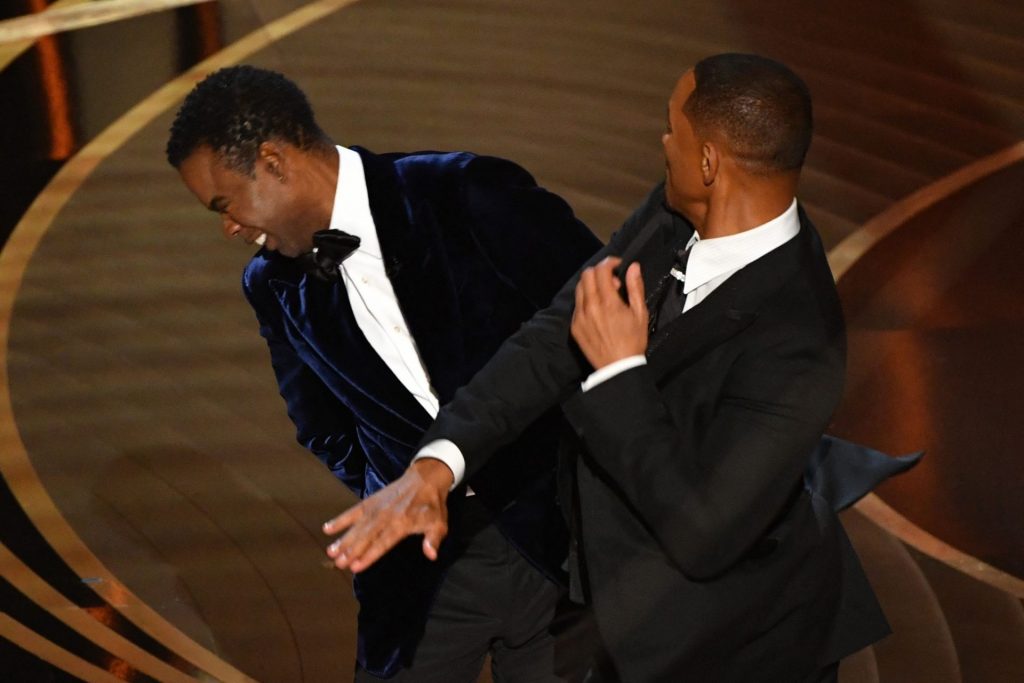
Then there was Adrien Brody virtually sexually assaulting Halle Berry on stage; Chris Rock getting physically assaulted by Will Smith. One was a “joke”, I guess; the other wasn’t. In both cases, the victim was a person of colour. Ah, the laughs.
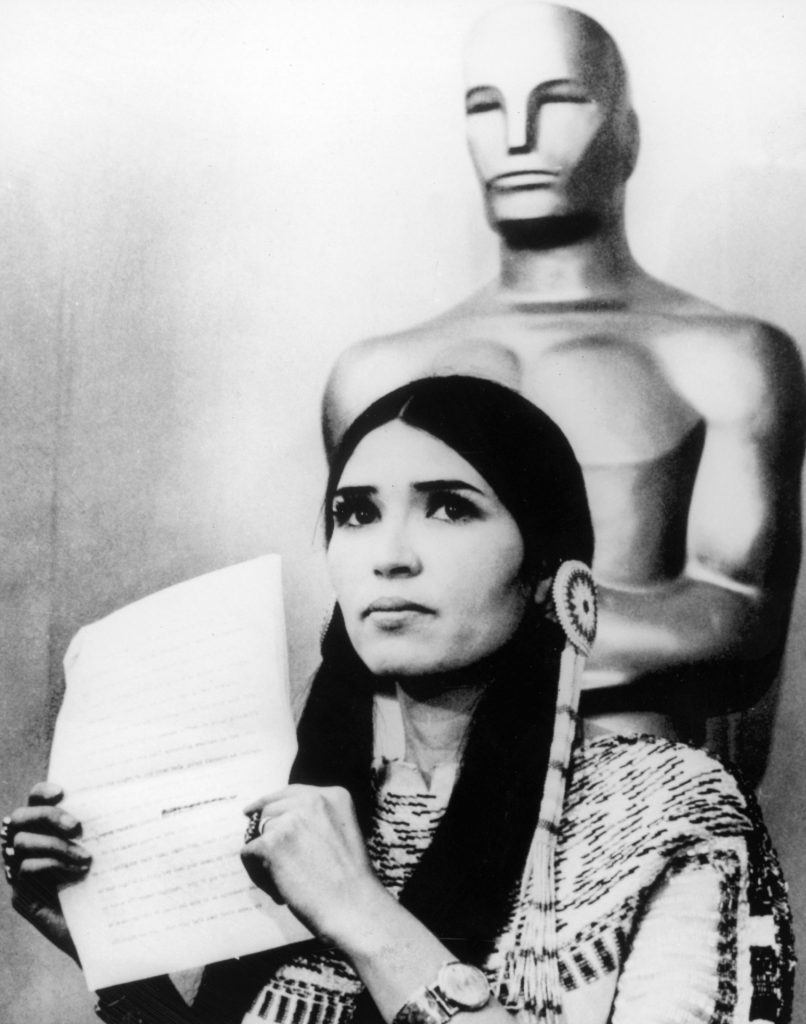
The thing that is so dispiriting about the whole exercise is the fact that so many “artists” and “creators” go along with it. George C Scott was nominated for an Oscar for Patton in 1970, but refused to attend and let it be known he didn’t want it. He called the Oscars “a two-hour-long meat parade”. I’d adjust that by adding an hour and a half.
Since then, no other actor, director, writer or producer has taken a similar stance against the whole notion of receiving awards. They all go, and most lose, and the few who win thank the Academy.
The closest to a boycott is Woody Allen playing his Sunday night jazz gig in New York as a way of always having an excuse not to attend. When the moral compass of your industry is in the pocket of Jeffrey Epstein’s chum Woody, I suggest you might have problems.
Perhaps it’s no coincidence that, until recently, one of the most successful studios at courting and winning nominations and Oscars was Harvey Weinstein’s Miramax. Weinstein understood that awards season was politics and commerce. Weinstein’s Shakespeare in Love won its Oscar in 1998 in no small part due to his minions slagging off Saving Private Ryan in the press.
When he did win, he elbowed aside the actual producer, Edward Zwick, to hog the limelight. He had wanted Zwick’s name off the picture, and when he found that he couldn’t do that legally, he had it placed at a point in the opening credits of a shot of a character stepping in horse shit. Classy. And an Academy Award-winning producer.
The famous directors and actors who never won Oscars give some indication. Richard Burton was nominated seven times, but never quite satisfied the Academy that he was up to snuff. Charlie Chaplin was a Red. Alfred Hitchcock made entertainments, airport novels really. Stanley Kubrick made films that weren’t as good as Oliver!
Far better to reward “Oscar-worthy” fare such as Out of Africa, Chariots of Fire, Gandhi, Dances with Wolves, The English Patient, and Ordinary People: colour supplements scripted by Reader’s Digest. And Oscar performances tend to reward a lot of acting rather than good acting. To the point that you can guess the clip they’ll use for the nominations as you’re watching the film for the first time.
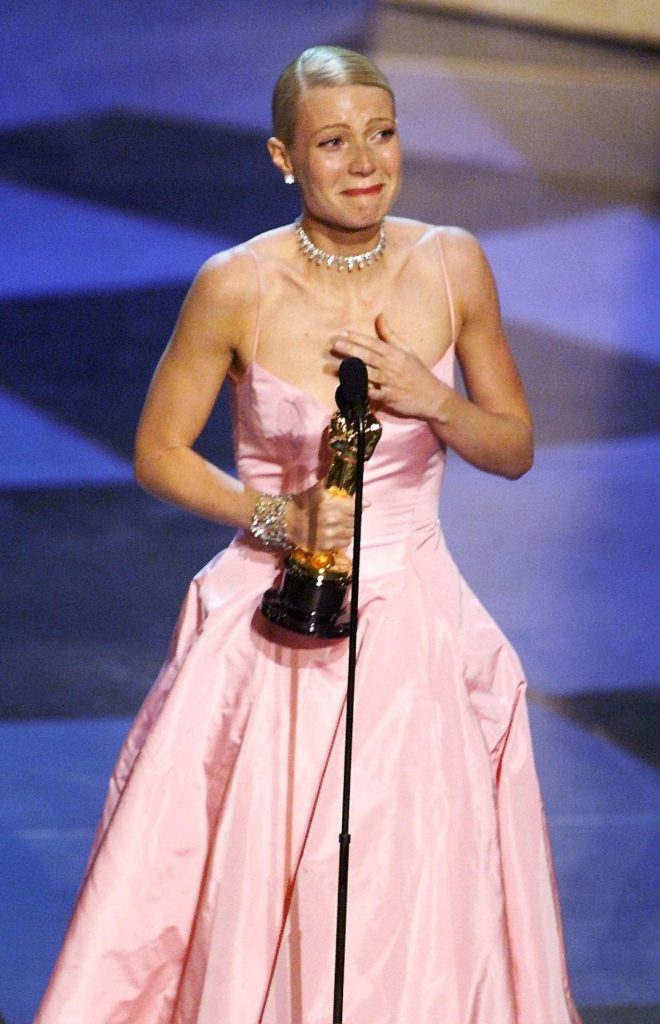
The minute I saw Anne Hathaway welling up and singing through snot in Les Misérables I knew the trophy was hers. Or the super-skinny McConaissance in Dallas Buyers Club, which also awarded Jared Leto. Seriously, I could just stop this article here. Anything that encourages Jared Leto needs to be stamped out. Jared Leto has an Oscar, and John Goodman, Glenn Close, Ian McKellen, Samuel L Jackson and Richard Burton don’t. Case closed.
But just in case you’re not convinced, and many won’t be, I know; many of my colleagues will defend awards season, telling me that it is fundamental in creating a buzz, the conversation, the discourse, the juicy content. But not all conversation is good, as anyone who has listened to a Joe Rogan podcast will tell you, and the buzz can be dental-drill excruciating. And when was the last time someone mentioned the discourse without using an expletive in the same sentence?
The idea of competition (the ruling ideas of any epoch) is the hammer of appreciation. We see it everywhere now. A huge amount of cultural journalism is hung up on ranking, from listicles to the Sight and Sound 100 best films ever made. We now get career rankings in lieu of obituaries with indecent haste. We internalise this as consumers, I mean as the audience… oh for Christ’s sake! Do you see?
Suggested Reading
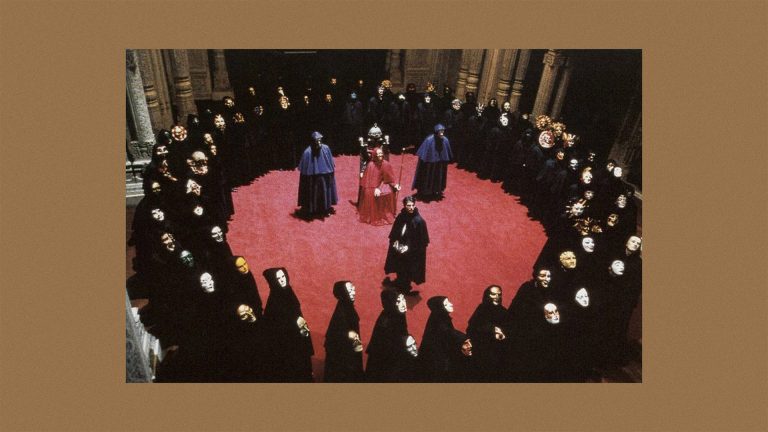

Epstein, Eyes Wide Shut and Hollywood’s sad fantasy of elegant evil
It’s the same with the conversation/discourse about box office. I’m sorry to sound old-fashioned, but what has all this got to do with art? Why not talk about what a film does rather than how well it does? What it means to you? How it’s working its magic?
For someone with a hammer, everything looks like a nail. Well, we’re being given a bag of hammers and a box of cats and now we’re wondering about why the cat industry is looking so unhealthy.
Art still makes for good branding, but think about that metaphor for a second. Branding is hot, violent, painful and happens to the arses of cattle. Is that all “arts” means in the Academy of Motion Picture Arts and Sciences? The industry, showbusiness, commerce – a brand.
And the same goes for festivals, by the way. Cannes, Venice, Locarno, Berlin, Toronto, Sydney, Busan and Tokyo. Do they all have to give prizes? Is this the only way we can get excited about cinema? Why not have non-competitive film festivals, where we just show the films and talk about them: crazy, huh?
The more I think about it, the more I’m beginning to suspect that awards and festivals are not really about films or cinema. In the same way that betting shops and casinos are not really about people who enjoy sports and playing games. The lights flash, the bells ring, and the glambot slouches towards Hollywood, ready to be born once more.
John Bleasdale’s novel Connery, about the life of Sean Connery, is published by Plumeria on February 23.