In 1847, a young woman living in an isolated house in the middle of Yorkshire published a beautiful love story – one of the greatest love stories of all time. It would not only be adapted many times for the stage, cinema and television but would serve as a template for a thousand books and films to come. The name of the woman was Charlotte Bronte and that book was Jane Eyre.
The same year her sister Emily published her own novel, Wuthering Heights, which could’ve been subtitled, via Johnny Lydon, “This is not a love song.”
Charlotte’s book provided a template for the modern love story. A marginalised woman takes on a professional role in a hostile environment and comes into contact with a handsome, charismatic male in a position of authority who negs her but is also irresistibly drawn to her. Yet there’s an obstacle in the way (the madwoman in the attic, his actual wife, Bertha Mason).
The woman finds an alternative suitor who would provide a conventionally acceptable pairing, but doesn’t get her moist. Returning to her true love, she finds the obstacle has gone – burned down the house and herself in it – and the man has been humbled and now needs her. The choice between the head and the heart, self-sacrifice and being true to one’s self are played out in a dramatically windswept landscape with pathetic fallacy forecast for the weekend: rainy for funerals, lightning for passion.
Where Charlotte wedded the Jane Austen marriage novel to the rural gothic, Emily’s Wuthering Heights is a full-throated hate story and entirely a unique beast. Even the declaration of love in it makes this clear: Catherine Earnshaw says, “I am Heathcliff, not “I love Heathcliff.”
The book’s central relationship is a toxic mess of narcissism, incest and jealousy. Passionate, yes, but as Morgan Freeman says in Se7en while looking at blood splatter in a crime scene: “Just look at all that passion on that wall.”
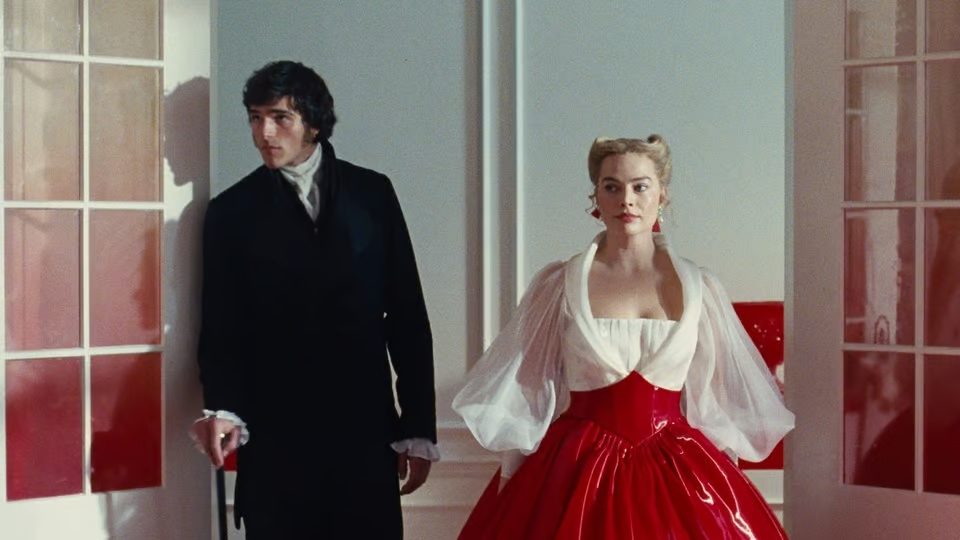
Now here comes Emerald Fennell’s disappointing new film version of Wuthering Heights, with Margot Robbie and Jacob Elordi playing Catherine and Heathcliff. Fennell has said most of all she wanted the film to give viewers the feeling she had when she first read the book as a 14-year-old, which is a weird admission to make, but okay. So what we get is horny, empty, immature fun.
And, like some 14-year-olds, Fennell skips the ending.
One of the reasons the book is so hard to adapt is that “heroine” Cathy dies roughly halfway through the book. The rest of the novel is taken up with Heathcliff’s intergenerational revenge. Talk about trauma.
William Wyler’s version from 1939, starring Merle Oberon and Laurence Olivier, snipped off the second half of the book, as did the 1970 Robert Fuest adaptation starring Timothy Dalton and Anna Calder-Marshall. Juliette Binoche and Ralph Fiennes also starred in a truncated 1992 Heights.
Even when Andrea Arnold took the brave but perfectly valid decision – which Fennell reverses here – to cast a black actor, James Howson, as Heathcliff in 2011, she followed the pattern of leaving the story early.
I have no skin in the game with literary adaptation. A great novel (and I reread Wuthering Heights almost annually) will survive misunderstanding, and what makes a great novel doesn’t necessarily make a great movie.
But let’s be clear about what we’re losing. This isn’t just funning up a dusty text the way Baz Luhrmann does with Romeo+Juliet and The Great Gatsby. This is telling half the tale. Imagine a Moby Dick adaptation where they don’t find the whale, or a Christmas Carol where Scrooge is only visited by one and a half ghosts.
For Fennell, the problem with the second half of the book is that it fucks up the first. Our romantic hero, Heathcliff, who has already revealed himself as a domestic abuser, rapist and killer of pet dogs in the book, becomes a child abuser to boot. Now there’s a character arc.
Suggested Reading


The expensive boredom of Melania
In seeking his revenge on the world, he indulges in fraud, manipulation and there’s even a suggestion of necrophilia. I’m not sure if he has it off with Catherine’s corpse, but they definitely spoon. The hot and heavy passion of the first half has come to this morbidity. Heathcliff will manipulate the younger Catherine into an unhappy marriage to sickly Edgar, whom he encourages to beat her.
Fennell has her own vision, which turns out to involve vivid colours, bodice-ripping excess, Martin Clunes and a trademark hint of campy Salburnesque shock. Her film has drawn comparison not with the great love stories but with Mills & Boon and Carry On Dick – possibly not what Fennell was aiming for, but who knows?
Suggested Reading

Awards season is bad for cinema
No doubt the smouldering glances, rain-soaked dresses and Elordi’s ecky-thump accent will sell out screens nationwide in time for Valentine’s Day, as well as providing memes galore. But it’s depressing to see how much safer than the original the film is. It cleans Heathcliff up, shaves off the hate and minimises his abuse into something more like mild BDSM of the Fifty Shades variety.
Essentially, what Fennell has done is give Bronte the Bridgerton treatment. And that’s fine – if you’re 14. For the rest of us, the chance to do something supernatural and not just superficial has been missed.
 Most popular

A world dragged headfirst into the Epstein Sewer

Am I still a friend of Peter Mandelson? It's complicated

Face it: Trump’s going mad
I’m sleepless, angry and anxious over this – and I know I’m not alone