I am a grump when it comes to all things Oscars. As I have written before, it’s not just the empty speeches, the fashion fixation, the dull box office discourse. It’s that the very idea of competition feels to me like a hammer to the art of appreciating films.
This year, some of the winners openly agreed with me. But as I watched, there was a strange sensation too. Was it a bit of hope?
Putting grouchiness aside, I submitted my Academy Awards guesstimates along with everyone else at a virtual party and I did pretty well. Not because of any Mystic Megness on my part, but basically because they were so predictable.
Before we start on individual honours, isn’t the format itself weird? To celebrate 2025 in March of 2026? In the age of streaming, I guess it’s the equivalent of buffering: a wheel spins, a snake swallows its tail and we watch the In Memoriam section and say to ourselves: “Jesus, was that this year?” It seems like more people died than should be legally allowed in a 12-period, and they didn’t even fit in Bud Cort or Bridget Bardot.
Anyway, One Battle After Another won best picture, director for Paul Thomas Anderson, adapted screenplay, best casting, best editing and Sean Penn got the best supporting actor award, but wasn’t there to pick it up because he was off to Ukraine to tell Zelensky to clear some room in his trophy cabinet. Sinners took home best original screenplay, best cinematographer (the first woman to ever do so) and best score as well as best lead actor for Michael B Jordan (though they should really have given him two).
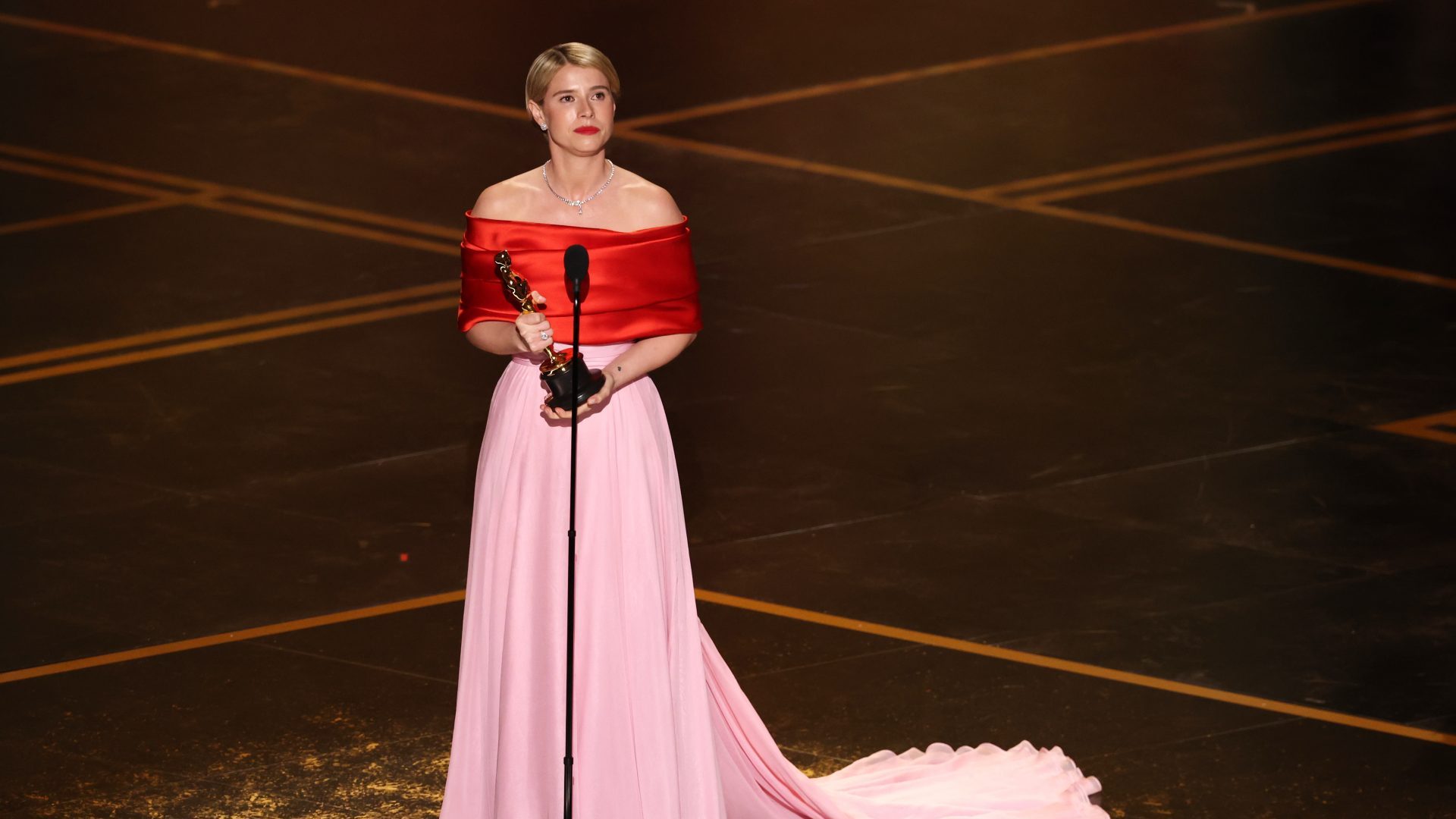
Jessie Buckley won best actress for Hamnet, and Amy Madigan won best supporting actress for Weapons, giving a great I-don’t-give-a-fuck speech that went full Frances McDormand. Joachim Trier’s Sentimental Value won best international feature, Norway’s first-ever Oscar, and Mr. Nobody Against Putin won best documentary. Its directors David Borenstein and Pavel Talankin spoke about the rise of tyrants and the paper-cut death of a civil society aided by the complicity of apathy.
Marty Supreme won zero out of nine nominations which was – as BlueSky user Isaiah D Colbert put it – the most Marty Supreme thing that could have happened. Timothèe Chalamet had to settle with being the butt of a series of jokes related to his ballet and opera diss, dressed in a white suit, yukking and sitting next to Kylie Jenner, who looked like she wanted to fire her publicist.
The schadenfreude of dunking on Timmy means that a lot of amazing work that went into Marty Supreme got lost in the mix. Specifically, how Jack Fisk – the production designer on Badlands, There Will Be Blood, The Revenant and Marty Supreme – still hasn’t won an Oscar is more evidence that the Academy has no validity as a judge of achievement.
Suggested Reading

Snubbed: The films and actors that should win these Oscars
Don’t take my word for it. Listen to Oscar-winner Ryan Coogler, who refused to be a member of the Academy because he didn’t want to sit in judgment of his fellow artists. “Unlike the rest of you pricks,” as host Conan O’Brien joked in his opening monologue.
Listen to Oscar winner Paul Thomas Anderson, who listed the best picture nominees from 1975 and said the winner depends on the mood that day. As well as mentioning his fellow nominees, he had a word for films that weren’t even nominated. Listen to most of the Oscar winners who make a point of congratulating their fellow nominees, many of whom they’ve spent more time with over the last three months than they spent with their crews and co-stars of the films they’re nominated for.
This occasionally provokes enmity, as infamously occurred when Harvey Weinstein (who knew?) behaved like a cock in negatively campaigning against Saving Private Ryan and getting his Shakespeare in Love a statuette, even racing the actual producer Edward Zwick to the stage so he could quite literally hog the mic. But frequently there’s warm camaraderie among winners and losers alike and Michael B Jordan and Leonardo DiCaprio hugging made me moist with emotion.
Conan had mentioned that this was likely to be a political Oscars because of the nature of events in the world, but I’m old enough to remember how they cheered Michael Moore when he won the Oscar for Bowling for Columbine and how they booed when he used his speech to denounce the war justified by fake arguments by the fake president George W Bush. We love courage on screen, but go beyond the “there’s so much suffering in the world” universal response and Ricky Gervais might unsheath his razor wit.
Javier Bardem got a cheer for skipping the autocue to say: “Stop the war now and free Palestine.” Sentimental Value director Joachim Trier quoted James Baldwin in his victory speech, following Bardem: “All adults are responsible for all children – so let’s not vote for politicians who do not take this into account.”
Suggested Reading

Hamnet is powerful because it’s unsentimental
This feels like a transitional moment. There was Will Arnett slapping back at AI when introducing the best animation feature: “Tonight, we are celebrating people, not AI, because animation, it’s more than a prompt. It’s an art form and it needs to be protected. Am I right?”
Amazon Prime and Netflix both got slapped back by the host. The recent buyout of Warner Bros Discovery by Paramount Skydance was also referenced by Borenstein as an example of a free society collapsing: “when oligarchs take over the media and control how we produce it and consume it.”
But for once these criticisms and jabs seemed to come from a space of hard-fought optimism and strength. The movies – internationally – had a bumper year in 2025. A generational change is taking place – a point that the In Memoriam sections always sadly underline. That generation of Claudia Cardinale, Robert Redford and Diane Keaton (not Bardot though, the bloody racist) are not coming back.
The films Paul Thomas Anderson namechecked from 1975 are from a golden age not just of Hollywood film, but of cinema’s centrality in the wider cultural conversation. There’s no saying that something like it might not come again at some point. It won’t be the Oscars which will do it, but at least this year they offered us a bit of hope.
John Bleasdale’s novel Connery, about the life of Sean Connery, is published by Plumeria
 Most popular
The bombs and the bombshell: At home in Dubai with Isabel Oakeshott

It’s official: Reform has slumped in the polls
Pedro Sánchez is outclassing Trump with the president’s own tactics

Brits living in Dubai – sorry, but you’re awful