“Poor mental health drives disengagement. Disengagement worsens mental health. And it begins not in the labour market but in the bedroom, on the phone, at 2am, long before a young person ever applies for a job.”
Young people and Work: interim report, paragraph 150
Alan Milburn’s Young People and Work review shows just how far the system has stopped working for Britain’s young: schools that don’t understand us, a job market that doesn’t respond to us and an NHS that doesn’t fit the problems we have. But his final report failed to mention another system which is holding us back – a commercial system which, unlike those above, has spent decades and billions trying desperately to understand us. Not so they can help us, but so they can connect our everyday feelings to their products and capture our time and our attention for themselves.
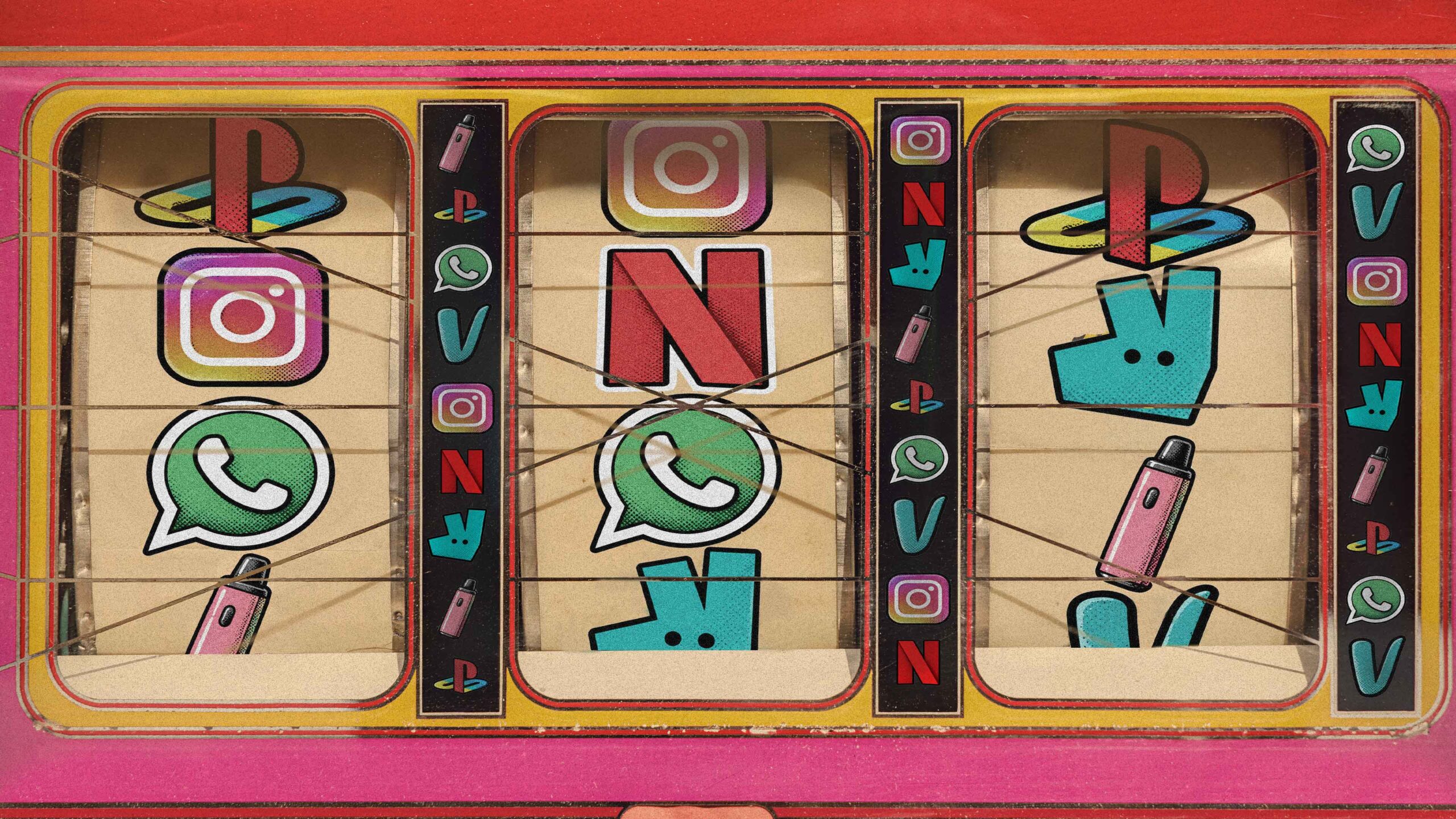
Shuab Gamote and Peter Hyman’s research for Milburn’s Interim Review coined the term ‘the bedroom generation’ because they found young people “now find that their only safe space – their cocoon – is the bedroom. A place for PlayStation and Netflix, vaping and YouTube, Pot Noodles and Deliveroo, porn and influencers, chatting online with mates and selling clothes on Vinted.”
Suggested Reading


Neets are a tough problem with one easy, very bad solution
But “the bedroom” is not a refuge we timidly retreat to from an unfair world, as many older generations imagine – it’s a trap. A highly engineered alternative ecosystem, infiltrated by industries whose aim is to keep us in their manufactured reality for as long as possible, whatever the cost to our wellbeing.
I know only too well how it works – multiple addictive products at the same time, sleep patterns drifting, health on the back burner – the suck of the products makes the world outside the bedroom look distant and difficult and affects our capacity to get stuck into its challenges and its opportunities.
It may look excessive – ten hours gaming, six hours scrolling, online binges which last for days, but none of this seems to us like the ‘addiction’ we all picture: behaviour rampantly out of control, with visible harms. It all feels normal, because now it is normal, because our friends are doing the same.
And the harm? The impaired concentration feels like who we are. The difficulty with emotional regulation feels like our personality. The inability to tolerate boredom feels like a preference. The social anxiety from underdeveloped real-world skills feels like ‘just me’.
This is where it collides with work. A job demands routine, sleep, confidence and self-regulation, being bored, knuckling down and dealing with difficult challenges – perhaps what Alastair Campbell describes in his new book as “persevilience”- the very skills the products are leeching from us.
What addictively designed products like social media, gaming, gambling, vaping and the rest do is present themselves as the solution to difficult feelings or situations and allow us to bury the adversity, which resurfaces, rather than deal with it and grow from it.
That’s the difference between resilience and persevilience. Resilience means you can handle tricky times, but persevilience leaves you stronger for next time.
I was disappointed that Milburn didn’t respond directly to these issues in his final report, because they seem to me another component of what he described as a “moral crisis” – an economic system which puts profit before young people’s health from babyhood onwards, resulting in a potential ‘developmental cascade’ with cumulative impacts which may change how we see ourselves and what feels possible to us.
The obvious next step would have been to join the dots between what Milburn called “toxic social media” and the regulation the government is planning. The under-16 social media ban is followed by a voluntary overnight curfew for 16- and 17-year-olds, before all restrictions stop at 18 – just as many NEETs have left the structure of education and the bedroom starts to tighten its grip.
Suggested Reading


Burnham’s NEET plan is doomed because of one fatal flaw
Much better would be to regulate the algorithms and make the products less addictive and safer for everyone, as so many activists and young people’s groups have called for.
Regulating the addictive design of all digital products from social media, to gambling apps, porn and yes, even Vinted, is essential. So is addressing the availability and marketing of junk food, vapes, alcohol, and cigarettes, their physical counterparts who are adding to the isolation – with Deliveroo replacing cooking so we don’t even have to leave the bedroom to eat.
Another problem which Milburn highlights is a 20th-century health system which is “poorly suited to the mental health and wellbeing needs that now undermine youth participation”. The transformation he proposes is well overdue.
Old school healthcare compartmentalises addiction and mental health, meaning Milburn bundles problems with drugs and alcohol with medical conditions like “musculoskeletal conditions, obesity, diabetes and asthma”. Mental health and addiction are considered separate even in the care system – NHS guidance for Child and Adolescent Mental Health Services (CAMHS) actually excludes young people struggling with alcohol and drugs as a primary issue. If addiction isn’t a mental health issue, I don’t know what is.
I don’t mean to dismiss the massive steps in the report – a new mental health “digital front door” with open access and no diagnosis needed is great; faster talking therapies, and local drop-in hubs where young people don’t need a formal diagnosis to get help look like important moves. But with this compartmentalisation hard-wired and problems with addictive products not seemingly covered specifically by many of the organisations mentioned, will the services provided under the banner of ‘mental health’ be able to help?
At the moment, if you are a 19-year-old worried about how porn is affecting your relationships, and how your gaming and scrolling is affecting your sleep, your confidence, and your ability to get or hold down a job, an internet search doesn’t have complexity like that. Believe me, I’ve looked.
There might be something for your problem gaming, but unless you reach what is classed as a ‘clinical’ threshold of harm you won’t qualify for help; the NHS doesn’t like it unless you’ve really hit rock bottom. You perhaps land on a mental health support site and look at the menu of ‘low self-esteem’ ‘stress’ or ‘anxiety’ and it doesn’t look relevant. Getting meaningful help from your GP in a three-minute slot when the problem is “I can’t stop gaming”, “I’m on my phone till 4am”, or “I think I’m watching too much porn” doesn’t seem likely.
Suggested Reading
Too many people are stuck at home – it’s time for a war on isolation
Milburn’s new Digital Front Door will have to get to grips with a new language, a change of attitude, and a fresh look at who has the expertise to help and how they do it – especially as many of us are struggling with the overuse of several products at once. The system isn’t geared for that and it will take a big mindset shift to get there.
Most of all, we want to get out of the bedroom and into the world – we just need a push and affordable places to go. Right now, free spaces have vanished, transport is expensive, and most youth clubs stop at 18, leaving older teens and young adults with nowhere to meet that doesn’t charge an entry fee or isn’t the vehicle for more addictive products.
Milburn’s huge, ambitious review is onto this, with its Youth Opportunity Service and calls for more youth spaces. But new places for young people on their own won’t be enough – not least because they will usually stop at 18.
We need what we are calling a Connection Economy. This is a more interconnected, intergenerational approach, where communities, transport, institutions and activities are designed so the easiest choice leads young people towards each other, not back to their screens.
Again, the young people Gamote and Hyman spoke to knew just what they needed and what was missing. “The craving for connection, for social interaction, for creativity and playfulness, meant that we kept encountering hidden talents, moments of energy, of possibility and of potential. Almost every young person had something they enjoyed doing from caring for horses, to archery, to cooking fresh pasta, to making raised garden beds, to crocheting, to playing football, to looking after fish.”
Joe Woof’s book, Unhacked: From the Addiction Economy to the Connection Economy, written with his mum Hilary Sutcliffe, will be published by Hachette in early 2027
 Most popular
Will AI kill capitalism? I built a new kind of simulation and found the answer

Westminster’s outrage machine has embarrassed itself over chicken nuggets


Inside the cult of Anthropic: The ‘good guys’ who could kill us all

GB News made him a star.. now he’s calling for the mass deportation of Jews