
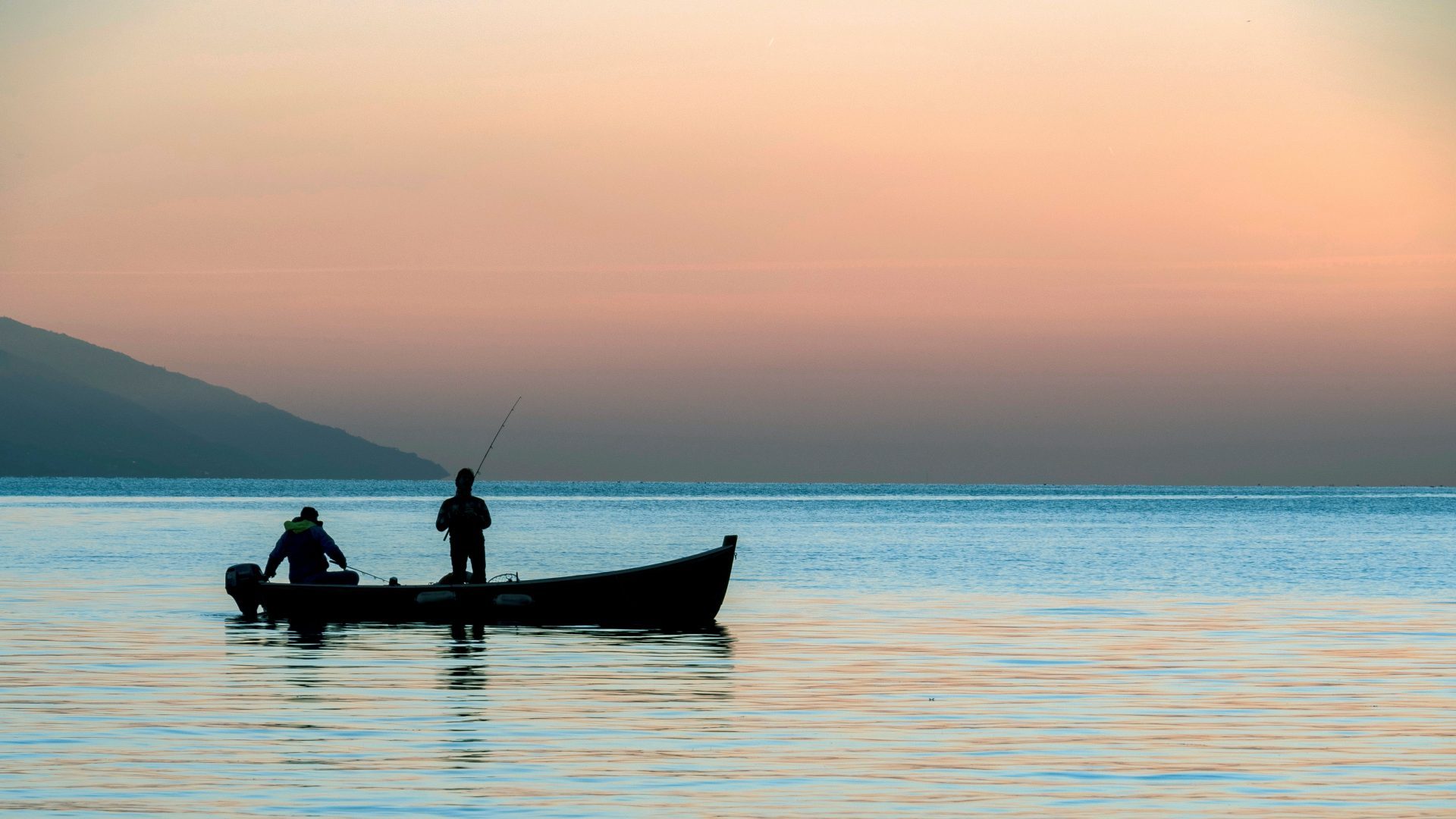
It was a normal day for Maurizio Scarmigliati. He lives near Lake Garda and was on a fishing trip off the coast of a small town named Peschiera del Garda in the southern part of the lake. Thirty boats containing diving and non-diving anglers and fishermen sailed off for the competition.
Maurizio stayed on the boat, but when his friend came up, he was holding what looked like a “dolphin”.
“I remember him coming out and the fish being almost one metre long,” Scarmigliati tells me. “The first catfish I touched was 18kg, but it was the smallest one that day. Some of the other divers caught some weighing 65kg and 80kg.”
Suggested Reading

Taste of Europe: Otis Smith’s sardines in green sauce
Twenty-two catfish were caught in total that day, setting off alarm bells for Scarmigliati. For the past five years he has served as president of the Garda Sport Fishermen Union (Unione Pescatori Sportivi del Garda), overseeing 10 associations dotted around the lake.
A native of the lakeside town Toscolano Maderno, Scarmigliati fears that the lake will be ruined by what the EU has classed as an invasive species.
Thought to have been introduced to Italy 50 years ago, the pesce siluro is the largest freshwater fish in Europe. And they are big. The longest one ever caught in Italy was pulled out of the Po River in 2023 by a presumably very shocked angler named Alessandro Biancardi. The fish he caught was 2.8 metres long.
In Lake Garda, the largest to be reeled in so far was a mere two-metre specimen, weighing in at 90kg. There’s no official estimate of how many are in the lake, despite recent efforts to track sightings of the omnivorous predator using an app.
“It’s a fish that scares people, not because it’s man-eating, but because it’s a fish that can destroy an ecosystem that has been here for 100,000 years,” said Scarmigliati. “They need to be taken out, but I think eradicating them completely now is impossible. There are too many.”
Locals have noticed a shortage of native fish like sardines, pike and tench in recent years, the latter being the centrepiece of the regional dish risotto con la tinca. Alongside the catfish, more than 40 alien species have made their home in Italy’s most famous lake.
There is also a lack of demand for catfish. Unlike fellow alien species, such as the pumpkinseed fish and corbicula clams, the catfish has yet to be tossed in with pasta. Efforts are under way to find a European wholesaler they can sell the fish to.
There have been round-table meetings with relevant representatives from the three local councils, but none of the decisions have made any real difference or been met with enthusiasm. One suggestion was to provide larger nets made of thicker twine to help catch more of the catfish. But the fishermen didn’t want them.
Suggested Reading


No, the UK is not turning into Italy
Hanging over all of this is the question of how they got into Lake Garda in the first place. That’s a matter of simmering local controversy. While they have moved through Italy’s river systems over the decades, Lake Garda should have been protected.
“The catfish didn’t just swim here on its own,” Scarmigliati says. “There is a physical dam blocking the path, meaning it is completely impossible for them to pass through naturally.
“We aren’t here to point fingers or blame specific people,” he added, “but the fact is they weren’t here before, they are here now, and someone put them here.”