
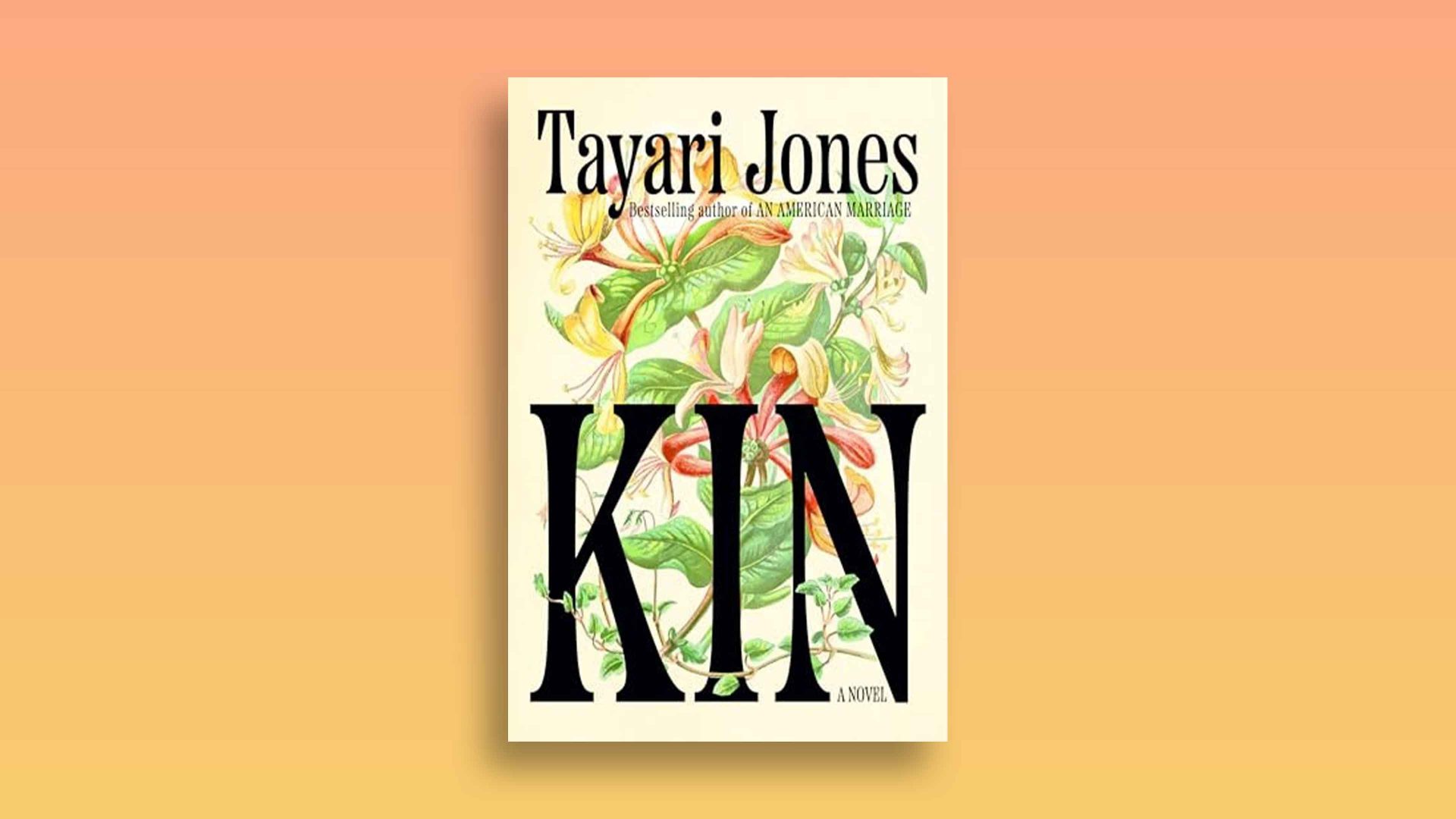
Tayari Jones, the American novelist whose 2002 debut was Leaving Atlanta, is back in every sense. Eight years after the success of her fourth book, the Women’s Prize for Fiction winner An American Marriage, she has returned to her Georgia home town after two decades away, and returned to the US bestseller list with Kin. It is a triumph.
Jones’s gift lies in telling stories from multiple perspectives, especially when those perspectives conflict. She deftly combines tales of racism, classism and other inequities with a real understanding of the deep love and responsibility within families – the ones you are born into and the ones you create with those around you.
Kin is a novel about the bond between “cradle friends” Vernice “Neicy” and Annie, motherless girls being raised by other women in their families in Honeysuckle, Louisiana and coming of age during the civil rights movement of the late 1950s. Its interlocking stories are narrated by the girls in alternate chapters.
Neicy’s mum was killed by her father; now her aunt Irene is bringing her up, having left her new life and lover in Ohio to do so. Annie’s grandmother has taken her in since her “trifling” teenage mother, Hattie Lee, left her at only a month old, unable to face the responsibility or shame of having a child so young.
Annie dreams of tracking her mother down in Memphis, showing her the error of her ways and receiving in return the love she has been starved of.
Neicy says: “The years had sent us in different directions, there was no denying that. Each time she wrote that she had possibly found Hattie Lee, my heart felt bloated, my chest crowded and overfull. Annie and I were two motherless girls who grew into motherless women.”
Irene tells her: “Over time, the daily discouragement will wear her down, like the heel on a loafer. You are the fortunate one. You know you won’t see your mama’s face ’til Gabriel blows his horn.”
We watch as the girls come together over the monumental absences in their lives, see their paths diverge as they face their traumas with very different outcomes, see them stay connected by writing, see them seek that missing maternal approval wherever they catch a whiff of female validation.
I lost my mother eight years ago and saw myself in both Neicy and Annie, trying desperately to find a replacement for that bond.
Despite thinking I am old enough to have outgrown the need for that specific maternal stamp of approval, I run towards it: my English best friend’s mum was with me the day I left my job of 10 years; and my American best friend’s mum came on an Italian holiday with me – to Camogli, where I would have loved to have taken my own mother had she lived.
I know these women aren’t my actual mother, but if there is that approval on offer, I am here to hungrily take it. And it’s an obvious, gaping grief, a naked longing that rises to the surface whenever things are going really badly or really well. Jones captures this on every page.
When reading Kin, I found myself wondering if people who have big, solid families develop the same depth of need for other friendships as those who don’t have that reserve of support to fall back on. I am one of the latter, and I loved the friendships in Kin.
Suggested Reading


The horrors of the online “Rape Academy”
I didn’t want the book to end. I wanted to stay in the messy, flawed, funny world that Jones created for these girls to be nurtured and loved.
Yes, “funny”. Given that the plot revolves around motherless girls, I was surprised by the amount of humour throughout the novel. But mostly I was blown away by the generosity of advice and support given by supporting characters who feel real and unique – from Honeysuckle to a Mississippi brothel, from Elektra, the Tennessee bar where Annie works, to fancy Spelman College in Atlanta, where Neicy wins a place, and beyond. And blown away too by the main bond of Kin, from Neicy to Annie and back again.
Upon Neicy’s marriage, as much to gain a mother as a husband, she says, “A person could refer to me now without speaking any of the names I had been born with.”
I’ve always been scared of losing my name and identity in a marriage. My mother never changed her name. She gave me her surname as my middle name, and I will never change my name to not include hers.
Maybe that act can be the maternal validation I still seek.
Kin by Tayari Jones is published by Oneworld.
Jamie Klingler is the founder of London Book Club