It’s 6:55pm on a balmy autumnal evening in Palermo Soho, the buzziest barrio of Buenos Aires, and, as the sun is setting, I’m in a coffee shop, sipping on a slightly overpriced but delicious oat flat white, waiting for the food to arrive.
To my left I hear US accents (never say “America” to an Argentinian when you mean the US – they’ll robustly inform you that you’re already in America). They’re bemoaning the state of their politics and how it’s surely by far the worst in the world. They are doing this while in a country that, less than a year ago, had triple-digit inflation.
The table to my right hosts two Germans chatting in words of almost unfeasible length. The table in front is silent as a woman peacefully reads her book. The rest of the sounds I hear are the distinct accents of Argentinian Spanish: loud, loquacious and rather lovely. That, and the clink of cutlery.
My food is served by Trini, who claims I’m a favourite customer because I try to speak Spanish, unlike some who expect her to speak English – not naming any countries, *cough, the US, cough*. My food is more like a breakfast dish than an evening one: salmon and spinach with béarnaise sauce served within a croissant with a side salad of rocket. It’s delicious. But it’s not dinner. Oh no. That’s hours away. This is a distinctly Argentinian dish. It’s meriendas.
“It’s the most important meal of the day – I go for meriendas straight after I’ve closed the library,” my local librarian tells me. While many digital nomads in Palermo hire popular (and expensive) co-working spaces where almost everyone speaks English, I prefer to practise my growing-but-still-ropey Spanish with locals in the free, if slightly dilapidated, public libraries.
They also help me to learn about the culture, which is so wildly different here to anywhere I’ve lived. “Dinner is when I’m at home with my family and relaxing,” the librarian says. “Meriendas is when I gossip with friends! Or reflect on the working day with colleagues. I never miss it.”
UK culture is a post-work beer or glass of wine down the pub then dinner or, if it’s a heavy sesh, a kebab. In Argentina, the culture is to have meriendas.
It’s a snack to bridge the gap between lunch and dinner, which is almost as long as a standard German portmanteau. It’s commonly taken between 5pm and 7pm.
Argentinians love their facturas, which are pastries, croissants or doughnut-like sweets, and these are often eaten as meriendas. But it’s also common at this time of day to have an omelette, a salmon bagel, avocado toast, a sandwich, or yoghurt with fruit and granola.
Suggested Reading

Argentina’s deafening new year
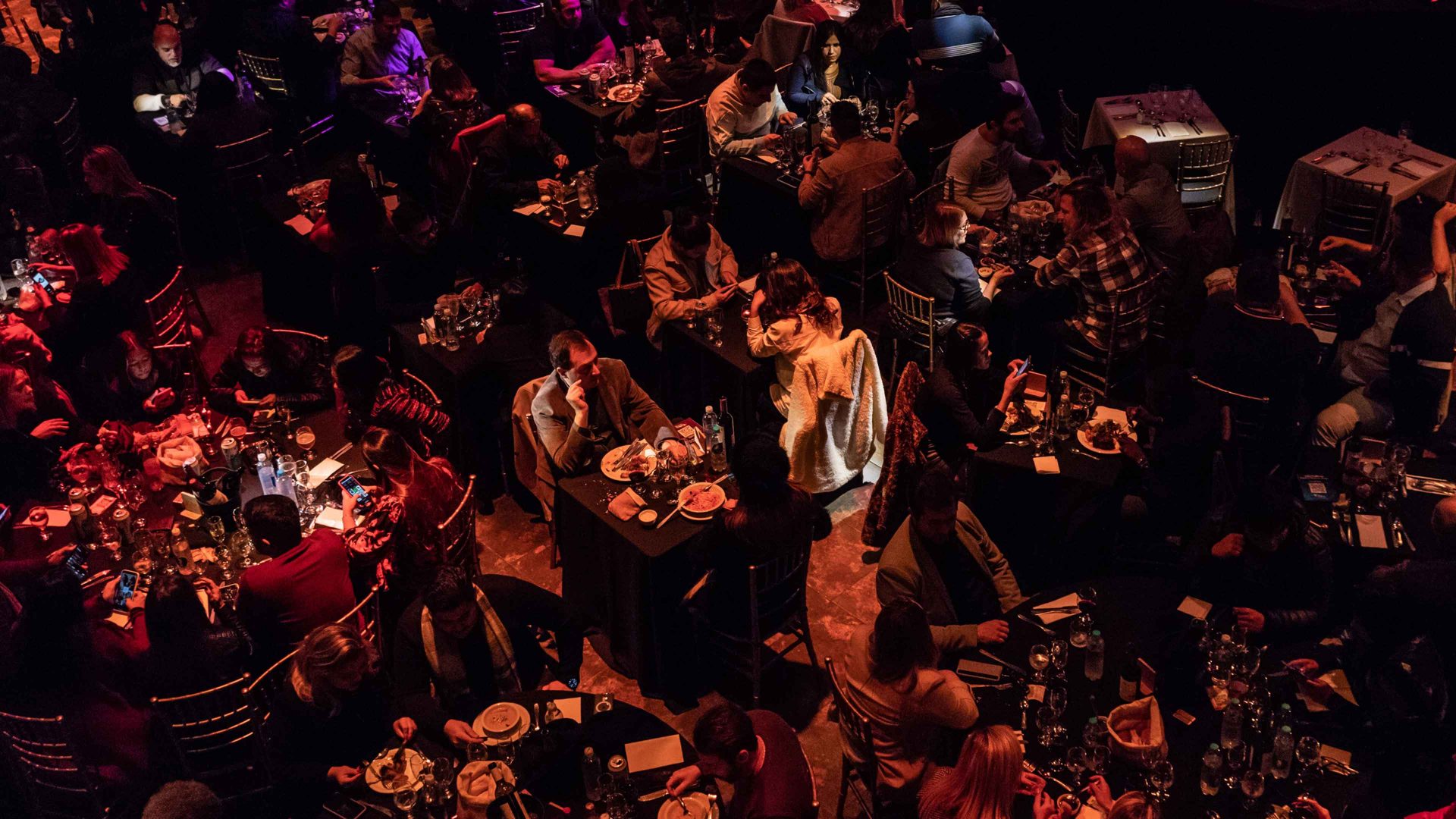
Dinner in Argentina is always a late affair. My favourite restaurant doesn’t even open till 8pm, and even then, it’ll be dead for a couple of hours, till the buzz re-merges. Dinner in Argentina is commonly between 10pm and 11pm. There’s actually less steak than I expected, although it is on many menus.
I have a “situationship” here – a chongo they call it in Argentina. He cooks for me fortnightly, sometimes at my apartment. It all sounds lovely. Except he arrives at 11pm, with me having bought and laid out the ingredients for dinner as I await his arrival. More than once we eat dinner at midnight. By this time I’m so hangry I can barely muster up gratitude, and eat at an unbecoming speed.
As I hand wash the plates at 12.40am – my furnished flat doesn’t have a dishwasher, only a gas-ring oven lit by a match – he says: “shall we watch a film?” It’s 12.50am on a Wednesday, he wants to start a film, and he has work at 10am! I never figured out how they do it, even with a siesta. When his alarm goes off, I’m exhausted, grumpy and groaning with indigestion; my midnight pasta has barely gone down.
I moved to Buenos Aires from Sydney, where I’d been living for 12 years. I didn’t realise I would inadvertently be moving from the world’s earliest-to-rise culture to its latest. Sydney’s first gym classes of the day are at 5.30am. Every light in the high-rise block opposite me is out by 9.30pm. You can’t get takeaway food in my suburb after 9pm.
As the diurnal becomes the nocturnal, I initially agree with friends who send me voicenotes about Argentina, saying “Oooh, I could never do that”.
Then I reassess the reasons I travel. It isn’t to have a comfortable culture. It’s to escape the familiar, not replicate it.
I allow the cadence of the country to dictate the structure of my day. I come to cherish my situationship’s midnight dinners, as we snuggle to watch a subtitled film into the early hours.
Gary Nunn is a freelance journalist. He lived in Argentina from 2023 to 2025