L’angoisse extrême. What words other than extreme anxiety can describe the mood in France after a deadly summer in the climate apocalypse? After thousands of heat-related deaths and destruction by wildfires, there is now the catastrophic prospect of Marine Le Pen becoming president in just over half a year.
Whose fault would it be if the extreme right Le Pen clan finally claims the power it has craved for more than half a century? As France enters the always-stressful political rentrée, back to work and school after the lengthy holiday break, one answer is emerging: France’s Jeremy Corbyn.
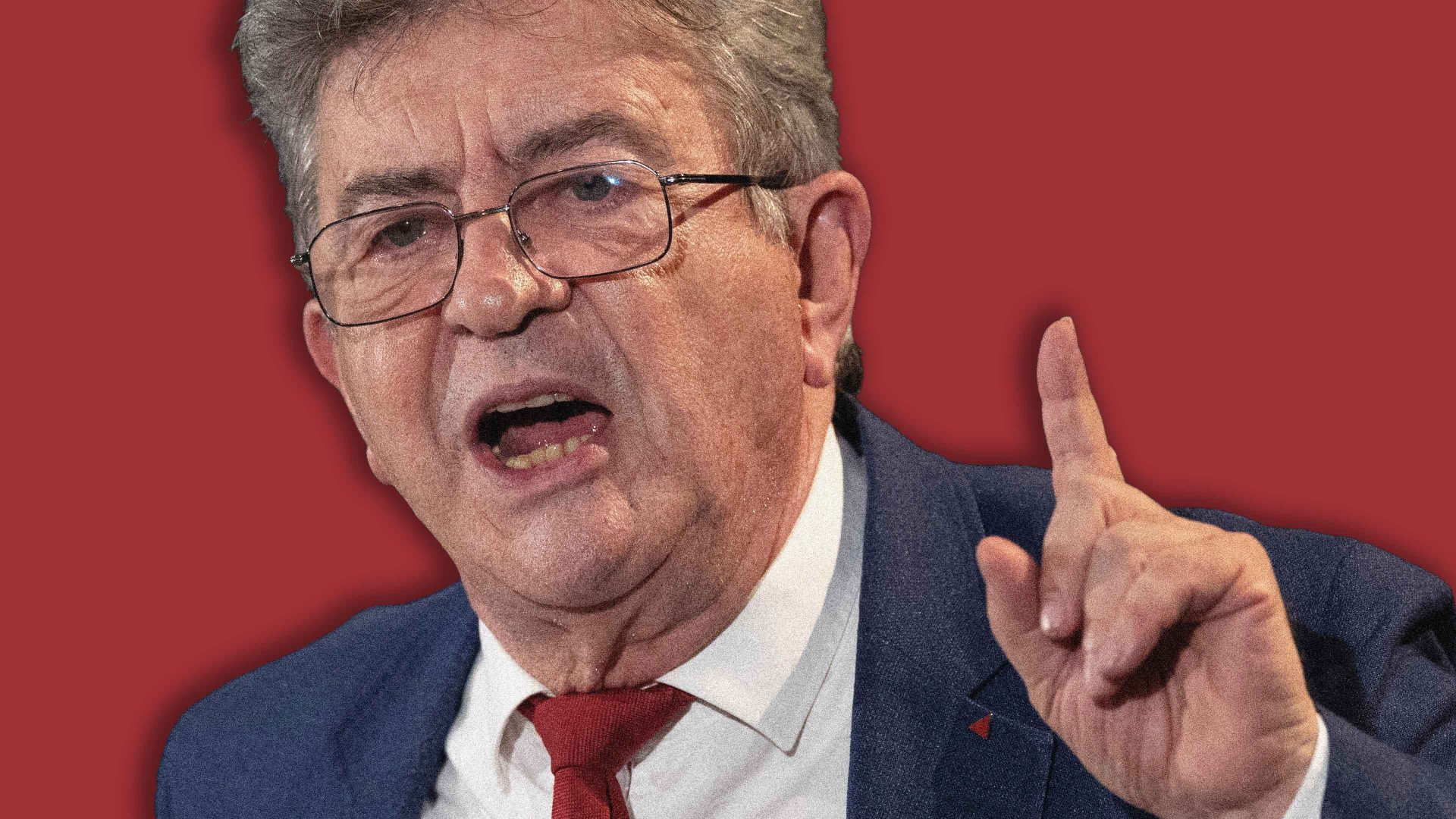
Jean-Luc Mélenchon, the 74-year-old leader of La France Insoumise (France Unbowed, or LFI), is an extreme left populist with far more charisma and cunning than his mate, the failed Labour leader. He is basking in a seemingly inexorable rise through France’s crowded presidential field, surrounded by adoring disciples who mouth the dear leader’s words in unison. His carefully crafted image is of the “wise old grandpa” of politics: avuncular, experienced and enraged.
It is working. With increasingly incendiary rhetoric, Trump-like attacks on journalists and media outlets, and even mockery of mainstream-left Place Publique candidate Raphaël Glucksmann’s Jewish-sounding surname, Mélenchon is squeezing out moderate contenders who have a far better chance of beating Le Pen.
It is a deliberately cynical strategy because if Mélenchon makes it into the second round of the April presidential ballot, he could hand the keys to the Élysée Palace to Le Pen, while at the same time cementing LFI’s desired role as the dominant opposition force, backed by mass violent protest in the streets. For the broader left, it would amount to political suicide.
“Le Pen’s National Rally remains as high as ever in the polls, despite its legal troubles. And on the left of the left, Mélenchon has pulled ahead,” says author and filmmaker Caroline Fourest, editor of the Franc-Tireur weekly.
Le Pen is still fighting the legal consequences of her conviction over the misuse of European Parliament funds and the battle over her eligibility to run for president. Fourest credits Mélenchon’s success to the ruthless political schooling of his Trotskyist years as a follower of Pierre Lambert and the hierarchical, devoted “pack” surrounding him, an allusion to La Meute (The Pack), the recent exposé of his tightly controlled political machine.
Fourest argues that the “submissive left” is falling into line despite Mélenchon and co’s record of saying horrific things about Ukraine, supporting dictators, seeking to weaken the European Union, talking nonsense about the economy and “surfing on anti-Jewish racism”. The Greens and Communists, she says, could instead have supported a candidate capable of building a broad left outside Mélenchon, attracting both those who want an end to Macronism and those who fear the National Rally as much as LFI.
Suggested Reading

Liberté! Egalité! Royalties! French newspapers take on Google
Instead, “they chose the plague, supposedly to avoid cholera. Because of them, we will have both.”
The numbers are worrying. Le Pen, whose latest election promise is on-the-spot fines for women wearing hijabs in public, is polling as high as 35% in round one and emerges as president in every round two scenario: crushing Mélenchon 67% to 33%; beating Glucksmann by 10%; leading former Macron PM Gabriel Attal by 8%; and her closest rival, centre right former PM Édouard Philippe, by 4%.
Yet the mainstream left is collapsing and falling into line behind an ex-Trotskyist demagogue who is a danger to France and Europe. Pro-Russian, pro-China and hostile to the European project, Mélenchon exploits the grievances of Muslims to capture an electorate and promote extremism, while encouraging antisemitism. And he is out to destroy the candidacy of the only credible left-wing candidate.
Glucksmann is not helped by the hopeless Socialist Party leadership of Olivier Faure or the Greens’ Marine Tondelier, who are both giving signs that they are betting on Mélenchon. Faure may run in the October Socialist primary, alongside a swarm of PS contenders, potentially squeezing out the mainstream left’s strongest candidate. The parallels with the flailing, divided Labour Party in Britain 10 years ago are clear.
Then there is Mélenchon’s Machiavellian multi-millionaire backer, investment banker Matthieu Pigasse, part-owner of Le Monde, Les Inrocks magazine and Radio Nova. He recently came to notoriety for getting the contract to restructure Venezuela’s debt, thanks to his connections with the Chávez-Maduro regime, and for sucking up to Donald Trump by attending the White House launch of Melania’s documentary.
Pigasse gives Mélenchon maximum media exposure and a veneer of economic credibility. But, seconded by Mélenchon, he has just claimed, falsely, that the European Central Bank could cancel France’s gigantic public debt without negative consequences. That provoked a huge fight with France’s global-star economists, including Nobel Prize winner Philippe Aghion and former IMF chief economist Olivier Blanchard. The exception is Gabriel Zucman, UC Berkeley economist and LFI favourite, whose economic policy appears built largely around taxing billionaires more.
A recent annual rentrée of France’s peak body of business leaders resembled a US primary debate, with Mélenchon, Le Pen, Attal, Glucksmann, Philippe and others questioned before hundreds at Roland-Garros, home of the French Open. “Was it PSG versus Barça or the first presidential debate?” quipped Quotidien, noting the wide smiles exchanged between Le Pen and Mélenchon.
Most conspicuous was the non-aggression pact between Le Pen and Mélenchon. The LFI leader gallantly rushed to his purported rival’s aid, declaring that she had never said France should leave Europe, “and neither did I”, while hectoring Philippe to “stop caricaturing everyone”.
The tactics are transparent. Le Pen would relish facing the firebrand she could obliterate in round two; Mélenchon needs President Le Pen as his Tweedledum to her Tweedledee if LFI is to atomise the left and centre and assume its coveted mantle as the eternal opposition.
Glucksmann, 46, a former documentary maker and son of the late philosopher André Glucksmann, did well, mocking Le Pen to her face. Asked about the debt, he told her, she simply answers “immigrants” and “Europe”. He also scorned the multibillion-dollar Saudi investment in Manga amusement parks outside Paris: “I don’t want my country, France, to end up as an amusement park for American tycoons, Russian oligarchs, Chinese Communist Party dignitaries or Gulf emirs.”
Suggested Reading
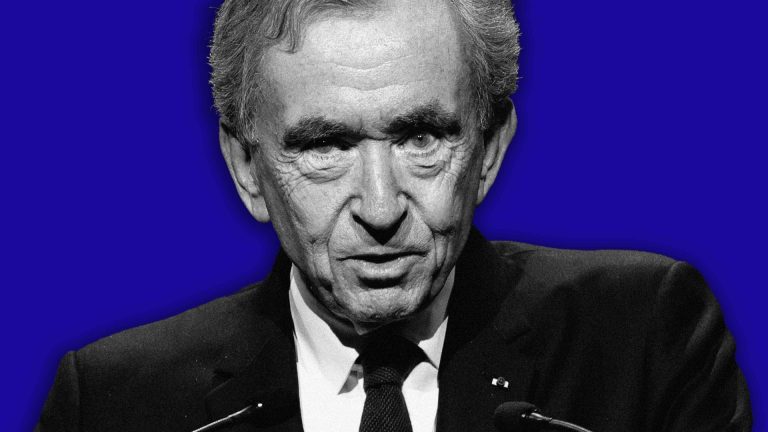
The miserable triumph of Bernard Arnault, richest man in Europe
Ever the top debater, grown-up wunderkind Attal, 37, skewered Le Pen’s expensive promises and failure to explain how she would pay for them. He compared her to someone who votes against every saving at the building meeting, then complains that the lift is broken. He was sharper still with Mélenchon: if cancelling the debt were enough, why raise taxes too? “Is it out of pure sadism?”
Le Pen reverted to form, showing again what a poor advocate for her own economic “policy” she can be. Significantly, her eternal dauphin Jordan Bardella was not in the room. Mélenchon was in standard ranting mode, although guffaws from business leaders at his legitimate complaints about low wages hardly helped the scarred image of France’s patronat, or business class.
And then there is the Corbyn connection. Mélenchon is, of course, an ideological and personal chum of the former Labour leader, while Corbyn’s prickly Your Party comrade Zarah Sultana recently attended LFI’s €400-entry-fee summer “retreat”. She was photographed with some of its most radical far left women.
More sinister was the appearance of Salah Hamouri, associated with the EU-designated terrorist group PFLP, alongside LFI MEP and “Lady Gaza” influencer Rima Hassan, who counts more than a million Instagram followers. Hamouri denounced an “enormous Zionist lobby in France”, claiming wealthy people linked to it and France’s main Jewish community body influence the media.
Hassan, who has faced a police investigation over alleged glorification of terrorism, then asked whether France’s offence should be abolished. Franco-Palestinian lawyer Mathilde Dabed said yes, calling terrorism-related legislation “poison”.
Meanwhile, the Mélenchonist chaos merchants in parliament are threatening again to sink the budget. The presidential campaign is barely off the starting blocks, but the two opposite extremes are already dictating the tempo and the agenda.
It is going to be one hell of an autumn.