
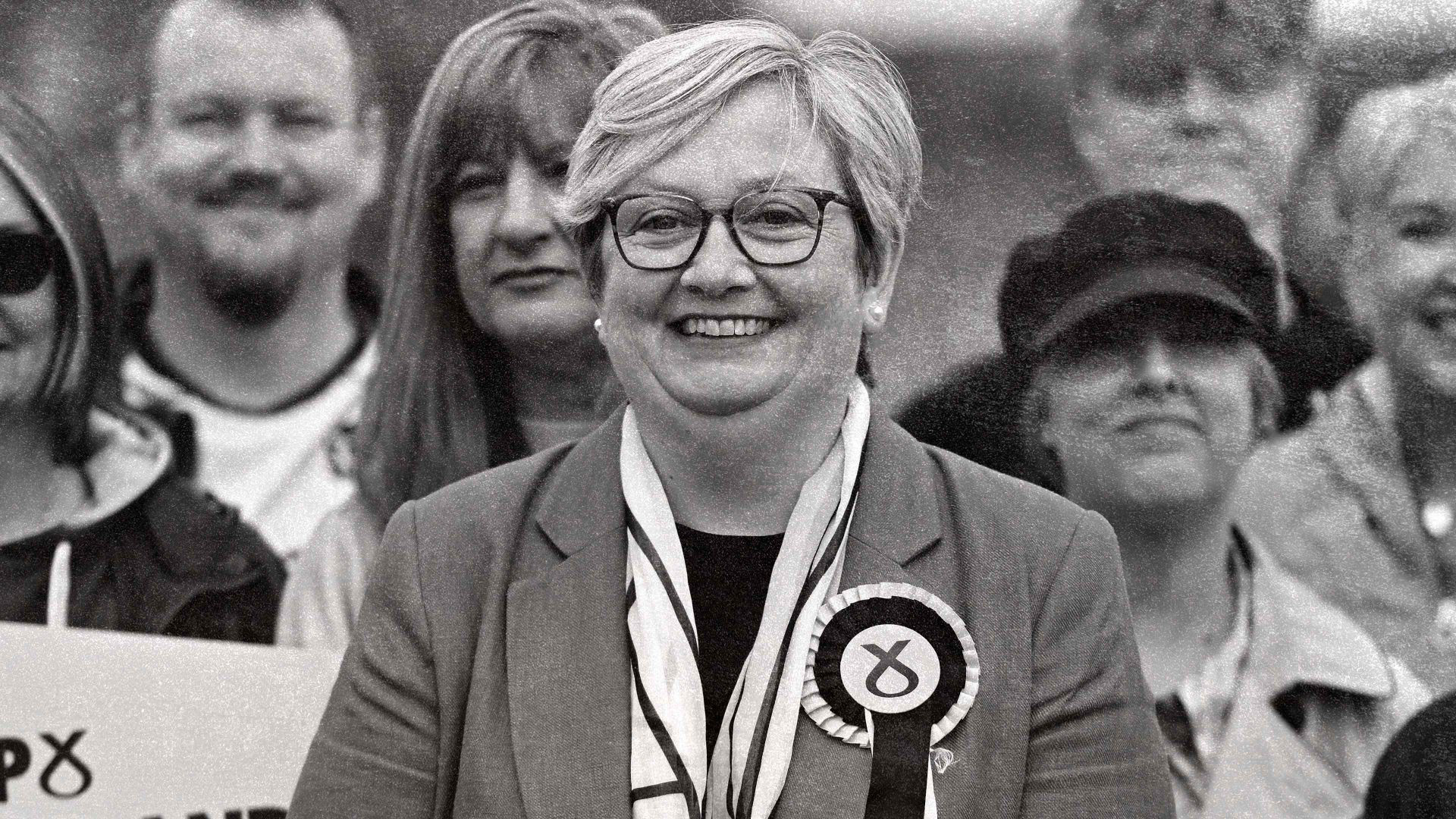
Joanna Cherry lives “rent-free” in Nicola Sturgeon’s head. “I’ve heard her say this about me,” the former SNP MP for Edinburgh South West tells me of the former Scottish first minister. In Cherry’s view, that comment is just another example of how the scandal-ridden Sturgeon has failed to answer her critics. As her new memoir Keeping the Dream Alive: An Insider’s Account of a Tumultuous Decade in Scottish Politics, makes clear, Cherry is most certainly one of them.
In the 2015 general election, Cherry was one of the 56 newly-elected SNP MPs heading to Westminster. In her nine years in the seat, she held various positions, including shadow home secretary, and in 2019, as a KC, she led the cross-party legal challenge that resulted in the UK Supreme Court unanimously ruling Boris Johnson’s prorogation of parliament unlawful. But, by her own admission, her time in politics is far from a pretty story. In 2024, she lost her seat and today, she has quit her party.
“People say politics is a nasty business. I’m afraid to say that’s true,” she says. Keeping the Dream Alive is a memoir in three parts: part exposé of an explosive decade in Scottish politics, part full-throttle defence of former first minister Alex Salmond and part road map for how the SNP trudge their way out of the quagmire into which Sturgeon led the party.
“Sturgeon and those around her were so keen to keep their hands on power that, although they became very good at winning elections, they didn’t deliver on good governance or innovative policies, never mind independence,” she explains. “Authoritarian”… “demonises those who disagree with her”… the leader of a “personality cult”; Cherry does not hold back when describing Sturgeon in her memoir. Still, Cherry insists her “beef with Nicola is not personal”.
“They’re not personal criticisms, they’re not directed against her as a person,” she says when I put it to her that her choice of adjectives does, in fact, feel targeted. “Our differences are in how we do politics”. She adds that Sturgeon’s leadership lacked “any form of political strategy”, and that it became fixated on speeches and short-term policies.
A key example of this, she says, is the Gender Recognition Bill, passed in December 2022 and subsequently blocked by Westminster a month later. Cherry believes it was a fight Sturgeon went into without fully understanding the complexities of the debate.
“She really hit on the idea of having young people in the party as her power base and saw self-ID as the next progressive step after equal marriage,” she says. More than this, Cherry explains that she thinks Sturgeon’s “nose was put out of shape” by the fact that it was Salmond who was able to deliver equal marriage, not her. “I think she wanted to do something progressive,” she sighs.
Then, there was independence and here lies one of the biggest betrayals. “She kept marching her troops up and down the hill with the promise of another independence referendum.”

“Those of us who challenged her independence strategy, which I did quite early on, became very quickly seen as the enemy, rather than people that she could have worked with.” Sturgeon “damaged the cause of independence”, though she is quick to add, not “irreparably”.
Reading Keeping the Dream Alive, you can feel Cherry’s anger radiating off the page. It should be no surprise to readers when Cherry writes that she believes the SNP deserve electoral defeat at the May Holyrood elections. It must have been hard to write these scathing words about a party to which she’s dedicated much of her life.
“You’re right, but it’s what I believe. The calibre of [SNP] candidates is very poor. Most are youngish people with very little life experience. Not all of them… but most of them. We’ve lost some of our best people who have either left the party through disaffection, been kicked out, or, you know, wouldn’t pass vetting.” And none, she adds, have the capacity to deliver on independence.
When, in May 2024, John Swinney became the first minister of Scotland and leader of the SNP, Cherry explains, he promised fresh thinking. But she found that pledge difficult to accept after the SNP’s record in office. After all, she says, if the party had new ideas, “wouldn’t they have produced them by now?”
And so, the failings of the SNP opened the door to Reform in Scotland. Cherry argues the party is now “noticeably splitting the unionist vote” before adding that, as their campaign has been such a disaster in Scotland, she feels Nigel Farage’s party will run out of steam.
During the first weekend of campaigning in April, Malcolm Offord, Reform’s leader north of the border, was hundreds of miles away, competing in a yachting race in the English Channel. His maritime adventures came to light just in time for his party to drop to third in the polls.
Nonetheless, Cherry argues that it is a mistake to dismiss Nigel Farage’s party as “far-right bampots”. Instead, politicians have a duty to investigate the party’s surge in the polls. “You can criticise Reform, but you shouldn’t demonise the people voting for them. You have to try to understand why they’re doing that and address some of their concerns.”
On one cold morning in January 2019, Cherry found herself climbing the fire escape of the Principal Hotel in Edinburgh. Accompanying her was a security guard whom she had just met in the coffee shop on Hanover Street earlier that day.
The pair entered the building through the staff entrance and ascended to a suite on the top floor. Inside the room was Alex Salmond, who had just been released from police custody and was facing multiple charges of sexual assault, including two charges of attempted rape.
“I was in a state of shock. I very strongly felt that he was innocent and I was suspicious about what underlay the charges. It was very difficult to see such a strong alpha male in such a position,” she recalls. After the shock, she describes, came anger. How did it come to this? “It was just a very profound experience that I’ll never forget. I’ve got a very firm picture in my mind’s eye of that day and how it felt. I felt heartbroken, for him and for the party.”
In March 2020, Salmond was acquitted on all charges. “There’s a very low conviction rate in one-off rape cases where it’s just a he-said-she-said situation. But in a case where several women are saying that a man has sexually assaulted them, generally speaking, the man is convicted of at least some of the offences.
“The fact that Alex was acquitted of everything tends to suggest that the jury didn’t find the evidence credible or reliable,” says Cherry, who, during her legal career, worked as a sex crimes prosecutor for three years and “spent many years helping women give their best evidence in sexual offences”.
“I think the intention was to hold an internal investigation at the Scottish government, which would find him guilty of sexual harassment at the height of the Me Too movement,” she says. The aim was never to end up in court, but, ironically, the “trademark ineptitude” of the SNP allowed the case to “grow arms and legs”.
Keeping the Dream Alive comes complete with backstabbing, claims of conspiracy and, Cherry can reveal for the first time, claims of bullying brought against her. It was the same unique process that was used against Salmond and, as far as she is aware, has not been used since.
“Normally, disciplinary issues with MPs were dealt with by the chief whip, but there was this new procedure whereby a member of staff was going to be both the investigator and the adjudicator.” It was November 2017 and six months earlier, after Westminster leader Angus Robertson had lost his seat in Theresa May’s 2017 snap election, she had gone head-to-head with Ian Blackford for the role and lost by one vote. “It was a very nasty campaign with a lot of quite nasty briefing against me. I’m afraid to say this continued after the campaign.”
For Cherry, Sturgeon was “bruised” after the election saw the party’s numbers deplete to 35, losing 13 seats to the Conservatives, including Robertson’s. More than that, Cherry believes that the SNP leadership were “very confident” that she would lose her seat and therefore an “internal critic”. Instead, Cherry held her constituency and, she writes, moves were made against her.
“There’s pretty good evidence of a modus operandi of using complaints to take out political opponents and ignoring complaints against people who were seen to be political allies.” Cherry had made multiple complaints against Ian Blackford’s behaviour towards her, none of which were acted upon.
The saga weighed on Cherry heavily and, she admits, when she went to see the Parliamentary Standards Commissioner to get the outcome of her investigation, where she was exonerated, she vomited outside the offices.
In 2021, in an interview with Holyrood’s Politically Speaking podcast, Cherry said that if she had known what was on the horizon, she would never have run to become an MP. Five years and a memoir later, would her answer be the same? In short, yes.
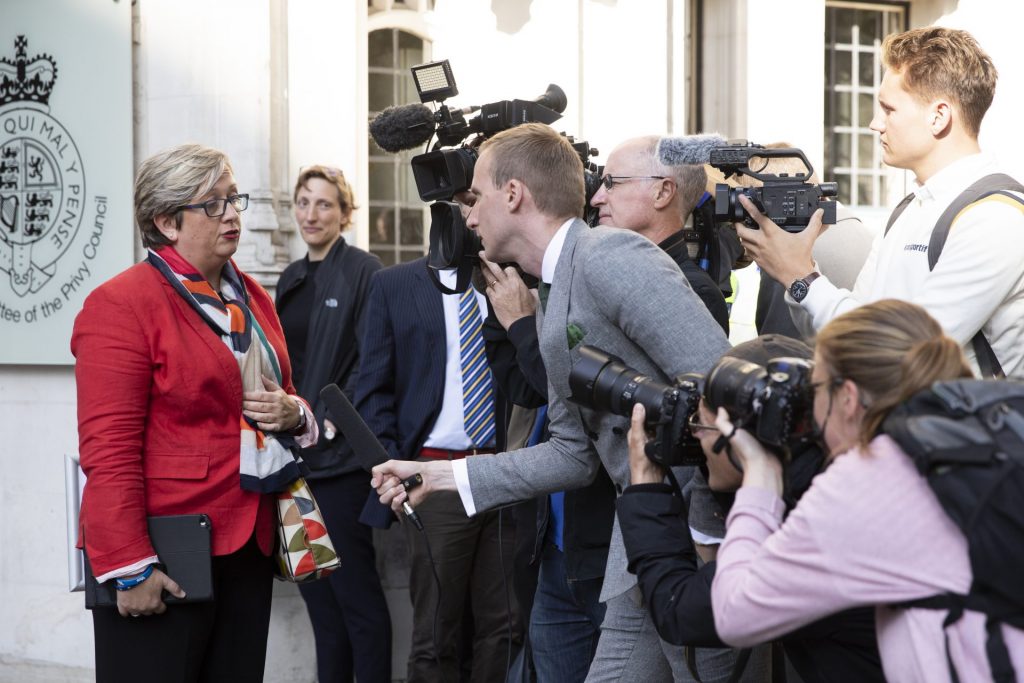
“If I’d known what I know now in 2014, I wouldn’t have put myself forward as a candidate. I don’t regret my political career. Aspects of it I really enjoyed.” Cherry’s most memorable moment was her Supreme Court victory against Johnson and she recently discovered that at Edinburgh University’s law school, her Alma Mater, first-year students are given the case (Cherry v Advocate General) to study legal research methods.
“One of my colleagues at the Bar said to me, if you never do anything again, your name’s on the most famous constitutional legal decision in Scottish and English law.”
“I don’t regret being an MP,” she concludes, “I’m just glad I’m not one any longer.”
Keeping the Dream Alive: An Insider’s Account of a Tumultuous Decade in Scottish Politics by Joanna Cherry is published by Icon Books