It’s gratifying to know that David Wojnarowicz’s ashes are residing somewhere on the White House lawn. As Donald Trump continues the most demented series of housing renovations in modern history, it’s refreshing to think that he’s churning up and breathing in the remains of artists, actors, musicians, mothers, fathers, lovers and friends, all of whom were victims of the Aids epidemic.
If Wojnarowicz had got his way, it wouldn’t have been his cremated remains dumped on the presidential residence. He famously wore a leather jacket emblazoned with a pink triangle and the words “If I die of Aids, forget burial – just dump my body on the steps of the FDA.” David Wojnarowicz was an artist and agitator who wasn’t fucking around.
I first encountered him in the pages of Olivia Laing’s magnificent The Lonely City (recently reissued in a 10th anniversary edition), which melds the lives of several artists (including Andy Warhol, Edward Hopper and Vivian Maier), whose work was often mired in loneliness, with the writer’s own struggles as she contends with the city of New York, alone.
You can understand why Laing was drawn to him. David Wojnarowicz was a photographer, musician, writer, painter, firebrand and dissenter. After a childhood of unbelievable brutality and deprivation, he found himself living on the streets of Manhattan at a painfully early age.
He hustled, he struggled, he nearly died. He found redemption in art. He had to put all that rage and pain somewhere.
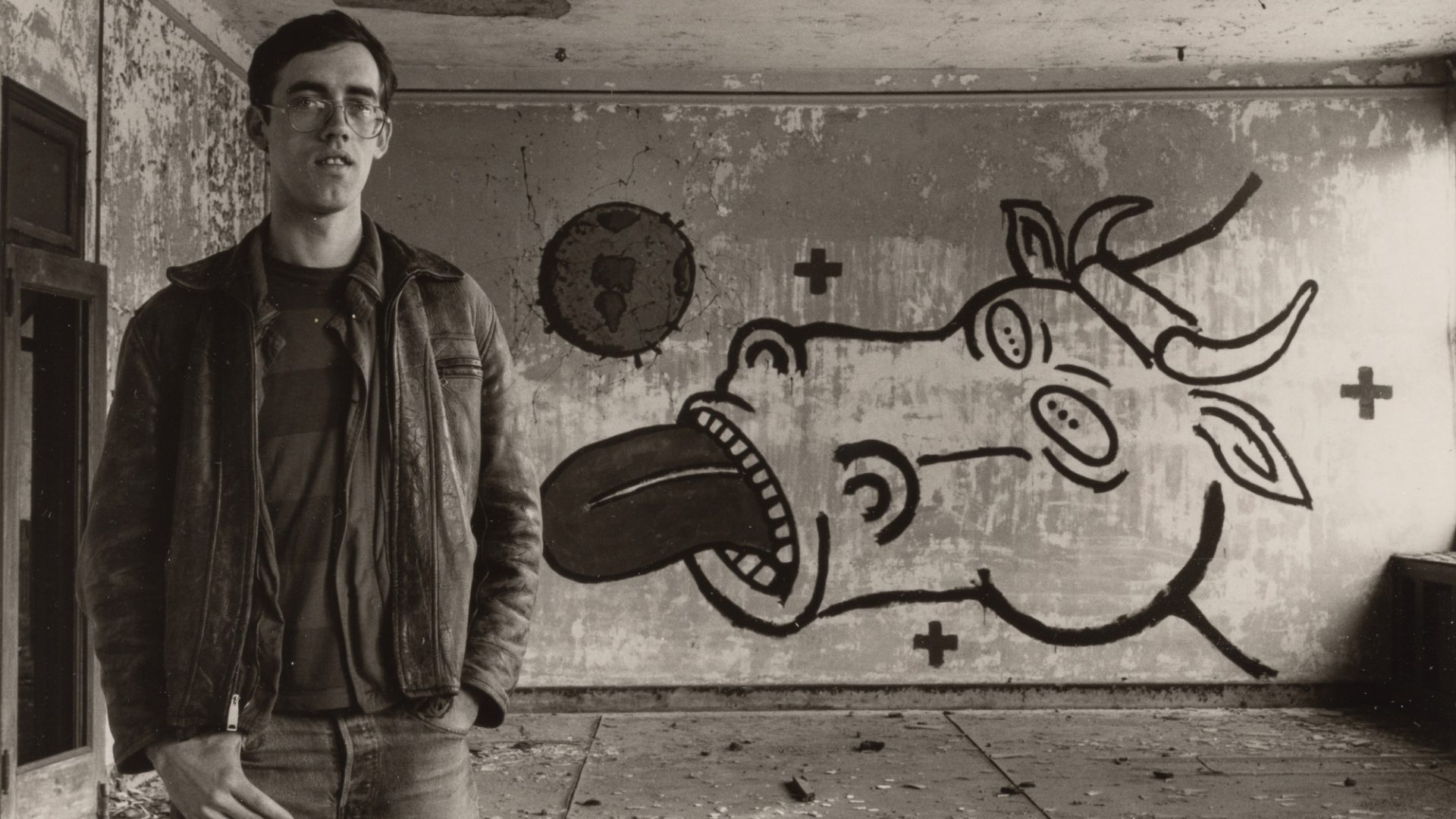
He grew obsessed with the crumbling, derelict Chelsea Piers of Manhattan’s waterfront, which became a vast complex dedicated to anonymous gay sex, drug-taking and incredible art. It developed into a huge illegal gallery where Wojnarowicz (alongside artists such as Andreas Sterzing and Kiki Smith) spray-painted the walls and took startling images of friends among the dereliction, often wearing a mask of doomed poet Arthur Rimbaud.
These images, and many others, can be seen at the Modern Institute’s wonderful Wojnarowicz exhibition, Some Day This Will All Be Crumbling Ruins, housed, appropriately, in a Glaswegian Georgian townhouse on its last legs (I think I overheard someone say the building was once an S&M nightclub – it feels like it’s definitely seen some things). Paintings, videos, photographs, sculptures and ephemera are all on display.
Once the artistic trip-switch had been flicked in Wojnarowicz, he went into overdrive. This was the broke, murderous, filthy New York of the 1970s and 80s, and he thrived.

He seemed perfectly designed for this era. Tall, lanky, oversized teeth not quite fitting in his mouth, an incredibly deep, indelible voice. Alongside luminaries such as Jean-Michel Basquiat, Nan Goldin and Keith Haring, he joined No Wave bands, created disturbing installations, made films, produced extraordinary, luminous paintings and took copious photographs. He had no artistic education, so he had no artistic boundaries. Anything was fair game.
In 1986, he met the photographer Peter Hujar. They were briefly lovers, then Hujar slipped into a mentor role for Wojnarowicz. As Laing attests in The Lonely City, both men were periodically rage-filled, and both painfully lonely despite being surrounded by admirers. The relationship helped Wojnarowicz find his artistic feet.
But soon Hujar got sick. And then everyone got sick. The Aids epidemic blew into the city and devastated the creative community.
An increasingly furious Wojnarowicz recorded the slow, painful, humiliating death of Hujar. The poignant images of Hujar on his deathbed occupy the top floor of the Glasgow exhibition. It also drove him to create one of his most celebrated and extraordinary works, the memoir Close to the Knives.
Told in a series of blistering, angry essays, Wojnarowicz relays his own precarious upbringing, the men who used him for sex as a desperate teenager, and the death of his friend, hastened by a Reagan-era administration who didn’t care and didn’t engage. “Some of us are born with the crosshairs of a rifle scope printed on our backs or skulls”, he wrote.
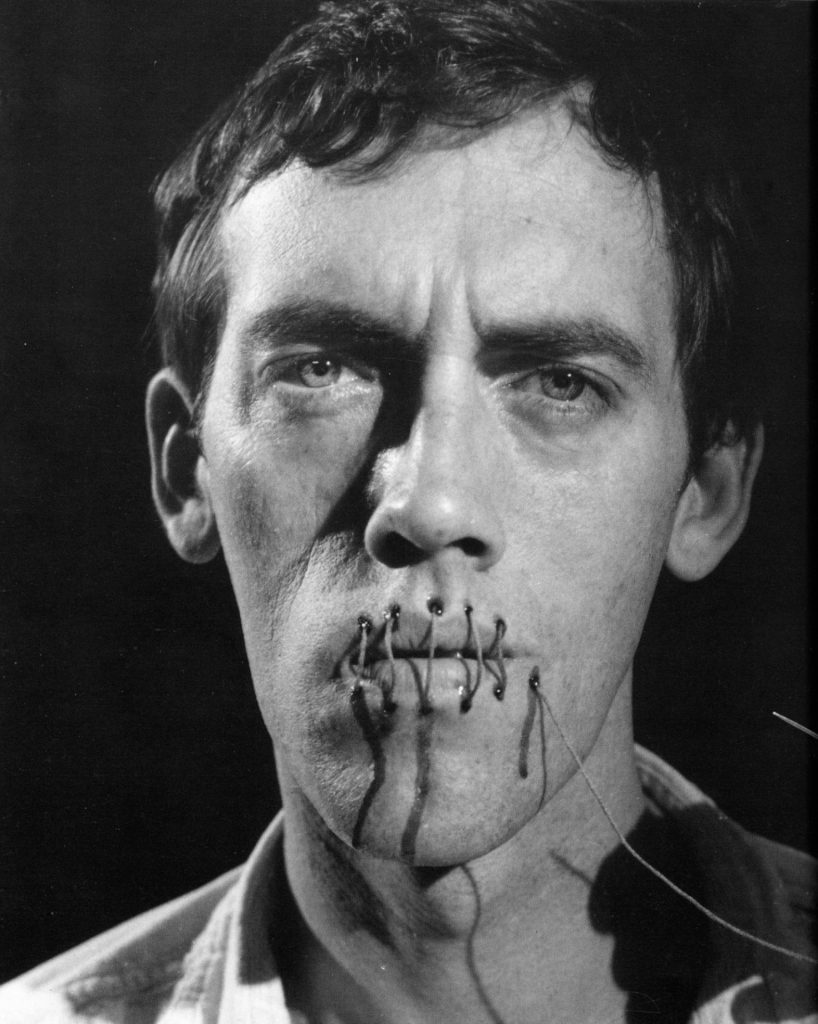
And then Wojnarowicz got sick. As he knew the end was creeping up, he dedicated himself to railing against the hypocrisy of the American government. Bush succeeded Reagan in 1989, but very little changed. He became a vocal member of the Aids activist group, ACT UP, and a photograph of Wojnarowicz with his lips sewn shut became one of the defining images of these devastating years. Silence = Death.
He died, in fury, in 1992 at the age of 37. His remains, alongside those of many others, were thrown in protest on to the lawn of a White House that failed them as it continues to fail us all. So when Trump’s ballroom inexplicably crumbles to ruins, you know exactly who is responsible for the sabotage. All the rage has to go somewhere.
The Lonely City (10th Anniversary edition) by Olivia Laing is published by Canongate. David Wojnarowicz: Some Day This Will All Be Crumbling Ruins is at the Modern Institute, Glasgow, until August 28