
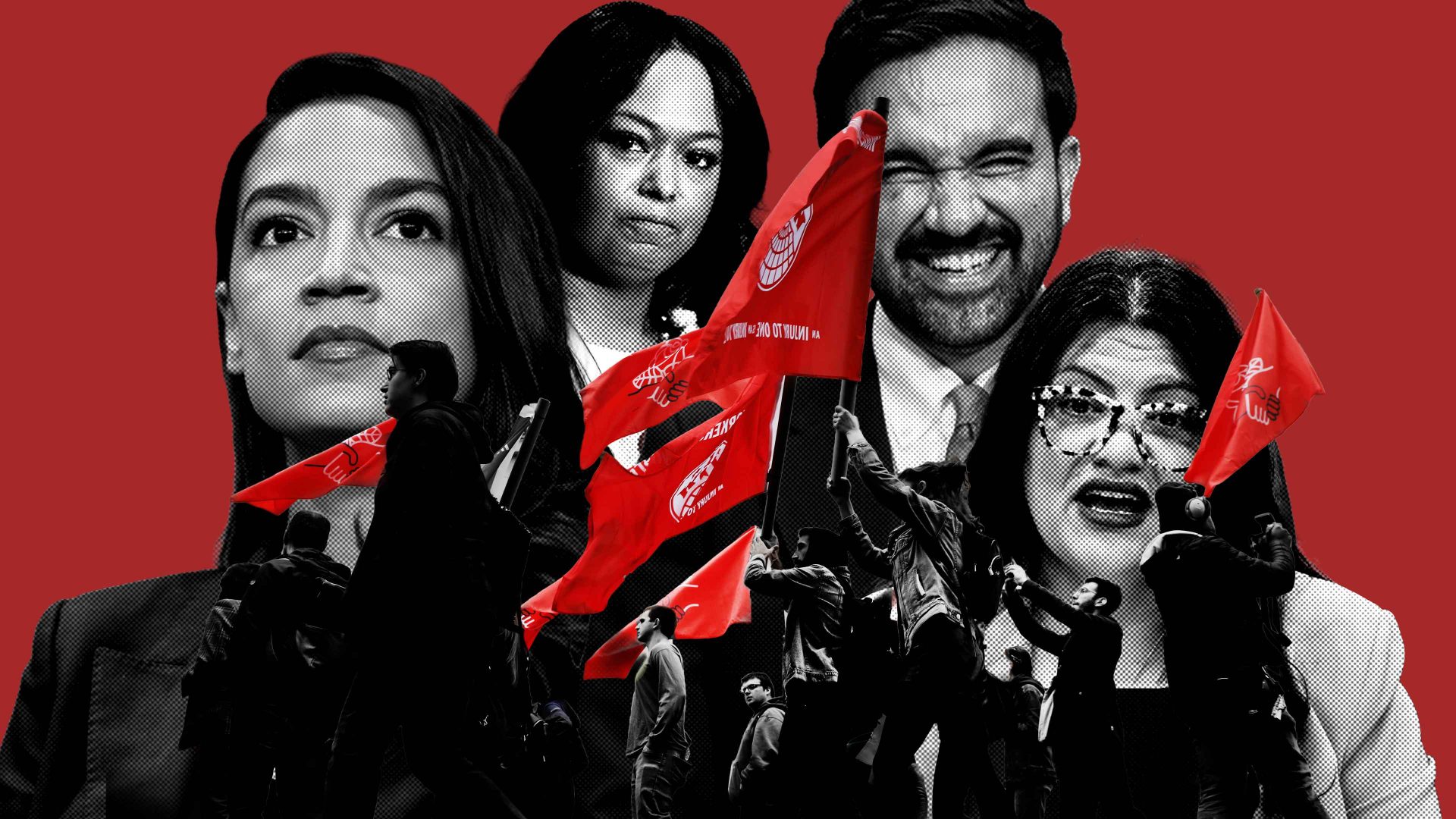
American politics loves a bogeyman. But the Democratic Socialists of America (DSA) are unique in attracting ire from both sides of the political spectrum.
Republicans have seized on a handful of primary wins by DSA candidates to paint the entire Democratic Party as “crazy communists” intent on destroying the very fabric of American life.
Some figures in the Democratic Party, meanwhile, accuse the DSA of hijacking the party, imperilling its chances of taking back the House and Senate with their divisive rhetoric on key issues.
“The DSA are not Democrats,” wrote New Jersey representative Josh Gottheimer on X after some DSA members won the race to field candidates in November’s midterms. Former Chicago mayor Rahm Emanuel warned that that could “spoil” his party’s chances.
And while the win for DSA member Zohran Mamdani in the 2025 New York mayoral race was greeted with cautious enthusiasm by much of the liberal-leaning press, recent articles have raised questions about the movement’s leadership and ideological direction.
Which begs the question: are the Democrats having their own Jeremy Corbyn moment? And what does this mean for the future of the party and its chances of winning back the White House in 2028?
Speaking to The New World, DSA national co-chair Ashik Siddique said there were key differences between the political landscapes of the UK and US, arguing that any socialist-leaning ideology has been stigmatised in America by cold war “red scares”.
“There’s not really much of a left wing tradition like a Labour Party that exists in the UK or other countries. So we’re reviving the tradition of democratic socialism in the US context.”
Suggested Reading


The Democrat who could make MAGA’s life hell in 2028
That revival began in earnest with Vermont senator Bernie Sanders’ run for the Democratic presidential nomination in 2016. Tapping into anti-elite rage sparked by the financial crisis, he campaigned openly as a democratic socialist and surprised many by pushing Hillary Clinton close.
Of course, an anti-establishment populist of a different stripe won that election: Donald Trump. But Sanders had proved that the s-word was no longer a forbidden term when running for public office.
In 2018, two other prominent democratic socialists – New York’s Alexandria Ocasio-Cortez and Rashida Tlaib of Michigan – won seats in the House of Representatives and remain there today. Come the midterm elections in November, their numbers should at least double. DSA-backed members are contesting five safe seats in New York, Philadelphia, Denver and Detroit. Washington DC is also likely to get its first democratic socialist mayor in Janeese Lewis George.
DSA membership has also ballooned on the back of Mamdani’s charismatic mayoral campaign, doubling to 120,000 since July 2024. Siddique believes that this surge in interest reflects the deep concerns many Americans have about the direction their country is heading in, with the war in Iran and stubborn inflation, as well as a backlash against the Immigration and Customs Enforcement (ICE) operation.
“With the $1tn military budget, the extension of ICE militarised domestic police force and armies occupying our streets tearing communities apart… it’s a very easy sell at this point to say let’s redirect resources away from militarising our entire society to fund families and communities [to have] a decent basic standard of living,” he says.
He believes the DSA is delivering concrete solutions to the issues ordinary Americans are facing, from the rising cost of housing to access to healthcare. He describes its policies as strengthening workers’ rights, an increased role for the public sector in industry, expanded social services and, of course, greater taxation of the “billionaire class”.
Siddique points to the success of Mamdani’s practical policy platform, saying he was “laser-focused on affordability and expanding universal public services, things like freezing the rent, expanding fast and free buses, and universal childcare”.
Siddique is deft at articulating a platform that doesn’t sound too radical and is keen to stress they are not advocating “top-down models… like the Soviet Union”. But there was hand-wringing in much of the Democratic Party when his co-chair, Megan Romer, gave an interview on Fox News in July in which she implied that the DSA wanted to abolish borders, prisons and the Senate.
There has also been controversy over the DSA’s opposition to Israel, and the refusal of some members to publicly condemn the Hamas attacks of October 7, 2023.
These are the kinds of headlines that Republicans are jumping on in their effort to portray the Democratic Party as hostage to far-left extremists – and which are forcing the Democrats to wrestle with their future ideological identity.
Siddique is scathing about former president Joe Biden’s uncritical support of Israel and lack of focus on the cost of living. He accuses the party of being beholden to “powerful corporations that pour lots of money into propping up people in both parties in government”.
He adds: “There’s a clear choice for the leadership of the Democratic Party. Whether they want to keep sticking with these powerful interests and protecting their interests, versus the masses of people that are clearly ready for an alternative that really raises expectations about what a good life is for everybody in this country.”
This is the binary choice commonly portrayed for the party as it heads into the 2028 presidential race: a full swing to the socialist left or doubling down on the safe centre. But there are other ways of approaching it. Given that there are only two viable political parties operating in the US today, they must contain a broad tent of ideology.
Suggested Reading
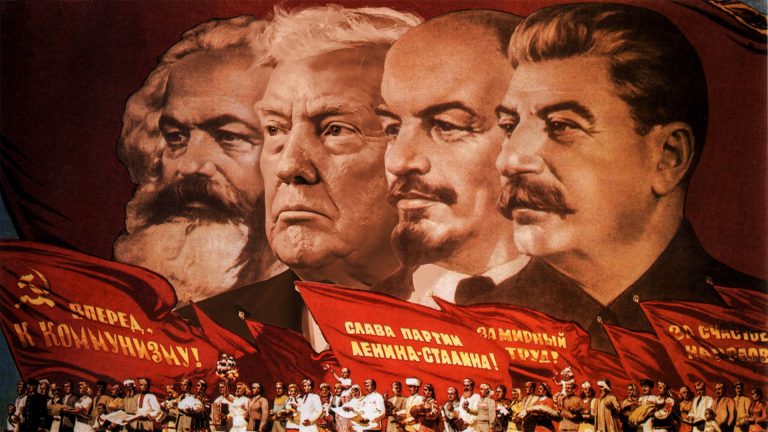
In desperation, Donald Trump turns to communism
It’s true that a faction can overrun a party – Trump’s MAGA movement has transformed the modern Republican Party. The democratic socialists, however, have not replicated MAGA’s mass appeal across broad swathes of the country. The races they are winning are in solidly Democratic areas.
What canny Democratic candidates are doing is leaning into the DSA messaging that is resonating in their communities and adapting it to their political realities. Jon Ossoff, the charismatic Georgia senator who is a potential 2028 presidential candidate, deploys rousing language in his re-election speeches, railing against “the ultra-rich” and the “corporate and billionaire money in our political system”.
While that language is remarkably similar to the DSA’s, he is solidly on centre ground when it comes to his voting record and his policies – as he needs to be in a swing state.
Democratic Senate candidate Troy Jackson – whose Maine seat almost certainly must be won for the party to take back the Senate – deploys similar anti-elitist language and leans heavily into the cost-of-living issue. But he couches these as working-class Democratic values.
This is a sound strategy. Mamdani won in New York because he identified what it was that people were angry about and gave them solutions. The broader Democratic Party needs to do the same. The policies don’t have to mirror those of the DSA, but the energy does.
Suggested Reading
America prepares to vote. Only problem is nobody likes anybody any more
Siddique says America can “absolutely” have a democratic socialist president in 2029, and AOC is currently a favourite for the Democratic nomination. But that feels like a leap. While the DSA will likely strengthen their negotiating hand after the midterms, polling does not support a broad acceptance of the democratic socialist label.
Americans want fresh voices who will stand up for them with passion and offer energetic solutions. It’s the ideas, not the ideology, that will save the Democratic Party.
 Most popular

Emily Maitlis’s diary: As I was saying to George Clooney just the other day…

A new film about Elon Musk reveals him as so awful it’s almost tragic. Almost


The strange case of the Lib Dem writer who fell for Farage


The right wing media hounded Jason Arday and ignored James Orr. It’s obvious why