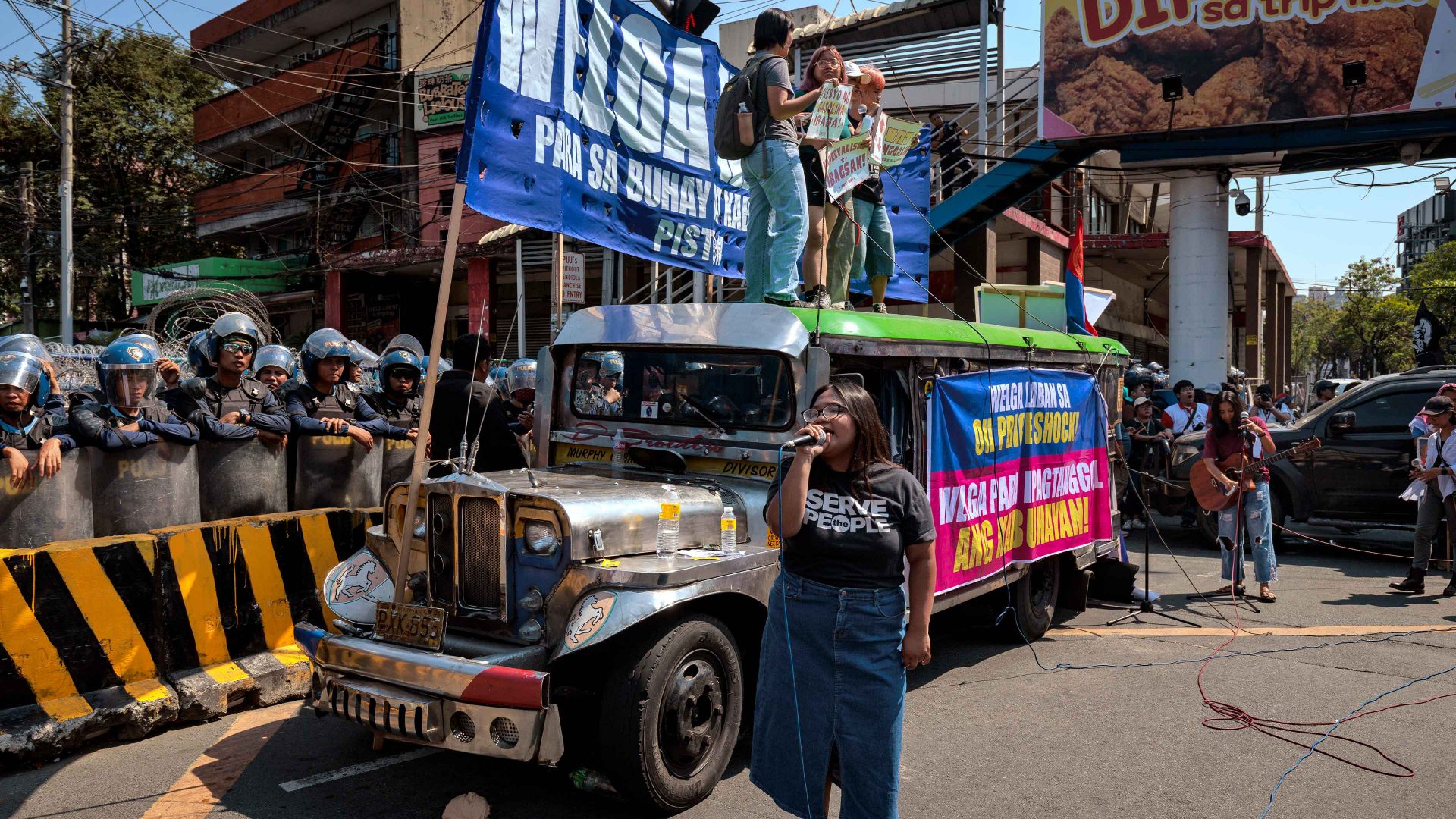
I’ve often thought the jeepney served as a metaphor for the Philippines itself. Now, it’s at the epicentre of a national fuel crisis brought on by the Iran war. The elongated, brightly decorated military jeeps that look like small buses were originally left behind by American troops after the second world war. They are the most popular means of public transport across the nation’s cities.
While teaching in Davao City, I was initially hesitant to ride a jeepney bus.
A lanky, six-foot-plusser like me struggles with low roofs and tight spaces. When I eventually mustered the courage, I ceremonially whacked my head as I hopped in the back, much to the amusement of the other punters.
I had the last laugh though, as they had to find room to shuffle along the benches that stretch the whole length of the bus – despite already being packed in like sardines.
As soreness subsided, I quickly understood why the jeepney is so popular. For 20 pesos (approximately 25p) passengers could ride from one end of the city to another. Some drivers would even operate through the night, bussing droves of call-centre staff to their unenviable task of appeasing people like me and you complaining to customer services from the other side of the world.
The whole operation is built on trust; you give the coins to the person next to you, and the money passes all the way along to the driver, who throws back the change without taking their eyes off the road.
An imperialist past, a vibrant feel, a collective effort: the jeepney is much like the Philippines itself, and is an integral part of the country’s economy. Stopping them threatens millions of livelihoods.
However, in the last couple of weeks, fleets have stalled. The jeepney drivers are out on strike to protest against rising oil prices, sent spiralling upwards by the Iran conflict. Thousands marched on the presidential palace in Manila, demanding price controls and that fuel tax should be scrapped.
The Philippines became the first country in the world to declare a “national energy emergency”, with just 45 days worth of fuel remaining.
Francisca, whose family owns a motorcycle maintenance business, told me their sales had dropped drastically since the price surge, as motorists had been priced off the road. “Filipinos are angry,” she says. “The Philippines has a rich supply of renewable energy but we do not have the means to utilise it – this crisis could have been avoided if the government was doing the right thing.” The Philippines is particularly vulnerable – 98% of its oil is imported from the Gulf.
Suggested Reading

Standing out in Central Asia
It’s not just drivers who are suffering – the school I taught at, like many others, has been forced to shut. “We’ve had no choice but to suspend classes because most teachers live far away and can only afford to take public transport,” says Lydio, a mental health practitioner. “Their morning commute has been made impossible, but I understand why jeepney drivers have gone on strike because oil prices here are astronomical.”
President Ferdinand Marcos Jr says that “nothing is off the table” when it comes to solving the shortage. Few, however, would have expected rapprochement with China. The Marcos administration had previously made a concerted effort to strengthen ties with its historical ally, the United States – taking part in joint military exercises in the face of China’s ambitions in the South China Sea.
Now, according to Marcos, the oil crisis could provide an “impetus for both [the Philippines and China] to come to an agreement” on disputed waters after years of friction – paving the way for joint oil and gas development projects.
The US, Russia and China have been competing for influence in South-East Asia for decades. But the new pressures brought about by America’s war are allowing the others to increase their presence.
Political pressure around the fuel crisis has led Vietnam to sign a deal with Russia to build a nuclear power plant. And the Philippines has also turned to Moscow, importing millions of barrels of crude oil – their first purchase from Russia in five years.
Just as the Americans did not intend for the military jeeps they left behind to become a national symbol of the country they once controlled – surely they do not intend to push even more traditional allies into the arms of Xi Jinping and Vladimir Putin. But that is what they are doing.
Ben Sturt is a freelance journalist who has lived in South-East Asia