When Gene Roddenberry first wrote the phrase “live long and prosper”, he couldn’t have envisioned that it would one day be an appropriate summation of his then nascent TV series. Star Trek celebrates its 60th anniversary this year, and while some recent franchise iterations have met with mixed results – not even Holly Hunter and Paul Giamatti could prevent Starfleet Academy from being cancelled last month after only one series – the brand’s continued longevity and prosperity feels assured.
In less rude health is its nearest sci-fi counterpart, Star Wars, which turns 50 next year. The franchise begun by George Lucas and owned since 2012 by Disney still has legions of older fans, largely powered by deeply entrenched nostalgia. I was one of them, but as I approach my own 50s, I find myself putting down the lightsaber and picking up the phaser.
Years of charmless prequels, a mismanaged new trilogy and underwhelming small-screen adventures mean the once-revered Star Wars world is now something of a big-screen bore. Most recently, The Mandalorian and Grogu – a big-screen extension of the streaming series – was pummelled at the box office by indie/horror films Backrooms and Obsession, and is on course to be the franchise’s worst performer since Solo.
The deep ambivalence I now feel towards that universe would have been unfathomable to my younger self. Like so many others, I lived and breathed Star Wars. But in these last few years, I increasingly value time spent watching the altogether more sedate exploits of Shatner and co, particularly the films. I think I’m able to put my finger on precisely why, and it is something more, something purer than now being closer in age to those on the Enterprise bridge during their big-screen era than the principal Star Wars players.
Unlike the original Star Wars cast, the classic crew of the Enterprise haven’t been reanimated to appease the older fan demographic. Instead they can exist as perfect fossilised pop culture figures, frozen in time from the 79 TV episodes of 1966-69 and the six movies made between 1979-91.
There’s a poignant power, too, in the sobering recognition that most of the actors who inhabited those roles are no longer with us. The march of time was very much acknowledged in the Star Trek films, and these days I find comfort in witnessing ageing men and women out in the far reaches of space, often reflecting on their own mortality and existence. There is no moment in The Force Awakens when Han gets angsty about middle age because Chewbacca has given him a pair of reading glasses for his birthday, but this happens between Kirk and McCoy during a scene in The Wrath of Khan.
Suggested Reading
How Wonder Man made Marvel feel human again
Star Wars has developed a throwaway, inconsequential feeling towards life and death – in 2019’s The Rise of Skywalker, there was the “somehow” resurrection of Emperor Palpatine as well as some needless, tasteless digital tinkering to bring Carrie Fisher back to life, only to kill off her on-screen character after a smattering of half-baked scenes.
Of course, Trek isn’t averse to cheating death, but when Spock was resurrected, it had dramatic weight and was firmly baked into the story arc. In fact, an entire film (1983’s The Search for Spock) was used to plan and deliver the return of Vulcan’s favourite son. It was full of deeply earned emotional beats and an unforgettable moment of heroic sacrifice, via Kirk’s only child.
What other franchise comes with such a terrific bunch of lived-in characters? Despite reports that some of the actors were unable to spend five minutes in each other’s company off camera, real-world grievances never found their way on to the screen. The crew of the Enterprise enjoyed an unwavering camaraderie, including a drunken campfire singalong between Kirk, Spock and McCoy during the opening of the much-maligned fifth feature, The Final Frontier.
You only need look back at the metaphorical musings in the original TV series to know that Roddenberry was interested in exploring bigger, probing themes than the more reductive good-versus-evil of Star Wars. It’s perhaps no surprise that the biggest critical success heaped upon latter-day Star Wars is for the more overtly polemical Andor series.
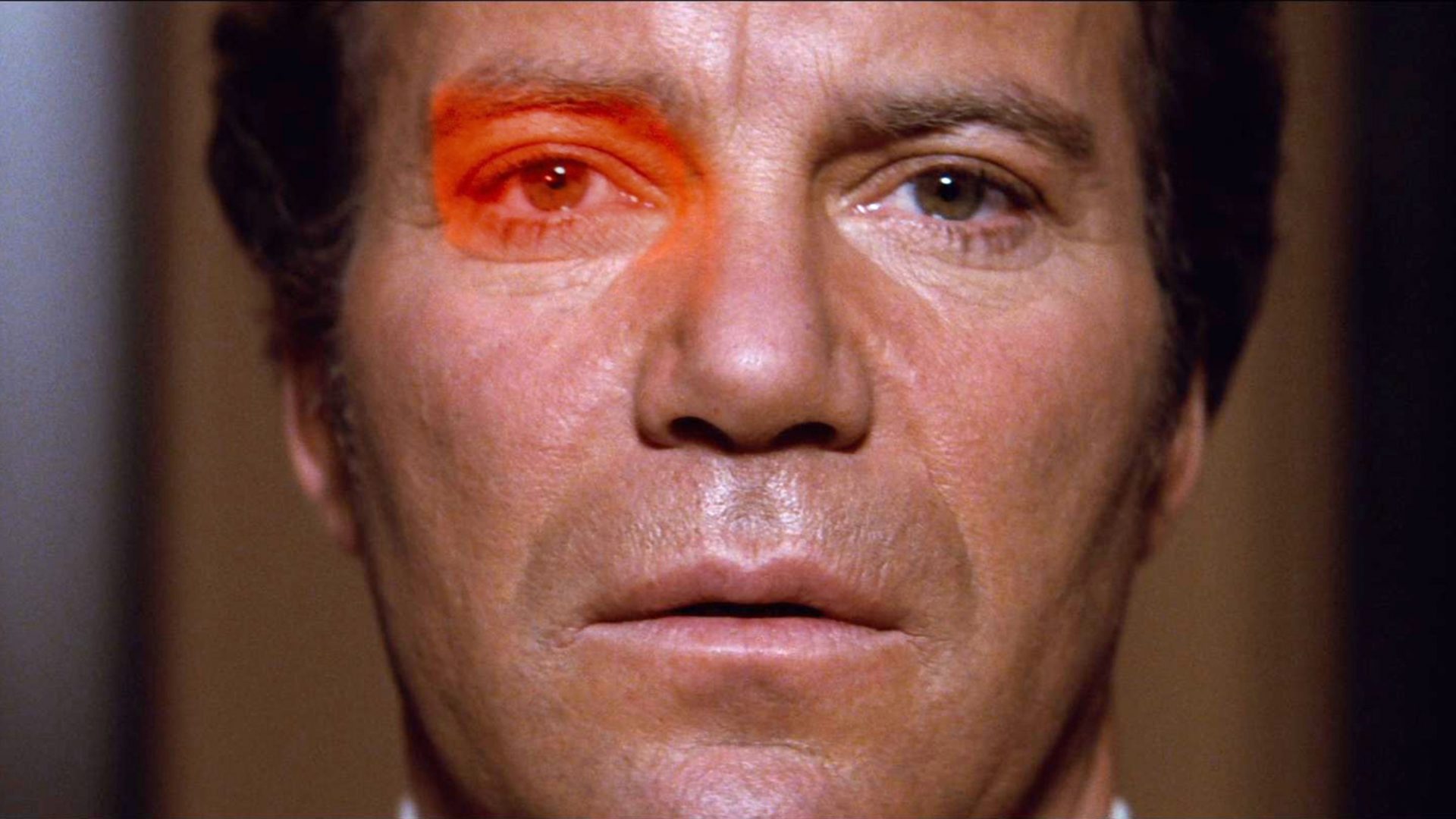
At the end of 1982 fan favourite The Wrath of Khan, having been put through the emotional wringer after witnessing the demise of his BFF and reconciling with his estranged son, a battle-scarred Kirk is asked how he feels. His life-affirming response is a perfect “rage against the dying of the light” retort which hits you right in the middle-aged feels.
“Young. I feel young,” he says. It’s a moment that now feels as powerful to me as “I am your father” did all those years ago.
Adam Lowes has written about cinema for over a decade, for titles including Film Stories and Den of Geek