
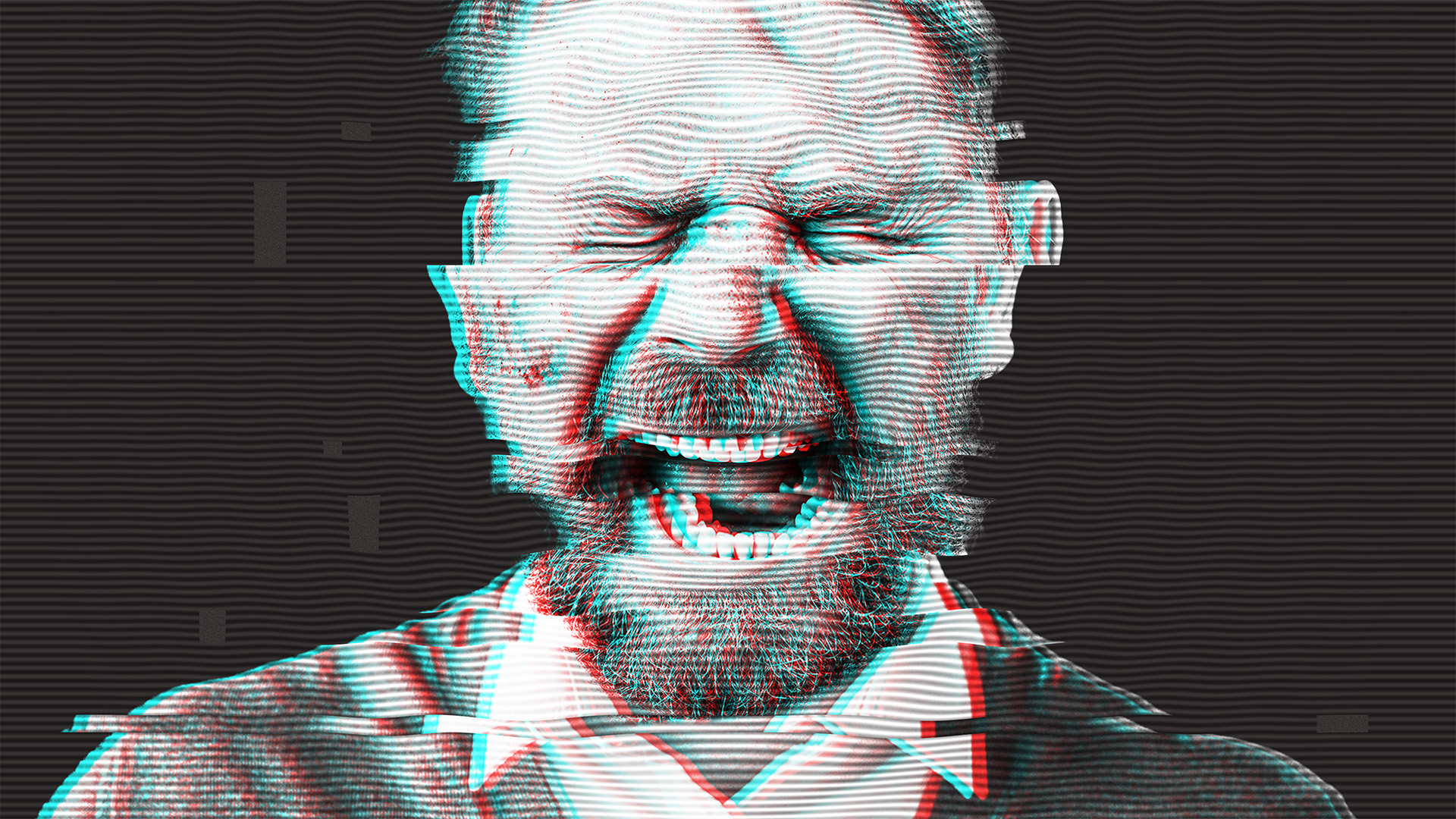
He sits alone in his house, laptop glowing in the dark. He’s not a teenager holed up in a gaming den, nor an elderly retiree falling for email scams. He’s in his fifties, maybe sixties. A mortgage, a family WhatsApp group, a job that once gave him purpose — all feel smaller, more precarious, now. He scrolls, shares articles, and drifts into forums where outrage is indistinguishable from truth. Slowly, his world narrows, discontent becoming something darker.
Meanwhile, public attention has fixated elsewhere: on young extremists or retirees vulnerable to scams. Those in the middle – digitally connected, socially influential – are largely ignored. Yet this group is unusually vulnerable, and uniquely dangerous.
The 2024 England and Northern Ireland riots revealed that far-right thuggery is no longer confined to the young. Many rioters were middle-aged, in their 40s, 50s, and 60s – a noticeable shift over time. During the 2011 England riots, just 5.6 per cent of court defendants were over 40. By contrast, a Guardian sample of the first 500 rioters charged in 2024 found more than a third — 34.6 per cent — were in that age group.
Government research reinforces that point. A 2022 Ministry of Justice report noted that pathways to radicalisation online were often “most evident for older rather than younger individuals”. The Southport riots proved just that: a lie about the perpetrator’s identity rippled through social media, mobilising hundreds within hours. Yet middle-aged extremism rarely features in our conversations about radicalisation; a phenomenon still largely seen through the lens of angry, young men.
Blind spots
Dr Sara Wilford, Associate Professor at De Montfort University, has led pioneering research into the radicalisation of people in their 40s to mid-60s, concluding that the dangers of this group are “flying under the radar among authorities concerned about radicalisation”. Her findings challenge assumptions about the role of ignorance or disengagement in extremism. After all, this is not a group of digital naïfs. They are politically active, socially and economically influential, but navigating online spaces not designed for them.
For Dr Wilford, much of this phenomenon stems from the way society treats the middle-aged. “This is borne out by the way the media — and I’m talking marketing as well, the whole ecosystem — treats this age group,” Wilford tells The New World.
“At 50, you’re considered over the hill. You can’t get a job if you’ve lost one. You’re seen as not worth training. You’re expensive. You’re a technophobe. These sorts of ideas permeate employers’ minds. So you can find that – at 50 – your whole life feels over. You feel like you’re on the scrap heap.”
This invisibility breeds resentment, creating fertile ground for some middle-aged individuals to drift into the conspiratorial corners of the internet. And, unlike younger radicals who grew up educated about online manipulation, the middle-aged entered the digital world as adults with the assumption that their life experience equips them to navigate it as easily as the physical world.
“We’re the ones giving the advice. Why would we need to learn anything? We’ve got it all sorted,” Wilford explains. Yet the wider culture sends the same message back: “We’re not marketed to, we’re ignored — it’s almost a confirmation that no one needs to talk to us. Society assumes this group has it sorted, that they’ve been guided through life and know what they’re doing.”
Middle age is also a period of intense life shocks — divorce, redundancy, bereavement — which research from RAND shows can fuel susceptibility to extremist narratives. As Wilford notes, many in this age group experience isolation just as they are searching for meaning, and online, they find communities ready to supply it.
The calls are coming from inside the House (of Representatives)
But of course middle-aged radicalisation doesn’t exist only at the margins.
Wilford’s research reveals a twin phenomenon: while some men drift into extremism through isolation and invisibility, another — highly successful, influential, powerful — move toward harder, more extreme worldviews from the opposite direction.
The signs are visible in the corridors of power across the world. Reform UK leader Nigel Farage has hardened his anti-migrant rhetoric, proposing mass deportations and calling Channel arrivals an “invasion” and a “scourge,” with Tory figures like Robert Jenrick following his lead.
Across the Atlantic, Elon Musk — the world’s richest man and owner of X — appears radicalised by the ecosystem he controls. Spending nearly $300 million supporting Trump’s campaign, the Tesla founder presided over the so-called Department of Government Efficiency (DOGE), and has since tumbled down his own algorithmic rabbit hole, amplifying far-right narratives, calling for violence on UK streets, and backing far-right activist Tommy Robinson, who claims Musk is covering his legal costs.
Suggested Reading
My best friend’s murder
Trump, though older, exemplifies the same phenomenon, surrounding himself with radical-right middle-aged ideologues: JD Vance, his anti-abortion Christian conservative vice-president, Stephen Miller, architect of his harshest anti-immigration policies; and Peter Thiel, Palantir founder and Silicon Valley financier. These men are hardly marginal figures, they run the show. Far from isolated, they are catered to, shaping our political systems.
These are the two faces of middle-aged radicalisation: the unseen: ignored and isolated; and the “highly successful.” “[The latter are] the most dangerous of all,” Wilford explains. “They are not disgruntled, looking for power. They are in the shadows. They bankroll others.”
Radicalisation – or as the system intended?
For Dr Ian Hughes, academic and author of Dangerous Minds: How Dangerous Personalities Are Destroying Democracy, we are reaching a dangerous tipping point.
He argues that while social institutions have long rewarded leaders with dangerous and extreme qualities, the present concentration of power in the hands of these men is existential. “When inequality is high, democracy is failing, and crises are everywhere, it’s not surprising that these kinds of leaders rise,” he tells The New World. “We’re now in a downward spiral—greater inequality, more aggression, more division. These leaders are actively trying to annihilate the social values they envy: love, care, equality.”
Hughes challenges the idea that this is some mass psychological radicalisation. Instead, he sees a collapse of guardrails – both in offices of power and across society – which is causing a shift toward extremism. “I’m not sure these men are becoming radicalised. What’s changing is the culture around them; it’s enabling them to express psychology that was always there,” he explains.
Wilford observes a similar pattern: many of the “radicalised” middle-aged people she studied had kept their views quiet for years, but online anonymity and constant exposure to like-minded voices made them acceptable. Social media is central to this process, as echo‑chamber dynamics amplify extreme views, normalising what was once taboo.
After the 2024 Southport attack, anti‑Muslim hate on Telegram surged by 276 per cent, and anti‑migrant posts on X more than doubled. For Hughes, it is a “global ecosystem deliberately used to undermine democracy,” one that encourages people to act on impulses they would once have restrained.
Nowhere is the removal of guardrails more evident than in Trump’s second term. The restraints that once held him back – moderating advisors, civil-service resistance, judicial oversight, party discipline, and a semi-independent media – have largely collapsed.
In the UK, the situation is strikingly similar. The Conservatives have abandoned their moderate wing to chase Reform UK’s hard-right voters. GB News, a conduit for conspiracy and grievance, now averages 81,000 daily viewers – surpassing the BBC News Channel in key slots – and is on track to become the UK’s largest news channel by 2028.
Meanwhile, local journalism has collapsed, the BBC has been weakened from the inside out, and unregulated social media amplifies outrage without scrutiny. With institutions weakened and trust and confidence in government at a record low, Britain has lost many of the stabilising forces that once contained extremism.
“Violence is latent in society all the time, but we have checks and balances that stop that violence from becoming overt,” Hughes observes. “Democracy is really a system of defences that keeps a lid on it.”
Middle-aged militants
Taken together, this is not a story about vulnerable groups at the fringes of society, but a political age moulded by a group of middle-aged men. One group falls downward into radicalisation because society has ignored them; the other climbs upward into extremism because it has enabled them.
The result is a dangerous symmetry. The isolated man in his living room finds purpose in the ideas pushed by the powerful man in the Situation Room. The powerful man finds a receptive audience in the anger brewing below. What looks like a wave of individual radicalisations is in fact one big feedback loop.
Both Wilford and Hughes are clear that the solution cannot lie with the individual alone. Middle-aged people are the only demographic with no meaningful protections, no targeted guidance, and no dedicated interventions. Ofcom commissions media literacy training for the young and the elderly, while Prevent’s publicly available materials focus heavily on younger cohorts. Yet the group that is active online, most politically influential, and most socially overlooked is the one with very little support.
“We can start building initiatives actually aimed at this middle-aged group and acknowledging their skills,” Wilford says. But right now, even the idea feels culturally awkward. “Are you really going to report the middle-aged guy in Aldi? Most initiatives are aimed at young people. Even if you report an older person to prevent radicalisation, the materials are not age-appropriate.” Her team has created age-specific guidance, but she stresses that the first step is simply recognising this group as vulnerable — and acting as though that vulnerability matters.
For the powerful men at the other end of the spectrum, the answer is more uncomfortable. The issue is not that they need to be “educated,” but that the democratic constraints that once contained their worst instincts have eroded. Reversing that means rebuilding the institutions that keep power in check: independent media, functioning parliaments, an empowered civil service and political systems that stop rewarding extremity with attention and electoral gain.
Despite their different emphases, both scholars agree on one essential point: none of this will happen unless we admit what is happening. This group are not a footnote in the story of rising extremism: they are its centre of gravity.
But, as Hughes argues, the scale of the challenge requires something society has never attempted: a reckoning with our institutions, and their susceptibility to bend to those who want to destroy them. “[We need] a mass conversation that acknowledges the spiral we’re in and thinks seriously about how to rethink our institutions. We’ve never done it before in history,” he says. “But we have to.”