Semiconductors – the ones inside the computer on which I’m typing, and those at the centre of Trump’s AI trade war with China – are one of the most important inventions to flow from the quantum revolution.
In recent decades, however, progress has stalled and scientists have been returning to a multidisciplinary approach. Universe+, a new project in Europe, is bringing together physicists, mathematicians and cosmologists in an attempt to break down the silos in which they often operate.
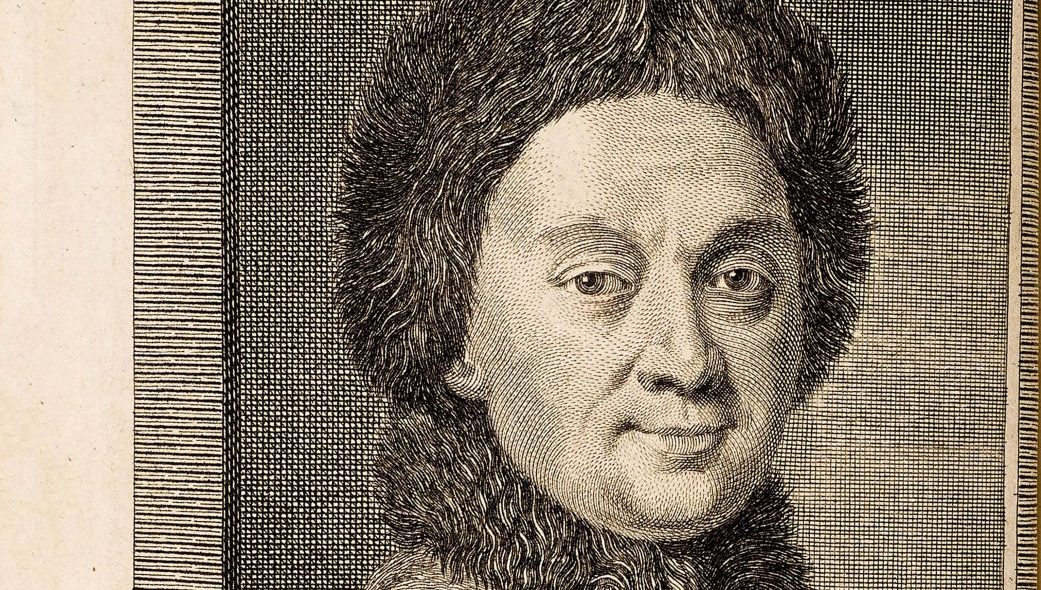
The groundwork for today’s technological revolutions rests on a long line of physicists throughout the 1900s, from Planck to Schrödinger to Feynman. But the story begins 150 years earlier with a French polymath, a remarkable genius whose wide-ranging and far-reaching contributions have been largely forgotten.
Pierre-Louis Maupertuis was born in Saint-Malo in 1698, and his clearest contribution to science came early in his career. After travelling to London, Maupertuis became enthralled by Newton’s work. In 1736, Maupertuis led an expedition to Lapland where he proved that the Earth was slightly flattened at its poles, confirming Newton’s theory and doing more, perhaps, than anyone else to popularise ideas that would go on to define the enlightenment.
Suggested Reading

How to save science from populism
The expedition increased Maupertuis’s own standing and “gave his career a contemporary fame that has seldom been equalled.” He even won favour with Frederick II, the King of Prussia, who invited him to become president of the Berlin Academy of Sciences.
It was around this time that science was beginning to function through institutions, and as Marco Storni, a historian of science who has written extensively about the period, writes: “His tentacles were in all the major institutions of the time.”
But Maupertuis’s most original contribution came in 1744 with his “Principle of Least Action”. He stipulated that the universe is governed by an economy of nature, always choosing the path that expends the least energy over the shortest period. The principle, which has been described as the greatest generalisation in physical science, would form the springboard for the leap from a classical, Newtonian world to a quantum one.
However, Maupertuis never spent much time developing this, or any of his ideas, in detail; the advantages of his insight wouldn’t become clear for at least a century. He arrived at his principle from intuition and seemed to lack the focus to see his project through to anything resembling a conclusion. At the time, the principle was not considered important, and Maupertuis was ignorant of the ripples his discovery would create.
He wrote widely on everything from salamanders to the existence of God. He studied and wrote about the family of Jacob Ruhe, a surgeon in Berlin whose family characteristics included extra fingers, and he became the first to formulate a theory of hereditary genetics a century before Mendel. But again, his analysis was speculative. His greatest asset was that he could converse with those at every frontier of science. “Maupertuis was never a specialist,” Storni explained, “but he was a man of culture, a man of letters, and a mediator between worlds.”
Suggested Reading
Why science needs to talk about failure
Maupertuis’s success came to a rapid and sour end. Shortly after publishing his “Least Action” paper, a colleague accused him of plagiarising the idea from Leibniz. His great friend, Voltaire, turned against him and, several years later, published what has been called the “satire of the century”: a scathing mockery of Maupertuis that forced him into seclusion and permanently tarnished his reputation, in life and after his death.
He fled Berlin and sought to travel home to Saint-Malo, but only made it as far as Basel before he became sick and died on July 27, 1759.
Maupertuis was the archetype of the 18th-century savant, writing widely and following his curiosity. Nima Arkani-Hamed, the theoretical physicist leading Universe+, regularly uses Maupertuis as an example of how to develop paradigm-shifting ideas.
Last year, he told me that he believed research today had lost the necessary “frisson of magic” required to make major breakthroughs in fundamental science – something Maupertuis certainly possessed, and which helped to shape the world we see today.