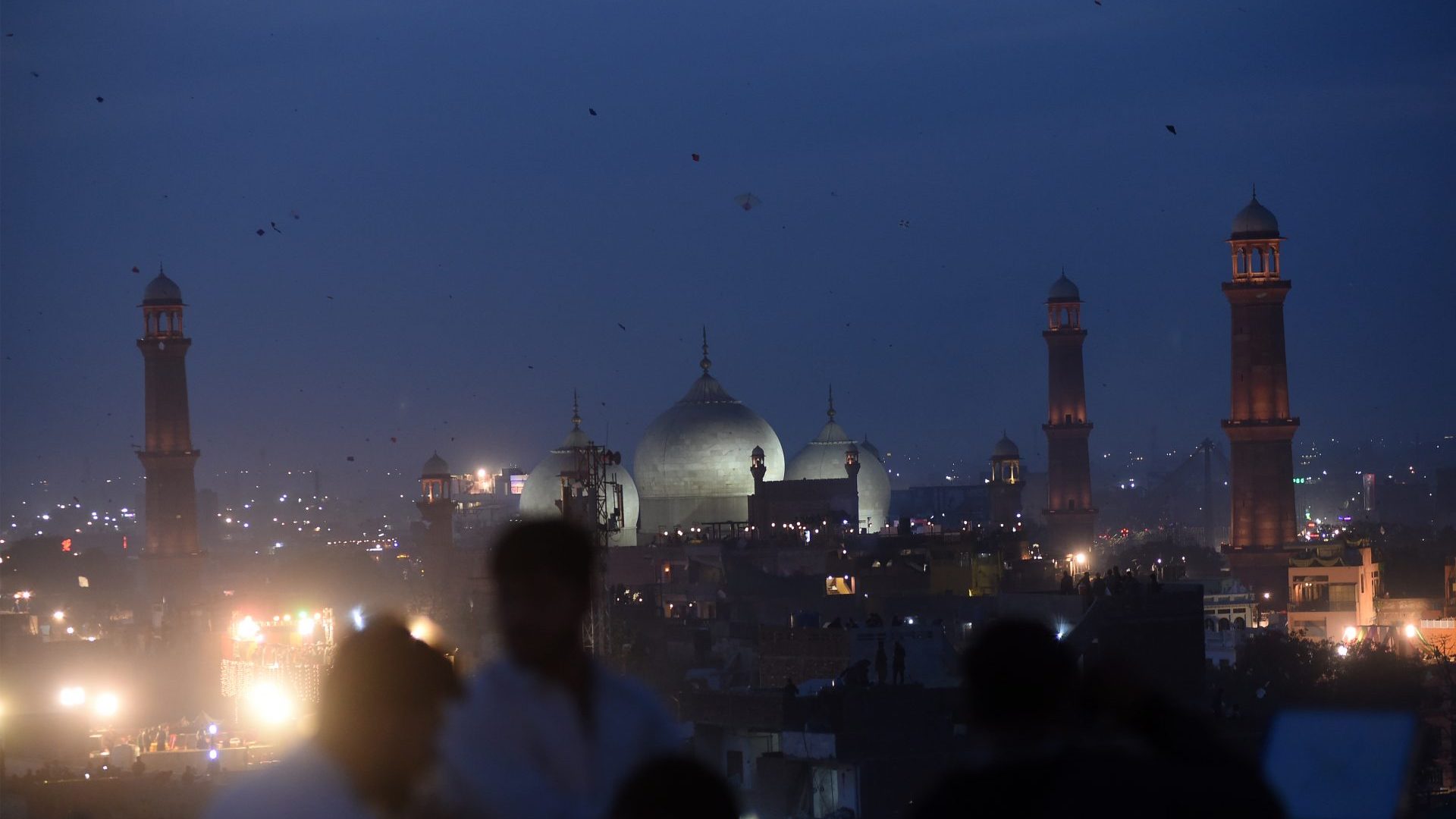
There’s a particular kind of concentration in Lahore’s co-working spaces – quiet, deliberate, almost stubborn – that feels worlds away from Silicon Valley’s noise and self-mythology. In shared offices across Johar Town, Gulberg and beyond, Pakistani women are building startups around problems that rarely make it onto billion-pound pitch decks: children with food allergies who can’t find safe products, stay-at-home mothers locked out of digital skills, domestic violence survivors navigating the legal system alone.
These are not the kind of “disruptions” that excite venture capitalists hunting the next unicorn. They are the prosaic mechanics of daily life. Yet solving them may prove just as transformative for Pakistan’s economic future.
Because Pakistan’s tech ecosystem is growing – rapidly.
According to Dealroom, the specialist global tech data firm, Pakistan’s startup scene has expanded 3.6 times since 2020, outpacing India and New York. There are now 170 venture-backed startups with a combined valuation of more than £4bn.
For startups launched since 2015, the sector has grown 11.3 times in five years, a rate that rivals the Bay Area at its peak. It mirrors where India’s ecosystem stood roughly a decade ago. Today, India’s tech sector is worth around £700bn and, as it hosts Google’s Sundar Pichai, Nvidia’s Jensen Huang and others at this week’s AI Impact Summit, offers a glimpse of where its neighbour could be heading.
At the centre of Pakistan’s surge is a cohort often overlooked: women.
Of the 3,400 applications to last year’s Aurora Tech Award – a global prize for female founders – 288 came from Pakistan. That is 8.5% of the global total from a country with less than 3% of the world’s population.
And these founders are building differently.
While much of Europe and the US chases AI tools, consumer tech and fintech apps, Pakistani women are working across education, health and infrastructure. Maria Ameer’s Ootien produces Pakistan’s first certified allergen-free foods, born from her own coeliac diagnosis.
Anusha Shahid’s Zvolta converts business premises into EV charging stations. Saba Nisar’s Saheli uses AI to monitor reproductive health. These are companies shaped less by abstract market modelling and more by lived necessity.
Suggested Reading
India and Pakistan, Asia’s dangerous neighbours
The challenge is capital.
Between 2015 and 2021, Pakistani startups collectively raised around £500m. For context, US startups raised roughly £300bn in 2021 alone. Of Pakistan’s total, just 1.4% went to women-led ventures. By 2025, that share had risen to around 10% of the ecosystem. Progress, perhaps, but still far from parity.
The imbalance is global, but in emerging markets it compounds. Female founders face the structural biases of venture capital while operating in an environment where capital itself is scarce.
Yet scarcity has prompted ingenuity.
Shut out of traditional VC pipelines, women are building parallel infrastructure. Standard Chartered’s Women in Tech programme grew from 86 applicants in 2019 to 1,900 across more than 100 cities by 2025. Companies like inDrive – now the number one ride-hailing service in Pakistan – are investing not only money but operational support.
The ten finalists in this year’s Women in Tech cohort – Ameer’s Ootien among them – generated Rs25 million in verified revenue within two months. They are tracking growth of 3.3 times. By western standards, where fivefold first-year growth is the benchmark for breakout startups, that may look modest. But these are companies that began with women solving the problems they encounter every day.
Walk through Lahore’s emerging tech hubs and you’ll see the signs: multiplying co-working spaces, cafés filled with laptop-clutching twenty-somethings, a young population betting that technology offers an exit from stagnation. Among them, increasingly, are women reframing Pakistan’s challenges – in education, healthcare, access to services – as opportunity.
Whether that optimism translates into durable, scalable businesses will depend less on ambition than on whether capital is willing to meet it. Talent is there. Demand is there. The pipeline is filling. The quiet disruptors are building.
 Most popular
Yes, it's a genocide

The race to save the Beatles

Matt Goodwin’s road to derision

How Jon Stewart told me the brutal truth about Trump and Hegseth