In the inky blackness of a deep cave that cuts hundreds of metres into a mountain, a torchlight picks out thousands of deep scratches engraved into the rock face. This extraordinary gallery of excavations has been formed by successive generations of elephants.
The elephants use their tusks to cut into the cave walls, and having chiselled off the rock, they chew and swallow the sodium and magnesium-rich debris.
By supplementing their diets in the mineral-rich caves of Mount Elgon, in western Kenya, the elephants here found an ingenious way to thrive. They are the only elephants in the world to go deep into caves to mine for salt.
Pushed to the brink of extinction by poachers just a few decades ago, the population of these herds is now up to around 700. Their resurgence has been a conservation success story.
At the same time, however, the human population in this fertile region of rich volcanic soil has also grown. The number of people in Kenya overall has more than doubled in the last 30 years. Farms have sprung up on formerly uninhabited land, some of which cut across the elephants’ migratory corridors.
For the people who depend on smallholdings for sustenance and a meagre livelihood, the elephants who trample their crops can be a nuisance.
In addition, hungry elephants have raided fields of maize, cassava and potato, wiping out whole harvests. Some farmers have set snares, which can leave the animals with potentially fatal open wounds.
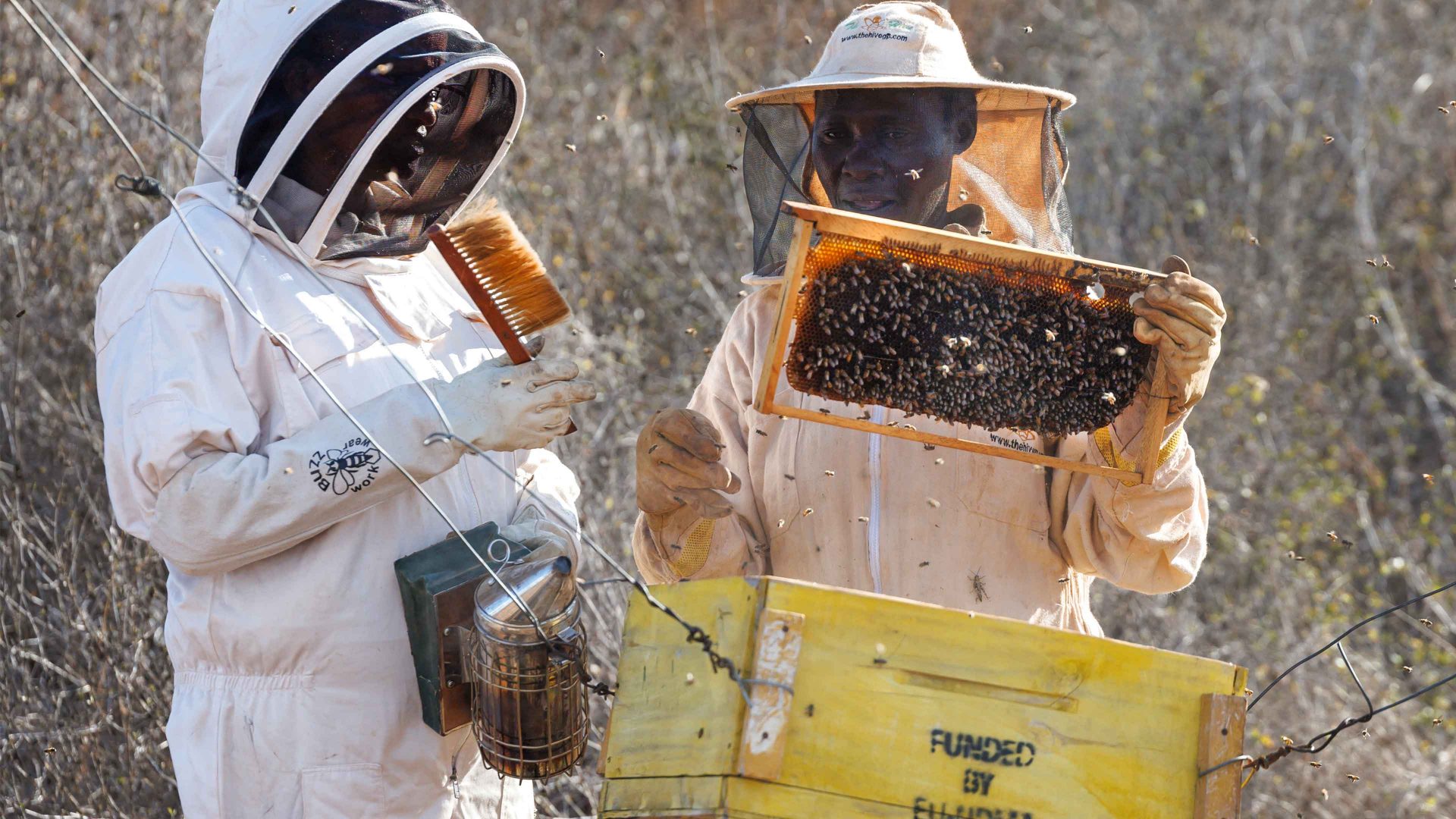
Conservationists have found an innovative solution. The UK-registered Mount Elgon Foundation, which was formed by Chris Powles – whose grandfather lived in Kenya and established a National Park – installed beehives on the edges of farms. It turns out that elephants can detect the presence of bees from far away, and they don’t like them. Scientists have shown that it puts them off venturing any closer.
One smallholder, Veronica Kibet, told me that she lost her crop in an elephant raid last year. The mother of five is entirely dependent on the maize and potatoes she grows in fields adjoining the family’s mud-walled home.
“It happened when we were at a funeral,” she told me. “So we could not chase them away. They ate the whole harvest in just a few hours. When we got back there was nothing left.”
Suggested Reading

Life in Venezuela is bad – Trump might just make it even worse
With her son Silas, seven, on hand to help, Veronica anxiously surveyed the current maize crop, praying that the hives will be enough to keep the elephants away this time.
Farmers have tried scaring off the elephants by clapping their hands and lighting fires, but this doesn’t really work. David Komol said: “For many years a large herd of up to 30 elephants has passed through this way. When they get scared by people, they stampede. One year an elephant speared an old man in the groin. He only just survived.
“We don’t mind the elephants, but we cannot abandon our farms. We hope the hives will mean that we can live next to them peacefully.”
In the 1970s, the herds that roamed across the region that spans the Kenya-Uganda border were almost wiped out by Idi Amin, who encouraged poaching for ivory as an incentive for his soldiers. It is rumoured the dictator even shot several Mount Elgon elephants himself on a hunting trip with Colonel Gaddafi.
“Over the 22 years I have been coming to Kitum Cave it is clear that the enhanced security patrols on the Kenyan side and the reduction in guns crossing over from the Ugandan side have made a real difference,” says Philip Chepso, a National Park guide.
With the help of their insect allies, human beings have accomplished an unimaginable turnaround for an elephant population that once seemed destined for extinction.
Tom Parry has covered wildlife conservation and hunting in Africa