You may not have noticed what has been described, with typical hyperbole, as the government’s “latest assault on democracy”. Nor should you feel bad if you did, but struggle to care much about it.
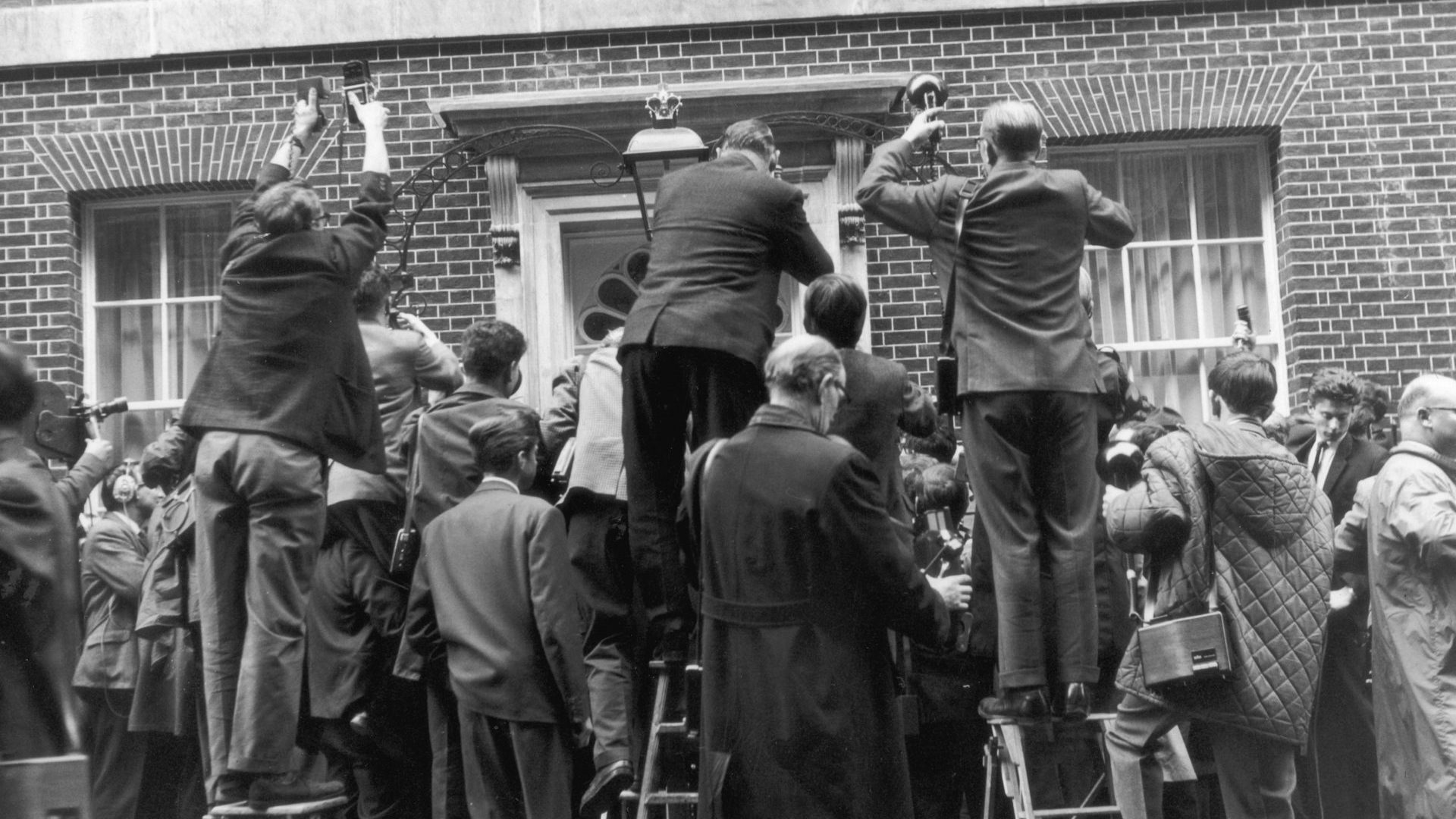
Nonetheless, many of the journalists who report from Westminster, known for arcane reasons as “the Lobby”, are in a lather about the recent Downing Street decision to abolish their afternoon briefings with officials. Some have climbed previously unconquered peaks of sanctimonious cant over the government’s “failure to consult” them first.
They shake their heads angrily when No 10 points out, reasonably enough, that many of those most upset about his decision rarely graced these sparsely attended events with their presence. In any case, there will still be a full briefing almost every morning, which gives the Lobby more opportunities to ask more questions than in just about any other democratic nation.
This is a government that has – largely in vain – bent over backwards trying to avoid an antagonistic relationship with the media. It has promised there will be no attempt to revive plans for properly independent press regulation, let alone go ahead with the once-planned second stage of a public inquiry into the way newspapers operate.
It appears to be handling competition issues over the proposed takeover of the Telegraph by the owners of the Mail with a fair-mindedness that neither newspaper applies to Labour. The future of the BBC’s licence fee and renewal of its charter is being determined without trying to intimidate the broadcaster over its journalism, as the Tories so often did.
The row with Lobby journalists illustrates some deep flaws in the way they cover politics. Their sense of entitlement and outrage is rooted in the notion that they speak, without fear or favour, truth to power. Anyone who spent time working either in political journalism or politics – and I’ve done both – knows this is nonsense.
The national press is still dominated by the big blue wall of the Sun, the Mail, the Express, the Telegraph and, quite often, the Times. Tim Bale, the Conservative historian, has characterised these newspapers as being an extension of the “Tory party in the media”, where neither facts nor the views of the readers matter so much as the ideological bent of their proprietors.
Far from being impartial tribunes of the truth, many of the journalists on these newspapers have, from the day Keir Starmer entered Downing Street, regarded their job as being to twist every story to do as much damage to his government as possible.
This is, of course, far from being a new phenomenon. Every Labour leader over the past century has had good reason to complain about the “right wing press”. At the same time, plummeting newspaper circulations have sapped their power since the “It’s The Sun Wot Won It” days of the 1980s and 1990s, when they could credibly claim to have changed the outcome of general elections.
Like the dark light from a dying star, however, newspapers still have an outsized influence on broadcasters. And, even in their apparent infirmity, the old press seems more vicious than ever as they seek to maintain what’s left of their hold on digitally distracted readers by echoing the nastiness found online with a daily dose of venom.
Suggested Reading

Keir Starmer: the anger manager
Although there are plenty of good political journalists who try to be fair to all sides (more so than I did as a Labour-leaning one during my time in Westminster), the shrinking audiences and failing finances of the traditional media have had other damaging effects on their coverage. Most news organisations have cut back on specialist reporters so they get announcements written up by a Lobby which – again with some honourable exceptions – knows little about policy.
At the same time, the demands of podcasts, constant online updates and social media give journalists little time to do more than scratch the surface of any issue. Not only does this infect their stories with groupthink, it also makes it much more likely to be done through the “who’s-up-and-who’s down” lens that focuses on political fortunes or their preferred narrative of unfolding chaos which creates such a clamour for a new occupant of Downing Street every couple of years.
In Westminster, novelty usually trumps efficacy, with ministers – and prime ministers – more likely to be judged by how well they communicate than the outcomes of the decisions they take. Press conferences and interviews see broadcasters vying for a viral clip with a “gotcha” question designed to catch their victim out rather than inform their audience.
The Lobby’s scrutiny is intense but generally about political performance or sometimes standards of behaviour and personal probity. Such things matter in any democracy, but can you name the last minister who was forced to resign over a failing public service, the faltering economy or some preventable disaster abroad rather than some accident in the political village?
Little wonder that so many voters have concluded that mainstream politics is more interested in itself than in people like them, or perhaps inherently corrupt, as they turn instead towards populists who want to smash the whole system.
The biggest moments of recent years have not been informed by much journalism on their real-world consequences. Coverage during the build-up to the invasion of Iraq was dominated by whether Tony Blair could get votes in parliament, not whether Iraq could be transformed into a democracy without huge loss of blood. Austerity was more often reported as a political strategy than a workable economic one.
Far more was written during the 2015 general election campaign about the shenanigans of what might happen if there was a hung parliament than what the impact might be of David Cameron’s promise of an in/out vote on Europe. The following year’s referendum often seemed to be not about the future of the UK so much as that of the Conservative Party.
And so it goes on. Analysis of BBC News push notifications during last year’s election found that 53% were about political process. The only other category to make double figures with 11% was “standards, corruption/sleaze”, while no policy issue – including tax, immigration or foreign affairs – got more than 5%.
And now, as the government grapples with policy dilemmas that got scant coverage before it was elected, we seem stuck in a loop of “inside Westminster” reporting about the finances of this politician, the influence of that adviser, or often the journalists themselves. The days following November’s budget were filled with stories about leaks, rather than what it meant for living standards, and the BBC’s political editor’s portentous verdict that “after a careful examination of the facts on your behalf” the public was misled.
Quite apart from whether he said the same when similar budget leaks happened under the last government, he was swiftly contradicted by officials from the independent Office of Budget Responsibility.
Suggested Reading

Starmer’s problem isn’t just Reform
Acres of coverage were devoted last autumn to claims that Jonathan Powell, the prime minister’s national security adviser, had interfered in the prosecution of some alleged Chinese spies. When an official report was published in December showing he had not, the Lobby shrugged and ignored it.
Last week, there were multiple stories that Morgan McSweeney, Downing Street’s chief of staff, had told the cabinet they needed to connect with voters on the “Three Es” of empathy, evidence and emotion, as well as saying the government had a “deficit” on the latter. None of that ever crossed his lips (yes, I’ve checked with two of those present) and journalists were told it was untrue. Some wrote it anyway.
On occasions, they are right to be sceptical about official denials, and a rambunctious press can serve a purpose by pricking the pomposity of others. But politics is not a game and I’ve lost count of the times journalists have told me that they’re “planning a bit of mischief” or want to “have some fun” with a story.
Some of those members of the Lobby who seem to be taking themselves very seriously right now could start with being a bit more serious about the subject they are paid to cover.
Tom Baldwin was senior Lobby journalist for the Times before a spell as communications director for the Labour Party. He is the author of Keir Starmer: The Biography