At the stroke of midnight Eastern Standard Time on 5 February 2026, the last remaining nuclear guardrails will cease to exist. The 2010 New START Treaty will expire. For the first time in nearly 60 years, the world will be without a binding agreement limiting nuclear weapons.
The world will revert to the early days of the Cold War when the nuclear philosophy of Mutual Assured Destruction (MAD) was the only barrier to Armageddon. And this time the danger is magnified by the existence of arsenals in China, North Korea, Pakistan, India and Israel.
START is the acronym for Strategic Arms Reduction Treaty. It is the final treaty in the US-Soviet arms limitation process that started in 1967 with a ban on atmospheric nuclear tests. It limits both sides to 1,550 nuclear warheads and 700 delivery vehicles.
The immediate reason for the treaty’s impending expiration is that neither the US nor Russia trusts the other to be truthful. All such treaties rely on inspections to verify that signatories are upholding their end of the bargain. START inspections have ceased.
Washington and Moscow agreed to a mutual suspension of inspections in March 2020 during the COVID-19 pandemic. However, before the health crisis ended, Russia invaded Ukraine and the US imposed sanctions and travel restrictions. Moscow argued that these measures made inspections impossible and in August 2022 blocked US scrutineers. In February 2023, Russia formally suspended its participation in New START, effectively rendering the treaty unenforceable.
The Russians were never happy with START. They did not like the cap of 1,550 warheads; felt that the inspection system was unnecessarily intrusive and wanted the freedom to introduce new systems without fresh negotiations. Moscow also wants to include any US missile defense systems in negotiations. The Russians are still angry about George W. Bush’s 2002 withdrawal from the 1972 ABM Treaty and are concerned about Trump’s proposed “Golden Dome.” Vladimir Putin is also keen to keep developing new weaponry. This includes a hypersonic glide missile (Avangard); a nuclear-powered underwater drone (Poseidon) and a nuclear-powered cruise missile (Burevestnik).
But despite his misgivings, Putin suggested that the current START Treaty be informally extended for another year and offered to maintain Russia’s strategic arsenal at its current level.
The Trump Administration rejected the proposal for a START extension. The treaty allowed for only one single year extension which was triggered in the dying days of the Biden Administration. Trump used the treaty’s “one-year only” extension clause to drop START. Most observers, however, believe that the real reason is more complicated.
President Trump has always said that the treaty negotiated by Barack Obama was “a bad treaty.” When told it would soon expire, he told the New York Times: “If it expires. It expires. We will just negotiate a better treaty.”
In fact, Washington diplomatic sources, say that the Trump Administration believes that American interests are best served by the absence of guard rails.
Trump’s foreign policy philosophy emphasises unilateral flexibility over binding treaties. To that end, he has down-sized the State Department’s arms control bureaucracy and withdrawn from the Open Skies and INF Treaties.
Suggested Reading

Carney spoke to the world. Trump rambled to himself
The US president appears eager to spark a nuclear arms race. He believes that he has the money and the technical expertise to win. Nuclear rearmament is a key part of Trump’s $1.5 trillion defense budget. Work has already started on new ICBMS, new strategic submarines and bombers and on increasing production of nuclear warheads. In a Truth Social Post just before Christmas, Trump wrote that nuclear weapons were central to his “Dream Military” vision.
Another key part of Trump’s plan is his “Golden Dome” anti-missile defense system. This worries Moscow because it would give the US a second strike capability. Cost constraints mean that Russia’s missile defense systems (S-300, S-400 and S-300VM) are limited to protecting key military and economic installations only.
Suggested Reading
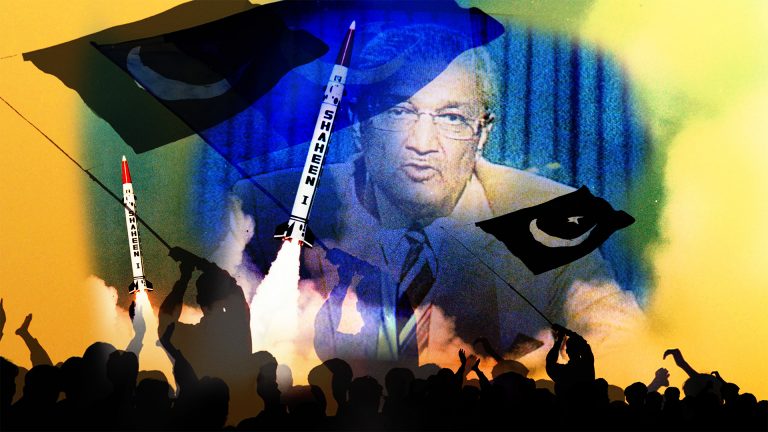
The father of Iran’s nuclear programme
The other reason America is dragging its feet is that it wants China included in any future talks. On this issue the Russians appear to agree. According to the Stockholm International Peace Research Institute (SIPRI) the Chinese have 600 nuclear weapons and are increasing their arsenal at a rate of 100 a year. The Chinese have refused to participate in any negotiated reduction of their forces.
The Russians are ambivalent about the inclusion of China. They accept the need for Chinese inclusion at a future date but believe that an interim pact can be negotiated before then. Moscow, however, is certain that they want the British and French deterrents of 515 nuclear weapons included in any future talks.
A few years ago, the British and French might have agreed to their inclusion, but Trump’s foreign policy has raised fears of the withdrawal of the US nuclear umbrella. That has increased the need for something that only a few years ago would have been unimaginable: a European nuclear deterrent that is independent of America.