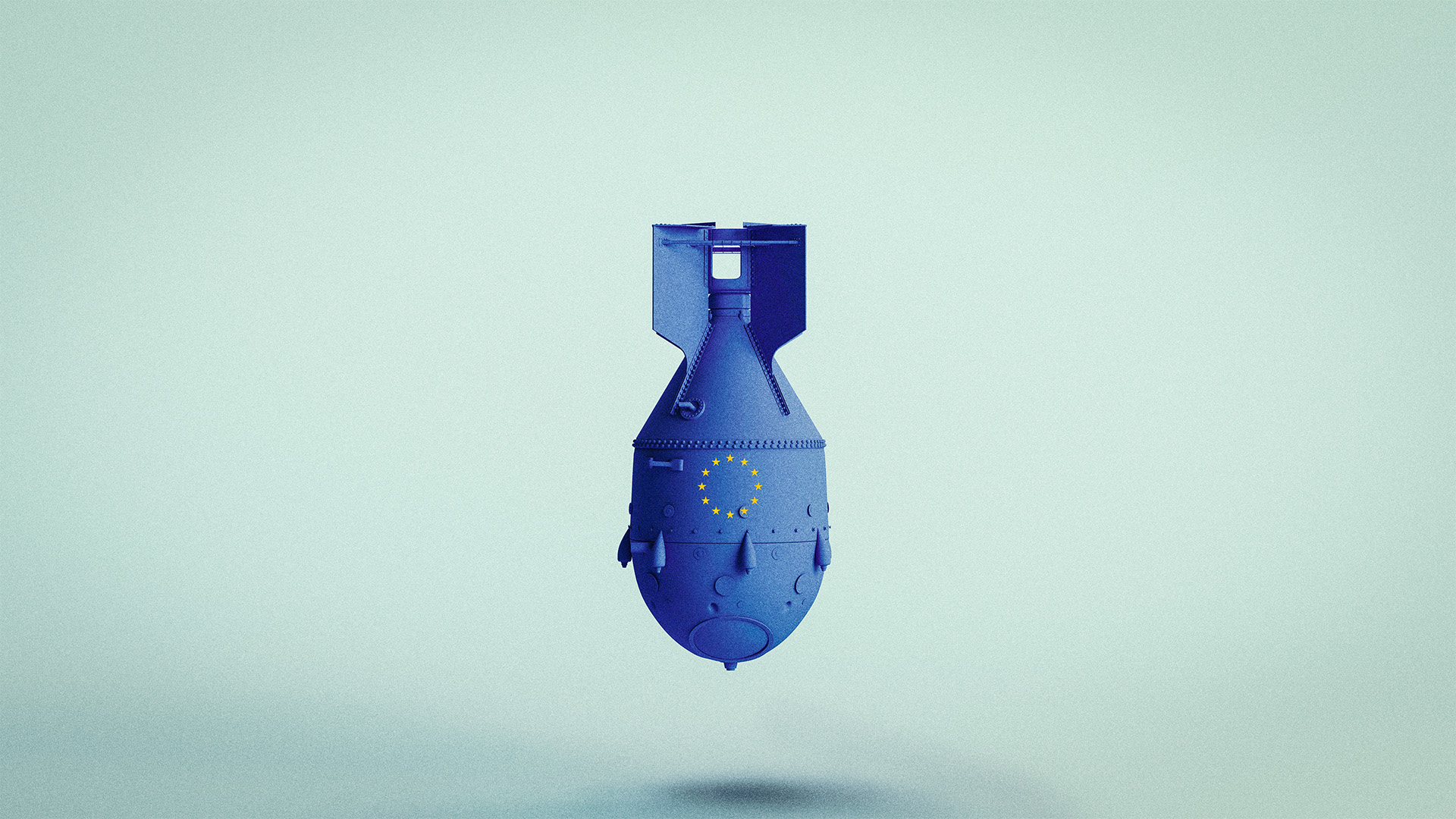
Greenland has badly shaken Europeans’ faith in the credibility of the American nuclear umbrella. In recent weeks the leaders of Germany, Norway, Sweden, Poland and the Netherlands have all called for talks on some form of “European nuclear deterrent”.
President Emmanuel Macron has encouraged debate by saying that France is “open to the discussion” of a European nuclear deterrent if Europe wants greater autonomy.
There cannot, however, be a “European bomb” as such. Neither can any European country which does not already have nuclear weapons obtain them or build them. They are all constrained by their signatures on the Nuclear Non-Proliferation Treaty (NPT) which prohibits them from building or acquiring nuclear weapons. And it is generally agreed that if any European country built itself a nuclear bomb then it would destroy the NPT treaty and open the floodgates to worldwide nuclear proliferation.
The only option is to use the existing French or British nuclear deterrents – preferably both – as a foundation of a nuclear deterrent that in a worst case scenario can replace the American umbrella.
But there is a problem. The British and French deterrents are built on very different foundations. In Britain’s favour, its nuclear forces are already fully committed to Nato. London also participates in Nato’s Nuclear Planning Group (NPG); the forum through which Nato allies consult on nuclear strategy. But, Britain’s Trident missiles come from the United States. This means that its deterrent is deeply embedded in the transatlantic relationship.
France, by contrast, insists on absolute national control. It refuses to participate in the NPG. Its nuclear forces are not under Nato command, and France refuses to discuss nuclear doctrine with allies. President Macron’s recent statements about a “European dimension” are a step in the right direction, but they do not alter the underlying reality: France’s deterrent is French, and France alone decides how it is used.
This leaves Europe in an uncomfortable position. If the United States were to withdraw its nuclear umbrella, suddenly Europe would be without a ready‑made alternative. Germany, Poland, and the Baltic states would lose the visible, forward‑based American nuclear forces that currently serve as a tripwire. Nato’s nuclear sharing arrangements would collapse overnight. And Europe would find itself scrambling to build a new deterrent architecture in the middle of a crisis.
Quiet, structured discussions must begin now, before any crisis forces Europe into improvisation. These discussions do not need to break the NPT or undermine America’s commitment to Nato. But they must prepare a diplomatic insurance policy for a scenario that European leaders increasingly fear.
Suggested Reading

The father of Iran’s nuclear programme
To be credible, that insurance policy would need to build around the British and French deterrents and require three essential steps.
To start with, Europe would need to replace – or complement – the American “tripwire” with forward‑based British and French nuclear forces. This does not mean transferring warheads to non‑nuclear states. That is forbidden by the NPT. It means stationing British and French tactical or intermediate‑range nuclear systems on the territory of vulnerable allies, under British and French control. Without such visible deployments, Germany, Poland, and the Baltic states would not feel secure.
The single biggest obstacle to a European deterrent is the French absence from the Nato Nuclear Planning group. It must join or, at the very least, establish a parallel European planning group. The NPG does not give allies control over British or American nuclear weapons; it provides consultation, transparency, and reassurance. The nuclear weapons states retain sovereign launch authority. Allies are satisfied because they have a voice in nuclear strategy. If Paris wants its “European dimension” to be taken seriously, it must be willing to discuss nuclear doctrine with its neighbours.
Suggested Reading
The unBrexited Britain that could have led Europe
Finally, Britain and France would need to cooperate on the development of next‑generation nuclear submarines. Both countries face rising costs and shrinking industrial bases. Joint development of submarine hulls, propulsion systems, and non‑nuclear components would reduce costs, increase resilience, and symbolise a unified European nuclear pillar. This cooperation would not require shared warheads or missiles – only shared technology and shared investment.
None of these steps is politically easy. France guards its independence; Britain is tied into US missile systems; Germany is wary of nuclear politics; eastern Europe trusts Washington more than it does Paris. But if the American umbrella were suddenly withdrawn, these steps would become not only possible but unavoidable.
Europe would have days or weeks – not years – to respond. The political groundwork needs to be laid now, quietly and responsibly, so that Europe can act quickly if the worst happens.
Tom Arms is author of “The Encyclopaedia of the Cold War” and foreign editor of Liberal Democrat Voice