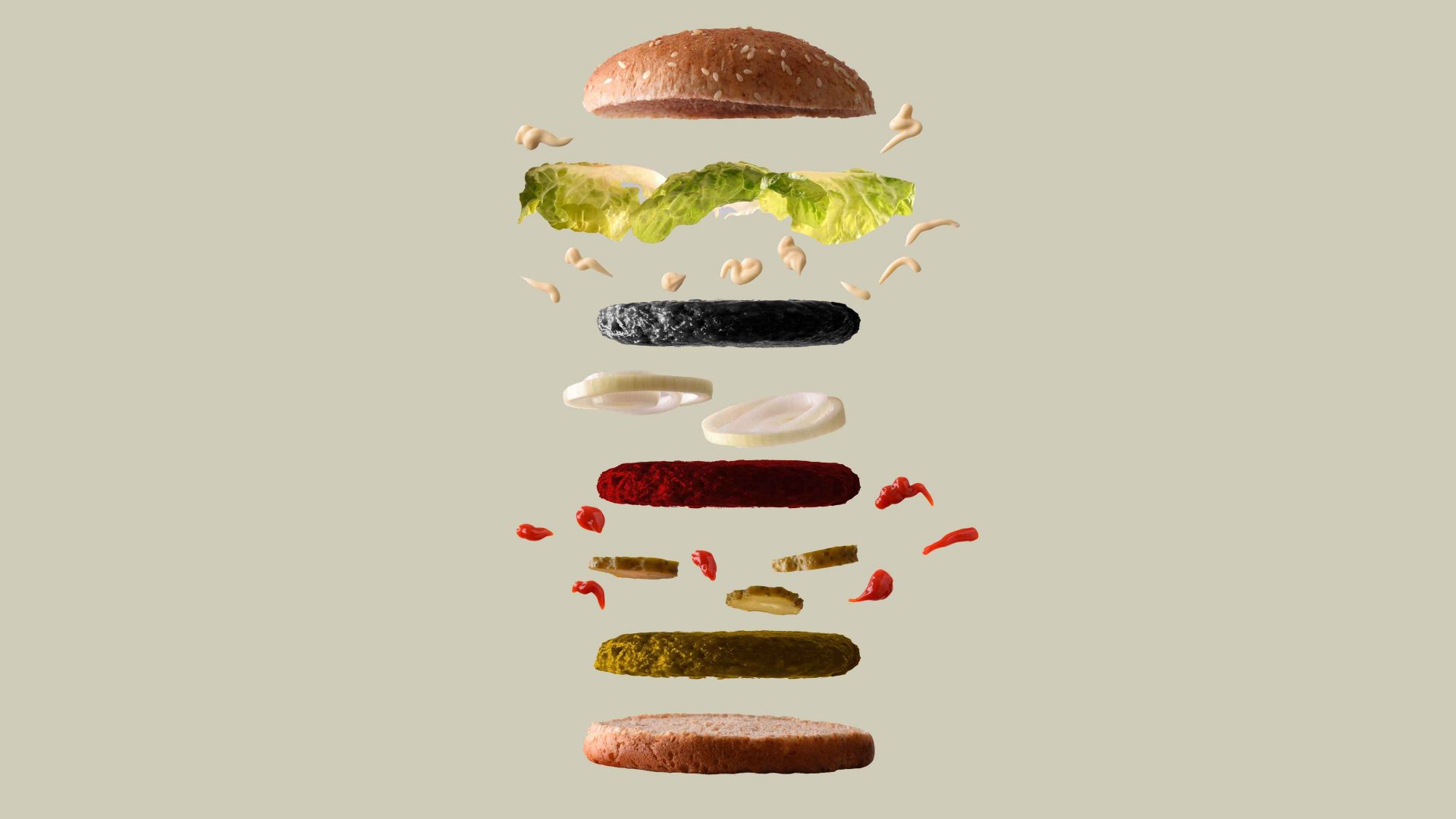
I’m not sure what’s going to be on my Christmas menu this year – either goose or fondue Chinoise – but the more exciting question is: who will win the Brussels schnitzel war next year?
The European Parliament has decided that terms like “steak”, “schnitzel”, “burger” and “sausage” should be reserved exclusively for products of animal origin. For yoghurt, cheese and milk, this already applies. But German makers and sellers of meat substitutes now fear they will have to pay out millions in re-labelling costs for their soy schnitzels and similar items, not to mention wading through heaps of red tape.
The initiative has come from French MEPs from the conservative EPP group, who say they want to protect European (read: French) agriculture and consumers. For the ban to come into force, however, EU member states still need to sign it off.
The EPP’s German CDU and CSU MEPs are against it. And in the Bundestag, the AfD is the only party that approves of the re-labelling. Everyone else – including agriculture minister Alois Rainer (CSU) – is against it. Germany could, however, be outvoted.
Full disclosure: when I fancy meat, I have a steak. Or even the Royal TS at McDonald’s (that’s a quarter-pounder with cheese, lettuce and tomato). When I’m in the mood for vegetables, it’s broccoli with butter, nutmeg and lemon. Or boiled potatoes with quark and parsley.
Not once have I ever bought a tofu sausage or a veggie burger – not even out of curiosity, just to see whether that substitute mix of flavour enhancers, food colouring, more assorted powders and plant mush comes anywhere near the real thing. Although, as Bismarck already knew, it’s probably best not to ask too many questions about what exactly goes into a proper sausage either.
Many German consumers are far less dogmatic. Germany is by some distance Europe’s largest market for plant-based alternative products – or so the industry claims. And the market is growing further. Which is why, in a display of harmony rarely seen, supermarket giants and retailers like Lidl and Aldi, environmental groups, the food lobby, fast-food chains and manufacturers such as Beyond Meat have spent weeks fighting against Brussels.
Suggested Reading

Why Brits can’t yodel
Of course, one cannot entirely rule out the possibility that accidentally purchased tofu sausages have already triggered marital crises in France. On the other hand, no one there seriously believes they’re eating an actual monk’s head when they tuck into Tête de Moine cheese.
Buffalo wings don’t come from flying buffalo, the Falscher Hase (False Hare) meatloaf never had fur, and a Halver Hahn may sound like half a chicken in German, but is actually a cheese sandwich in the regional Cologne cuisine. Leberkäse is yet another highly misleading term, as it translates into liver cheese, but contains neither. It’s just a south German meatloaf.
And in a country that has at least five names for a bread roll and cheerfully consumes Himmel und Ääd (heaven and earth – mashed potato, black pudding and apple purée), Armer Ritter (poor knight, a type of French toast), Tote Oma (dead granny, a Thuringian sausage dish), Strammer Max (strapping Max, toasted bread, ham, and a fried egg on top) and even Nonnenfürzchen (nuns’ farts, the dessert pastry), really shouldn’t be worried about anyone confusing a Viennese with a veggie schnitzel in the supermarket chiller.
Among the proponents in the business world, however, is the German Meat Industry Association. “Meat, as a valuable animal-based food, should be clearly distinguishable from other products without sparking a culture war,” they say.
And according to a survey, 50% of Germans support reserving terms such as schnitzel or sausage exclusively for animal-based products, with plant-based alternatives required to use different names. Another 28% oppose the idea, and 21% did not answer.
In Brussels, the decision was postponed last week – the EU member states and the European Parliament couldn’t agree on the new rules. Best to leave it that way. According to the same poll, only just under one in four (24%) consider it important for the European Union to deal with the issue at all.