This February has been unusually busy in German cultural warfare. First warzone: Bochum, where theatre-goers “unleashed their inner resistance fighter” (Frankfurter Allgemeine) at the premier of Tiago Rodrigues’s Catarina and the Beauty of Killing Fascists.
The award-winning play ends with a kidnapped far right politician delivering a nasty, extremist monologue. You’re supposed to feel uneasy, even outraged – at the ideas. Not at the guy delivering them.
In Bochum, however, as well as boos, an elderly couple climbed on to the stage and attempted to drag the actor into the wings.
Critics were baffled that an educated theatre crowd would confuse fiction with reality. Others pointed out that attacking art “against fascism” is, well… kind of fascist. So an evening that was meant to warn about authoritarianism ended up demonstrating it.
Meanwhile, in Hamburg’s Thalia Theatre, there was a fake courtroom. For three days, Swiss director Milo Rau held a “trial against Germany” that put the AfD in the dock, with real lawyers, an ex-justice minister as presiding judge, and a jury of seven citizens playing democracy’s Simon Cowell.
Some critics labelled it “completely irresponsible” as the witness line-up included prominent ex-AfD MPs. Others berated the “judge” for badgering an AfD-leaning influencer of Pakistani descent, who (correctly) cited crime statistics. The verdict: AfD looks largely unconstitutional but a party ban? Erm… not quite.
And then, finally – the 76th edition of the Berlinale. Which, if you believe an open letter signed by Tilda Swinton, Javier Bardem, Mark Ruffalo and around 80 other film activists, is “censoring artists who oppose Israel’s ongoing genocide against Palestinians in Gaza and the German state’s key role in enabling it”.
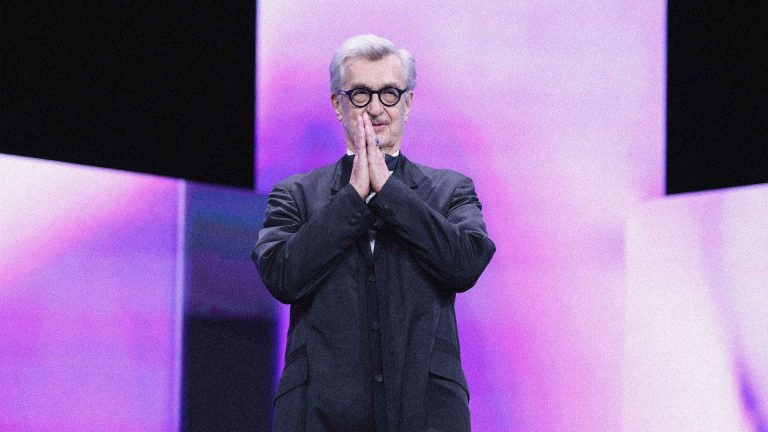
The spark? Jury president and director Wim Wenders. When provocatively asked at the opening press conference what the jury had to say about “selective solidarity” and the “genocide in Gaza supported by the German government”, he replied: “We have to stay out of politics because if we make movies that are dedicatedly political, we enter the field of politics.”
He insisted that film-makers are “the counterweight of politics. We have to do the work of people, not the work of politicians.”
Festival director Tricia Tuttle backed him. Polish producer Ewa Puszczyńska, a member of the jury, called the question’s framing “unfair”, a view shared by the jury. Perhaps because its members – from Nepal, South Korea, India, the US, Japan – wondered why jurors at a Berlin film festival were expected to issue position papers on the Middle East.
Suggested Reading
The Berlin Film Festival’s cowardly retreat over Gaza
Novelist Arundhati Roy, however, cancelled her appearance. A pity, as the festival, compared with Cannes or Venice, is notoriously short on VIPs.
When reading the letter, which scolds the Berlinale for not fulfilling “the demands of its community” by not condemning “the ongoing Israeli Genocide against Palestinians”, I felt reminded of a GDR agitprop song. It’s called Sag mir, wo Du stehst – “tell me where you stand”.
Quite apart from the presumption of appointing oneself the voice of “the Berlinale community”, I always thought it was generally authoritarian regimes that required artists and institutions to declare political allegiance to a cause.
In a democracy, one is – refreshingly – at liberty to choose. A side. Or no side at all. Or perhaps the side of art.
The Berlinale dilemma is partly self-inflicted. Since its beginnings, it has styled itself as “the most political” of festivals, which made sense back then, in a city divided by the cold war. Although one might still assume that “political” referred to the art on screen or its interpretation, not to the institution itself.
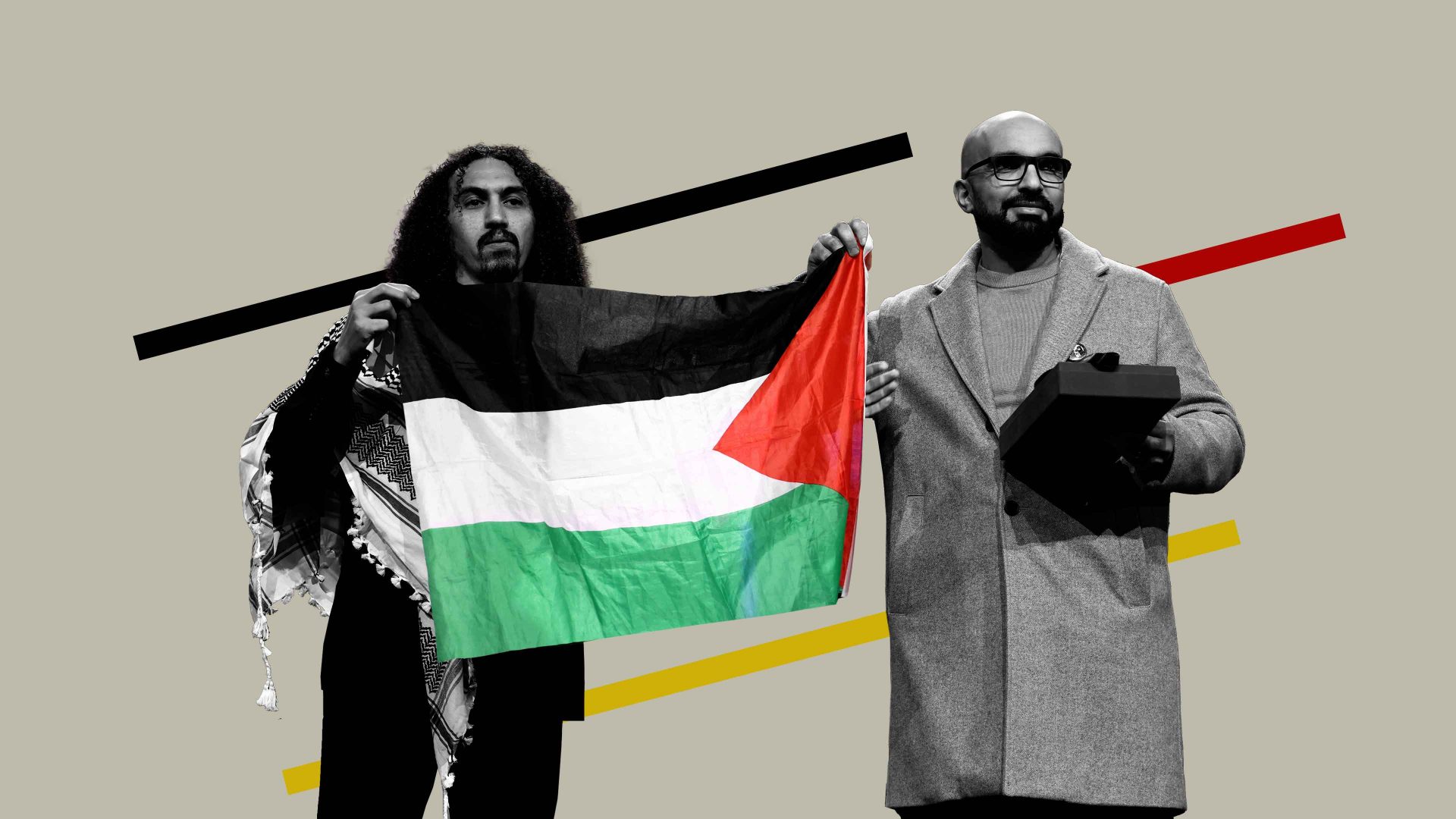
Finally, at the awards ceremony, Palestinian-Syrian film-maker and Perspectives winner Abdallah Al-Khatib (Chronicles From the Siege) went on stage with a Palestinian flag and lambasted the German government as “partners in the genocide of Gaza by Israel”.
The reaction? Some applause, the one cabinet member present left, and there were also boos and shouts of “Free Palestine from Hamas”. Some even saw a threat in Al-Khatib’s words – that once Palestine is freed “one will remember who was against us”.
Nothing says “silenced by censorship” quite like a live microphone, stage lights, press coverage and a festival prize.