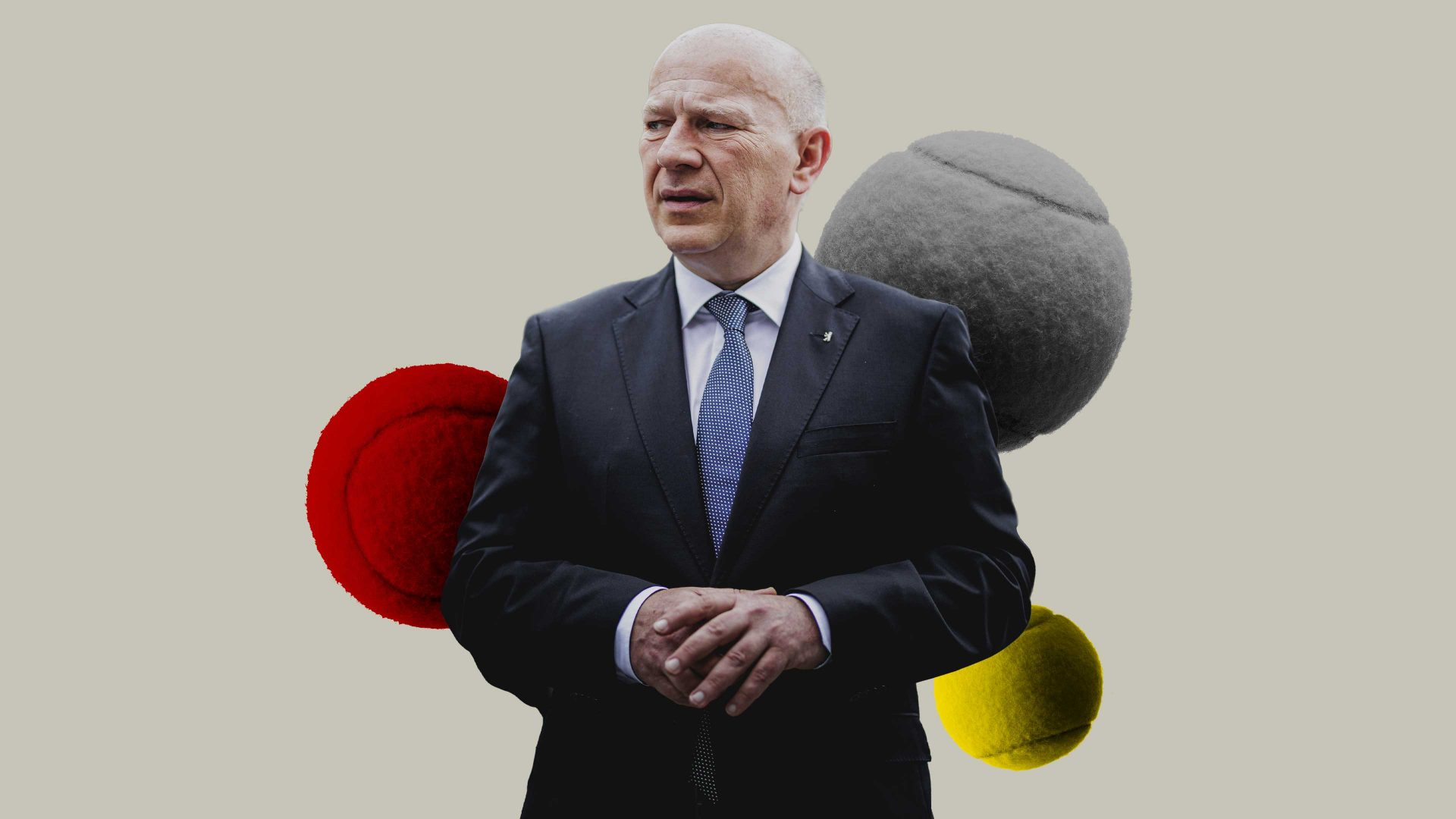
Let him who is without sin cast the first stone. Or, in the case of Berlin’s mayor, the first tennis ball.
Since the truth came out about what Kai Wegner was doing when the parts of the city were plunged into a major, five-day blackout on January 3, his Christian Democrats have embraced a forgiving, faith-based reading of events and closed ranks around their man, at least in public. But his sporting hobby, or rather his questionable sense of timing, may yet cost him the state election in September.
Voters are unlikely to forget that when an entire south-west suburb was left in darkness, the mayor went missing. On the first day of the outage, caused by an arson attack on a cable bridge later labelled “left wing extremist terror”, Wegner effectively dropped off the radar.
He didn’t appear in the affected areas, nor at City Hall. Rumours quickly spread that Berlin’s mayor had been unreachable for hours. Confronted with criticism, Wegner insisted he had neither been idle nor relaxed. On the contrary, he had been “on the phone all day”, coordinating and gathering information, and had “literally locked (himself)” in his office at home.
This was not exactly textbook crisis leadership. And it wasn’t even true.
What the mayor failed to mention, to the public and even to his own staff, was that he had spent part of that Saturday afternoon playing tennis with his girlfriend, Katharina Günther-Wünsch, Berlin’s CDU education senator.
She appeared sufficiently untroubled by the plight of 100,000 Berliners without electricity, heating or phone service to post a photo of the pair on a tennis court as her WhatsApp status.
When the story finally broke, Wegner was unapologetic. “I had to switch off. I needed to wind down,” he said, sounding less like someone fresh from a mindfulness retreat. Unsurprisingly, people began to wonder whether a politician who needs to decompress after a few hours on the phone during Berlin’s biggest crisis in decades has the stamina to run a city of 3.4 million.
Eventually, Wegner conceded that “personally, it would probably have been better” to be on the ground on day one and take a few photos, before adding that this would not have helped anyone. Here, he missed the point entirely.
Suggested Reading
Germany’s coalition of the unwilling
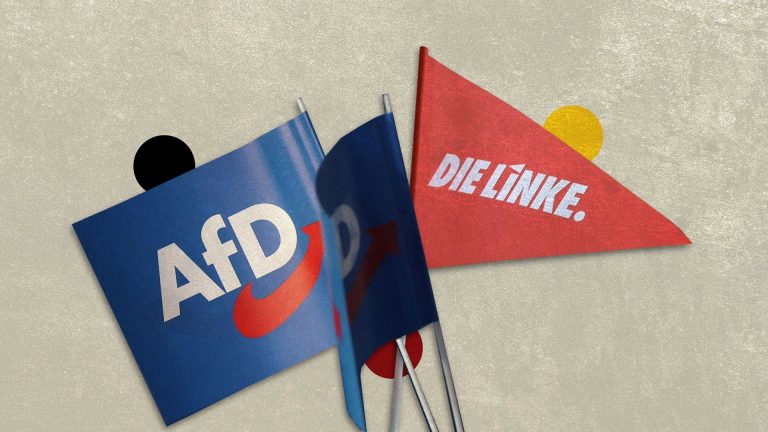
This wasn’t about a photo opportunity; it was about a basic show of empathy. Members of the AfD, not wearing party emblems, handed out stew to those affected and posted videos of them doing so on social media. The blackout’s scale was huge, with 45,000 households and 2,200 companies affected. Schools closed. Hospitals and care homes were evacuated.
Firefighters only just managed to replace the battery of an elderly man’s breathing machine in time. Four days into the blackout, an 83-year-old, bedridden woman was found dead by her son. Whether the rapidly cooling flat – outside it is well below zero in Berlin – played a role remains unclear.
When electricity finally returned after five days, some residents were greeted by the next disaster: frozen pipes burst, flooding flats and houses.
Nevertheless, some commentators concluded that Berlin’s crisis management services had worked well, and that Germans simply have absurdly high expectations of their democratic politicians. Perhaps. One might argue, however, that proper behaviour is precisely what distinguishes democratic leaders from the undemocratic sort.
Either way, Wegner’s tennis match threatened to overshadow the real perpetrators. Responsibility lies with a shadowy extremist network calling itself the Vulkangruppen (Volcano Group), which has carried out similar, though a little less devastating, attacks since 2011. Its members and structures are a black box for German authorities.
In a pamphlet celebrating the arson, the group claimed it wanted to “cut the juice to the ruling class”, condemning their “greed for energy” depending on fossil fuels. They apologised to the “less wealthy” but expressed little sympathy for “villa owners” left in the dark. For less well-off Berliners trapped in tower blocks without lifts, too frail to climb down the stairs, this brand of revolutionary compassion must have been beyond cynicism. The attack also exposed, once again, how vulnerable Germany’s infrastructure is.
This week, the federal interior minister announced the government will “fight back” against “left wing and climate extremists”: more staff for domestic intelligence, more surveillance powers to track digital traces, stricter infrastructure protection and more CCTV.
Obviously, no amount of surveillance can replace leadership. But presumably Wegner will be happy to see somebody else in court.