
In Emilijia Skarnulyte’s most famous work Aldona (2013), we meet the Lithuanian artist’s blind grandmother walking through sunlit country lanes and orchards. But the idyllic rural landscape featured in the documentary no longer exists.
Southern Lithuania is now a Nato “hot border”, home to heat cameras, military infrastructure and, since April last year (2025), the Bundeswehr 45th Panzer Brigade, the first German brigade-sized unit to be stationed permanently abroad since the second world war.
Aldona’s sight loss in 1986 is attributed to nerve damage from the Chernobyl nuclear power plant disaster’s radioactive fallout. Filmed on her daily walk from her cottage to Grutas Park, a tourist attraction filled with all of Lithuania’s displaced Soviet sculptures, we are by Aldona’s side as she circles a statue of Stalin and feels Lenin’s giant nose on a monumental bust.
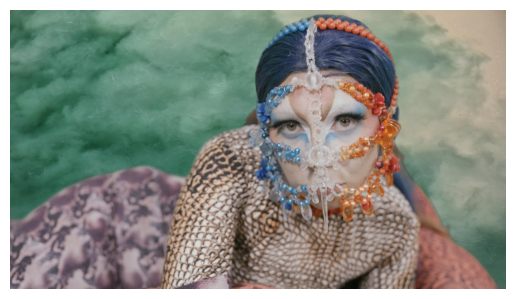
Emilija Škarnulytė, Riparia 2023. Courtesy of the artist. Co-produced with
Ferme-Asile and Taurus Foundation for Art and Science
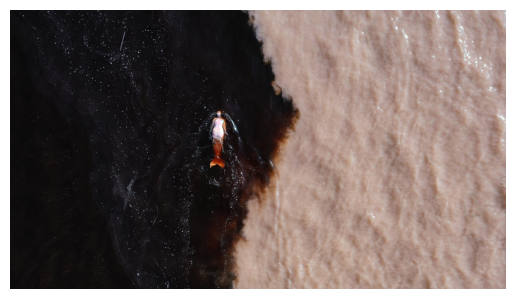
Emilija Škarnulytė, Æqualia 2023. Courtesy of the artist. Commissioned by
Canal Projects and the 14th Gwangju Biennale.
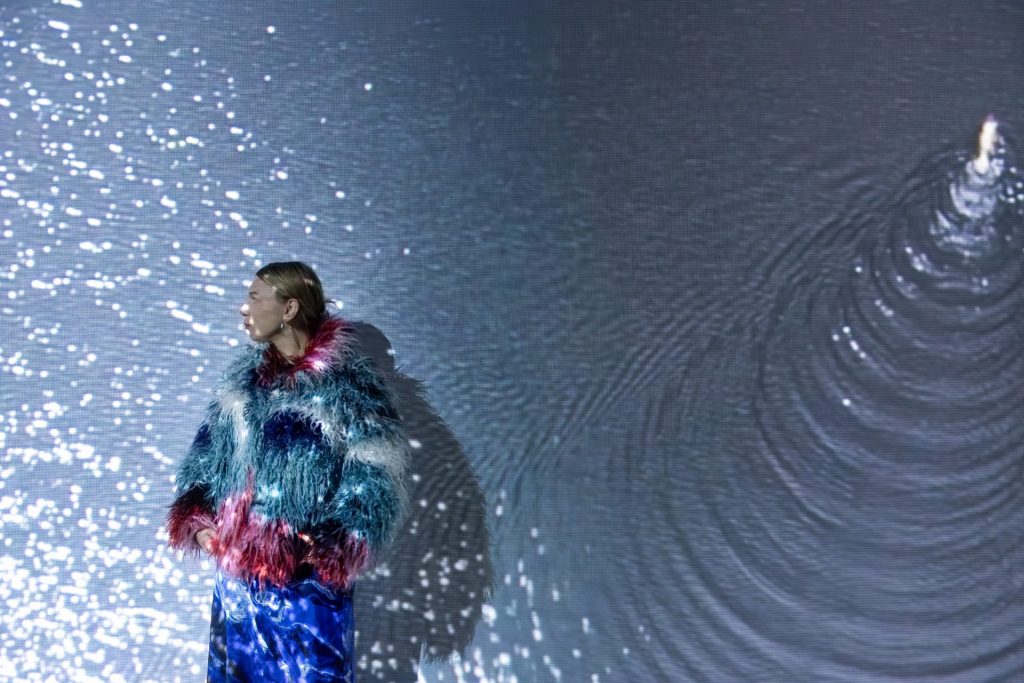
Emilija Škarnulytė at Tate St Ives, 2025. Photo © Tate (Sonal Bakrania)
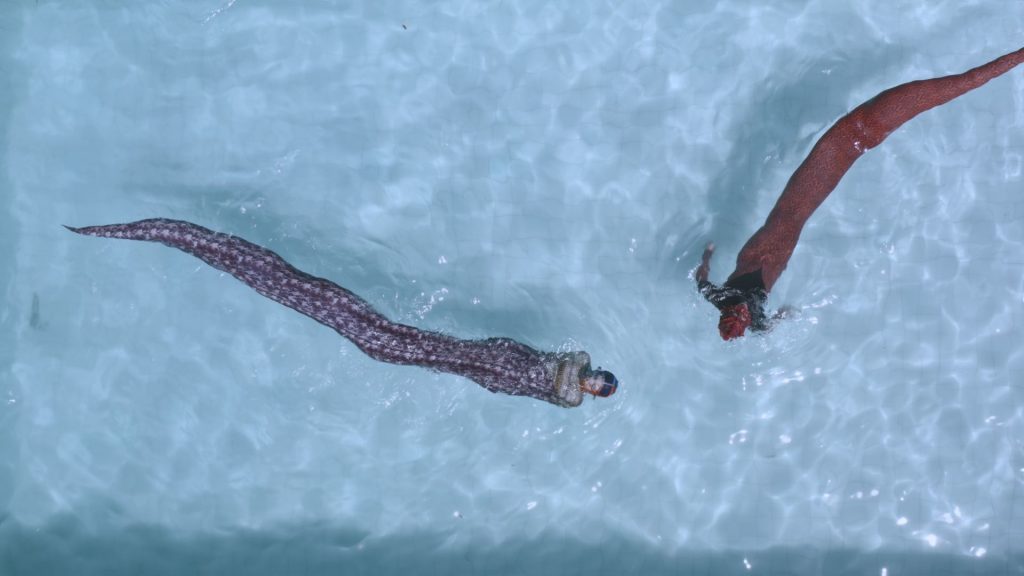
Emilija Škarnulytė, Riparia 2023. Courtesy of the artist. Co-produced with
Ferme-Asile and Taurus Foundation for Art and Science
Today, the nearby spa town of Drushkininkai opens on to the Sulwalki Gap, a term coined in 2015 by former Estonian president Toomas Ilves for the strategic strip of land separating Belarus from Kaliningrad, and connecting the Baltic states of Estonia, Latvia and Lithuania to Poland and the Nato bloc. If Russia gained control of the Gap, the Baltic countries could be cut off from its Nato allies.
Skarnulyte describes her grandmother as “a blind prophet, guiding us”, and her 13-minute film, now showing as part of the artist’s exhibition at Tate St Ives, touches on layers of contested, painful history. Although presented as a kitsch tourist stop, complete with tinny Soviet military music blaring through speakers and aluminium plates in the cafeteria, Grutas Park’s display of freight trains is a reminder of the series of 35 mass deportations of Lithuanians by the Soviets in 1941 and 1945 -1951. In addition to the 130,000 civilians, comprising 70 per cent women and children, forcibly transported to Siberian labour camps, around 150,000 political prisoners were held in Soviet gulags.
Deportees were slowly released following Stalin’s death in 1953, but approximately 28,000 Lithuanian civilians had already perished from the living conditions. “It’s not a nice memory for Lithuanians,” says Skarnulyte.
Tate St Ives’ presentation of Skarnulyte’s work is sunny-side up. Aldona is screened beneath a ceiling of drying herbs, creating a shadow frame across the top of the screen and a fragrant link to Aldona’s knowledge of healing plants and grappa distillation. The gallery’s circular shape is echoed in Wheel of the Goddess, a display of the artist’s later films, with four curved screens forming a circle. Skarnulyte labels the gaps between screens “portals”.
If Water Could Weep, Mermaid Tears (2023-4) is positioned throughout the main gallery. Its glowing, whirl-shaped glass crystals reference the Lithuanian origin myth of mermaid-like sea goddess Jurate, who is imprisoned in her amber palace beneath the ocean for falling in love with Kastysis, a human fisherman.
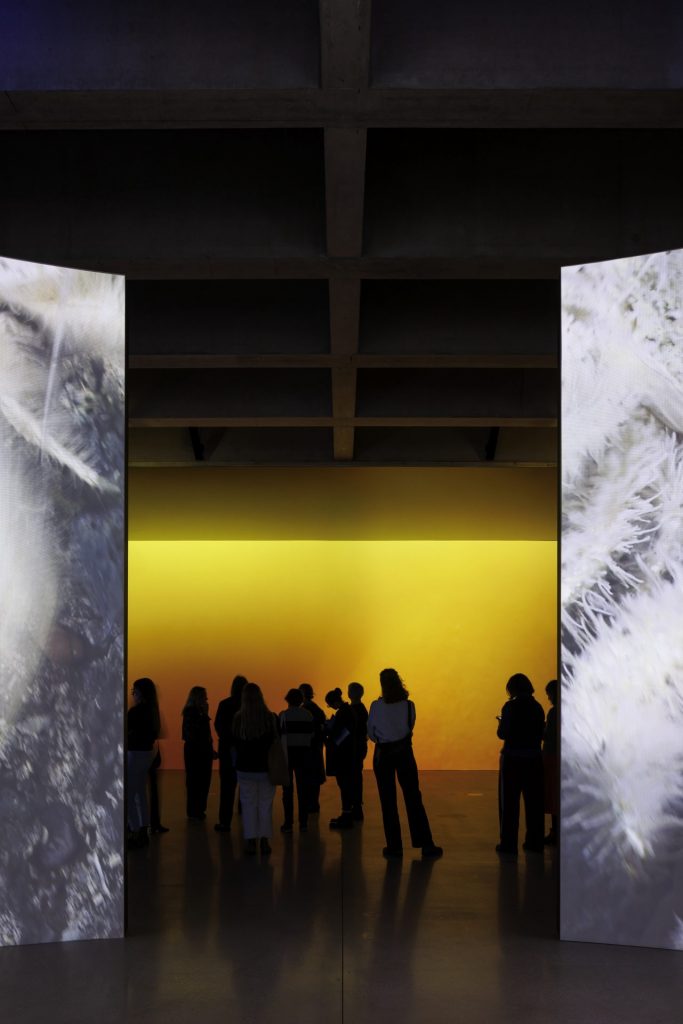
Emilija Škarnulytė, Tate St Ives, 2025. Photo © Ansis Starks
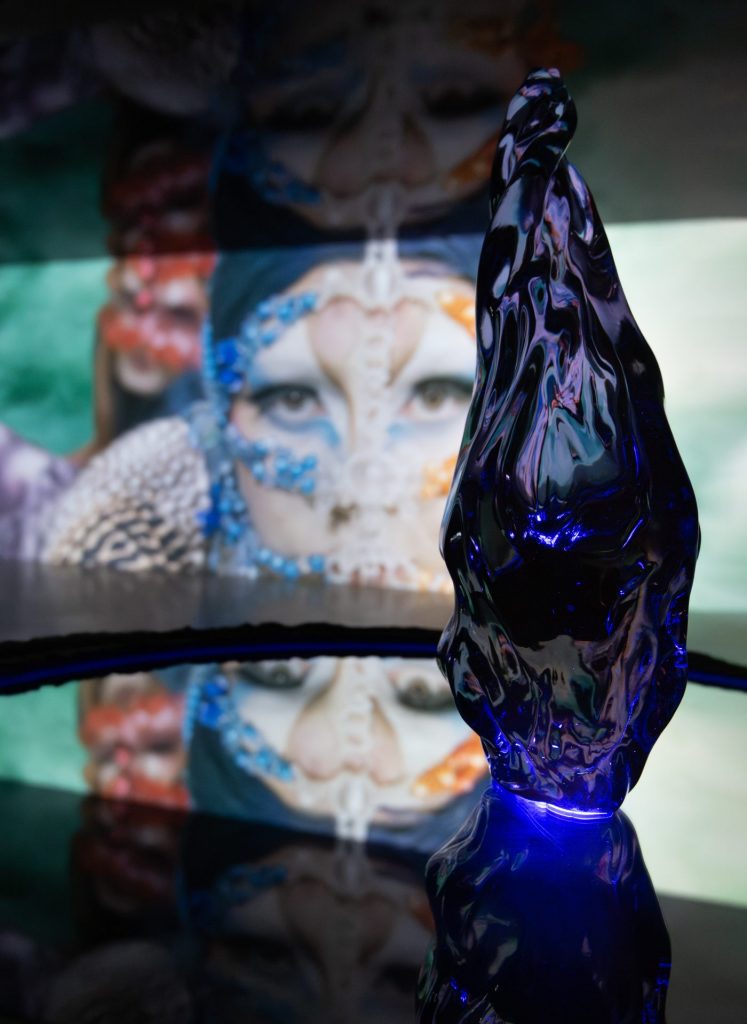
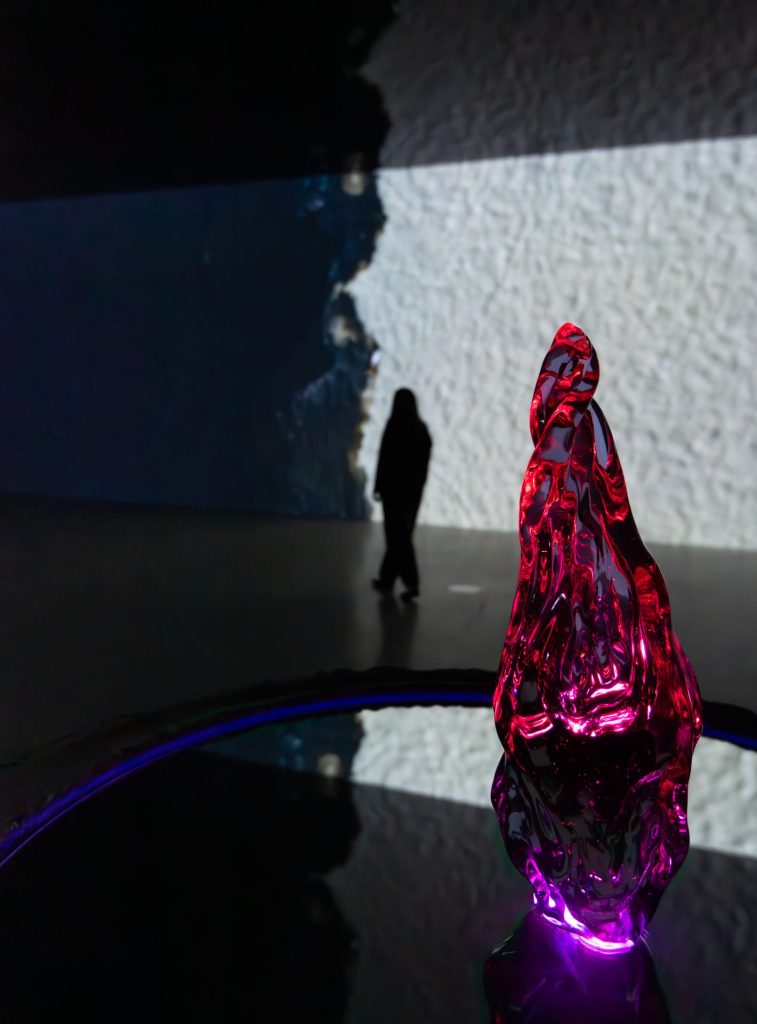
Emilija Škarnulytė, If Water Could Weep (Mermaid Tears) 2023–4 and Æqualia
2023, Tate St Ives. Photo © Tate (Sonal Bakrania)
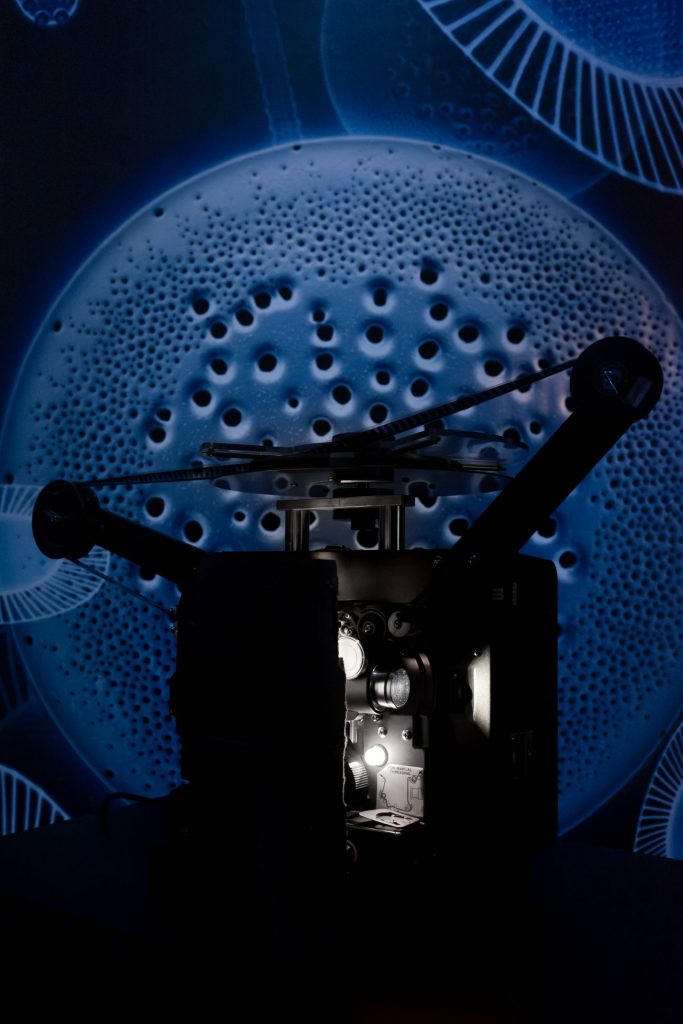
Emilija Škarnulytė, Tate St Ives, 2025. Photo © Ansis Starks
Amber, found plentifully along Lithuania’s Baltic coast, is known locally as “Jurate’s tears”. Glass tears present geological and thermal processes colliding with oceanic mythologies, “transforming emotional experience into physical form”.
Although sharing the Catholicism of her grandmother, who went to mass every Sunday and listened on the radio when she could no longer attend, Skarnulyte draws widely on Lithuania’s long pagan history. Famously, Lithuania was the last European country to adopt Christianity as its official religion, holding on to the old ways until the end of the fourteenth century.
In Riparia (2023), one of the montage of films shown in the Wheel of the Goddess, the artist traces the Rhone from glacial Switzerland to the Camargue, portraying the river as a living entity, boundary and physical focus of human belief. Enlivening the Rhone’s industrial waters, two serpent-like figures glide through the river, inspired by Lithuanian archaeologist and anthropologist Marija Gimbutas’s work on Neolithic goddess figurines, depicting women gods as hunters and birds, that predate female fertility goddesses.
Telstar (2025), made close to Tate St Ives during a residency in Porthmeor Studios, silently places Cornwall’s Neolithic standing stones, including Men an Tol and Lanyon Quoit, next to footage of Goonhilly Earth Station and animations of satellite Telstar I, which in 1962 transmitted the first transatlantic television broadcast. Research also took Skarnulyte to St Senara’s church in Zennor, associated with the Mermaid of Zennor legend, and home to a pew carving of a mermaid, believed to be 600 years old. The transnational and timeless qualities of myth are shot through Skarnultyte’s work.
Aequalia (2023), poster image of the Tate St Ives show, inserts the artist, wearing a fishtail, into the confluence of the Amazon’s milky Rio Solimoes and dark Rio Negro. Navigating the river by feeling the Rio Negro’s warmer currents, Skarnulyte says the work is a metaphor for species interdependence, even if her body rebelled following the strain of swimming as a half-human, half-fish chimaera.
Fusing documentary and imagination, Skarnulyte’s future archaeologist stance, whether revealing the underwater Roman city of Baiae, or lifeless Baltic waters deoxygenated by cold war weapons, makes what could be an ecodoom nightmare, dream-like and navigable, offering a glimmer of hope like a shaft of light through water.
Emilijia Skarnulyte is at Tate St Ives until April 12
 Most popular

Yes, it's a genocide
The race to save the Beatles


Matt Goodwin’s road to derision
How Jon Stewart told me the brutal truth about Trump and Hegseth