
Matthew Goodwin is among the highest-profile by-election candidates of the last couple of decades – but only if you belong to a certain group of people. The former academic turned firebrand blogger and GB News broadcaster is certainly better known among the media and political elites he loves to castigate than among the general public.
He recently declared that he would rather shoot himself in the head “than be at some dinner party table with Nick Robinson and Mary Beard”. But it is an unusual novice parliamentary candidate who has already recorded a 45-minute Political Thinking BBC podcast with the same Nick Robinson before having faced the voters in any electoral contest.
Goodwin’s reputation as a controversial voice may have hindered Reform’s constituency campaign in Gorton & Denton more than it has helped it. “You spent so long Matt, I think, researching far right extremism that you did get a little bit confused and thought what you were reading was an instruction manual”, his Green Party opponent Hannah Spencer jibed at last week’s Manchester Evening News hustings.
Having declared Englishness an ethnicity, not a national identity, Goodwin ignored Keir Starmer’s challenge to say whether he believes Manchester-born United hero Marcus Rashford can not be English. The campaign has been further damaged by revelations about social media posts by his interim campaign manager in Tameside, Adam Mitula, which include use of the n-word and a declaration that he would “never touch a Jewish woman”.
Goodwin’s by-election opponents challenged Goodwin to reject the personal – albeit unsolicited – “vote for Matt” endorsement from Tommy Robinson. Yet Nigel Farage said he was “not bothered” by the endorsement. Goodwin ducked offering any substantive comment, beyond reiterating that Reform had not allowed Robinson to join the party.
That silence may reflect an electoral dilemma: Reform voters nationally are split over Robinson, with a third positive, a third negative and a third on the fence about him, according to polling for More in Common. Robinson has joined another political party – Advance UK – whose candidate Nick Buckley, once Reform’s Mayoral candidate in Greater Manchester, is championing Advance’s new maximalist hardline immigration policy: it would ban all immigration from 50 Commonwealth countries, almost everywhere that is not majority white, excepting Japan and Singapore, and outbid Reform on remigration too.
Suggested Reading
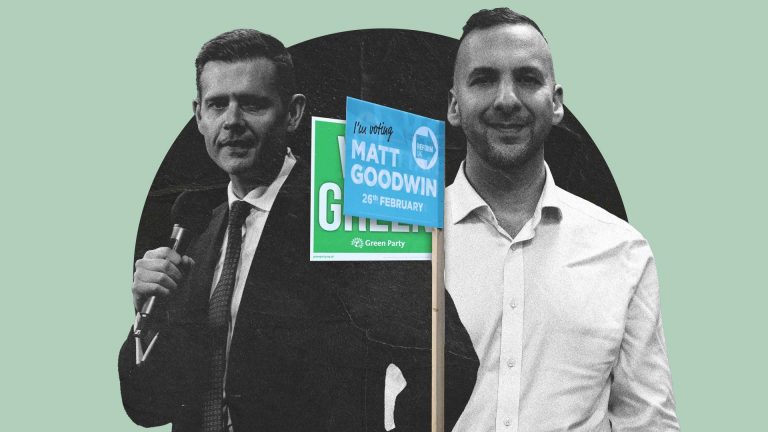

Matt Goodwin, Zack Polanski and Lucifer: the fight for Gorton and Denton
Goodwin’s politics shifted dramatically after the EU referendum in 2016. His referendum night prediction – at an LSE event as the polls closed – had been for a narrow Remain victory, though he was later to claim to have seen Brexit coming a long time before.
Goodwin’s journey rightwards has accelerated considerably in this decade too. He could not – today, be more scathing of the Conservative record – that the party should never be forgiven for its choices on immigration in particular.
Yet Goodwin remained a vocal champion of Boris Johnson while he was in power. “If Boris goes, the realignment goes”, he was tweeting into 2022, long after Johnson had designed his post-Brexit immigration system. Goodwin muted his criticism as he sought an inside track to influence – switching to building his profile in the online attention economy once that government fell.
Goodwin has shifted most dramatically to embrace Trumpism in its most extreme form. After the January 6 insurgency in 2021, Goodwin declared that he now saw “fascist” as an appropriate label for Trump. Five years on, Goodwin declared that the central challenge for Reform is “how a Reform government can look a lot more like Trump 2, rather than Trump 1?”
Goodwin has said of Trump’s norm-breaking second term: “It allowed us to see what a fightback looks like, what counter-cultural policies look like.” Yet the spectre of Trump’s chaos and cruelty could be Reform’s biggest electoral liabilities in Britain.
Will Goodwin win? He was the bookmakers’ favourite when his candidacy was declared. But the betting market momentum seems now to be with the Green Party favourites.
Gorton & Denton is tougher terrain for Reform than Runcorn, won by only six votes last Spring. There are more Reform-friendly demographics in the Tameside council wards around Denton that make up a third of the constituency, but two-thirds of the constituency’s voters live in South Manchester, whose high level of ethnic diversity, students and graduates is less fertile ground.
Reform’s opportunity is that both the Greens and Labour say they are the only hope of keeping Reform out, with little hard evidence about the state of the race on the ground. Goodwin’s path to Westminster probably depends on a fairly even three-way split in the vote. He will struggle to gain the seat if progressive voters do work out which rival candidate to coalesce around.
If Goodwin did win – and got to join the parliamentary group before Reform reached ten MPs – he may well end up driving the party’s home affairs policy agenda. Goodwin’s knowledge of social mobility would be an asset if Reform wanted to construct a substantive agenda on opportunity. His former colleagues in academia would be wary of this disillusioned ex-academic shaping the party’s higher education agenda, however.
Immigration is by far the top priority for Reform voters. Immigration levels have been falling fast – though Nigel Farage is in denial about this, telling the BBC last week that the net migration numbers were only down due to an “exodus” from the UK.
Suggested Reading
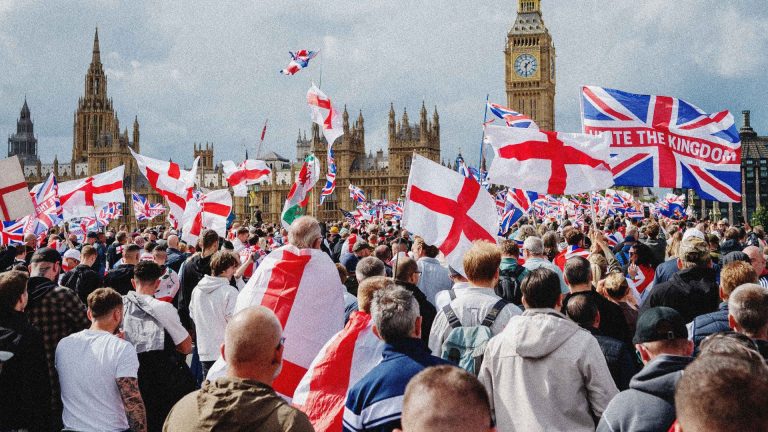
Racism in Britain is getting worse
In fact, falling visa numbers make up 90% of the fall in net migration. Those falling numbers may see Reform may increasingly pivot to themes of integration – including Goodwin’s interest in exploring themes of the so-called “Islamification” of Britain and a ban on Muslim migrants.
Yet Nigel Farage faces a central dilemma in how far to echo the challenge from Rupert Lowe’s Restore Britain for mass deportations of legal migrants – which may appeal to his own core vote – and the need for a more balanced voice, when Reform’s shaky reputation on questions of racism and extremism with swing voters could put a ceiling on its support.
Defeat in Gorton & Denton would be unlikely to end Goodwin’s parliamentary ambitions. Goodwin’s campaign commitment to his Mancunian identity saw him declare “Manchester is in my blood” as he returned to his grandparents’ city – but it seems unlikely to see him veto opportunities to stand elsewhere by 2029, perhaps vaunting closer local connections in the East Midlands, West Midlands and the south of England.
But, first, Goodwin himself is on the ballot paper in Denton and Gorton. The outcome may illuminate the balance of risks and rewards for Reform, presenting itself as a potential government, in embracing the sharper edges of the online right.
Sunder Katwala is director of the migration think tank British Future
 Most popular
Tony Blair’s never-ending legacy tour


Face it: Trump’s going mad

Is university worth it?
The coercive control of Marco Rubio’s Munich doctrine