
History will recall her as the woman who took down a prince. But Virginia Giuffre was so much more than that: a brave survivor of sexual abuse who spoke out about the horrors she experienced at the hands of some of the world’s most powerful men.
When courage called, she answered, telling her story years before the internet was peppered with MeToo hashtags. As soon as she went public, her account was distorted by salacious gossip-mongers and prurient tabloids.
2025 was the year she finally got to disclose to the world what happened to her, on her own terms, in her memoir Nobody’s Girl.
2025 was the year of her vengeance. Her cracking open of the Jeffrey Epstein horror has claimed the reputation of the prince who abused her and shaken Donald Trump’s MAGA movement to its core.
With the release of the Epstein files, the final account of her courage may well yet be of even greater consequence.
2025 was the year the compound effects of abuse, vilification and persecution overwhelmed Virginia Giuffre. She killed herself on April 25.
Twenty-five years had passed between the 16-year-old Virginia’s fateful introduction to Epstein at his Palm Beach mansion and her death in Neergabby, a farming community 15 miles north of Perth in Western Australia. Giuffre was 41 years old.
A month before she died, she emailed Amy Wallace, the co-author who had been working on her book with her, to say it was her “heartfelt wish” that her memoir be released “regardless” of her circumstances.
In October, her publisher honoured that request and Nobody’s Girl was released to critical acclaim: “If books can shape history, this is one,” read one review. Many of the facts were familiar to those of us who have followed Giuffre’s fight for justice. What was different was that this was Giuffre’s account of her abuse, in her own words, unfiltered by journalists and deposition lawyers with their own agendas.
The most poignant aspect of her book was the fact that she felt she had to keep imploring her readers to persevere, because she was all too aware how much terror and pain there was for them to wade through. “I know it is a lot to take in. But please don’t stop reading.” She’s right about that, but if it was a lot to take in, what must it have been like to live through?
It was her allegations about Andrew Mountbatten-Windsor, then Prince Andrew, the beloved son of Elizabeth II, that originally propelled her into the harsh spotlight of the international media back in 2011. Giuffre had been approached by a Daily Mail reporter, Sharon Churcher, who was investigating the case of an anonymous woman who had accused the wealthy financier Jeffrey Epstein of sexual abuse in a civil lawsuit.
Giuffre decided to go public with her story of how as a 17-year-old she was trafficked to have sex with Mountbatten-Windsor, and shared the now-infamous photograph of herself with him, his arm around her midriff, and Epstein’s friend, the socialite Ghislaine Maxwell, in Maxwell’s house in London. From that point on, there was no going back.
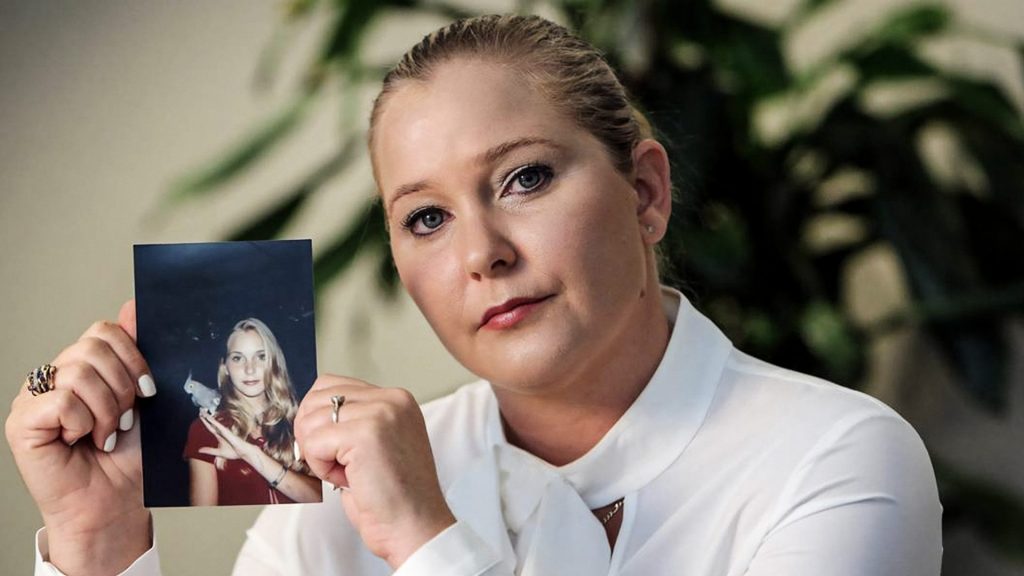
Giuffre details the three times she says she had sex with Mountbatten-Windsor in her autobiography. (He – implausibly – denies ever meeting her, despite the photographic evidence and several witnesses putting them together on more than one occasion.)
She was brought over to London by Epstein and Maxwell the first time; she says Andrew knew she was only 17 and that Maxwell told her: “You are to do for him what you do for Jeffrey”. He acted, she recalled, “as if he believed having sex with me was his birthright”.
But her encounters with Mountbatten-Windsor are just a fraction of the abuse she suffered at the hands of Epstein. Like so many victims of sexual abuse, Giuffre was heartbreakingly vulnerable.
Suggested Reading

The murder of Virginia Giuffre
As a child, she says she was sexually abused by her father from the age of seven, and has said that on one occasion, he lent her to one of his friends, who raped her. (Her father denies all allegations of abuse; his friend later served a 14-month prison sentence for sexually abusing another girl.)
As a teenager, she ended up on the streets, where she suffered further sexual abuse and rape, and was picked up by a sex trafficker called Ron Eppinger. She has written about how this made her a candidate for grooming by Epstein and Maxwell; abusive adults have a special eye for vulnerable children, so easily manipulated with gifts and warmth.
She came into contact with them after her father got her a job in Donald Trump’s Mar-a-Lago resort, where he worked on maintenance. She has described how Epstein and Maxwell first started using her for sex, and then how he lent her out to other powerful men in his network, including senior academics, a gubernatorial candidate and a former US senator.
She says she was choked and beaten by a prime minister, and wrote that she was scared she would “die a sex slave”.
Giuffre was subjected to a relentless campaign to undermine her credibility by Mountbatten-Windsor and his allies. His PR adviser ludicrously accused her of doctoring the photograph of them together.
After she brought a civil case against him, his lawyers accused her of being a gold digger and tried to cast her as an offender rather than a victim, helping to traffic other girls despite the fact she was a child when Epstein trafficked her and abused her.
In the end, Mountbatten-Windsor settled a civil case with Giuffre in 2022 for around £12m, funded by the late Queen Elizabeth II, whose household was reportedly determined that this scandal would not sully her Platinum Jubilee that year.
This year, as Giuffre’s memoir was being published, the royal family finally acted to remove all his titles and force him to move out of his home in Windsor. In a telling statement announcing his decision, King Charles made clear that his thoughts and sympathies lay with the victims and survivors of abuse.
It’s not justice, but it’s something: something that Giuffre did not live long enough to see, however. As the palace released the news, her family said “she’d be so proud”.
Mountbatten-Windsor is to date the only man to have faced any form of accountability for his associations with Epstein. The only person serving a prison sentence for their role in the sex trafficking and abuse is Ghislaine Maxwell.
Epstein himself spent 18 months in a low-security prison after he pleaded guilty to soliciting prostitution from a minor in 2008, but was allowed to leave the prison for 12 hours a day. He was charged with sex trafficking minors in 2019 and killed himself in jail a month after he was arrested, before he could face trial. Conspiracies around the circumstances of his death abound.
The identities of many of the other powerful men to whom Epstein trafficked underage girls to be abused by them remain unknown. There is the devastating chance they will always be. But Giuffre did everything she could to try to achieve justice, not just for her, but for Epstein’s other victims, too.
Giuffre’s family have said she “had a little bit of hope in her” that the Epstein files – a huge cache of documents the US Department of Justice holds in relation to Epstein – would end up released. Congress has now passed a bipartisan bill, forcing the Department of Justice to publish these files by December 19.
Campaigners hope that the documents will shed light on why Epstein avoided prosecution for so long, despite numerous girls reporting that they were abused by him, as well as finally paving the way for prosecutions of some of Epstein’s associates.
They may even raise existential questions for Donald Trump about his own close relationship with Epstein before the two fell out. The whirlwind unleashed by Giuffre’s determination to speak her truth has yet to subside.
Suggested Reading
Prince Andrew and an unforgivable secret
Her story stands as a timeless reminder that being sexually abused in childhood results in enduring trauma that cannot be magicked away. Her life was clearly deeply troubled before she took her own life in April. She was separated from her husband, who had been granted custody of her three children, and a restraining order against her.
In the weeks before her death, she had given an interview accusing her husband of abuse (allegations he denies), and her family said she was suffering terribly as a result of not being able to see her children.
She has spoken of how her abuse made her the “perfect victim” for Epstein and Maxwell. But too often, the media circus also requires their victims to be pristine, saintly: beyond reproach. But trauma is complicated: as anyone who has worked with survivors knows, it messes with people’s heads, hearts and memories.
Virginia Giuffre’s torment is deeply shaming for any society that claims to take abuse seriously. She may no longer be with us, but her legacy lives on. Just three weeks before her death she wrote that Nobody’s Girl had “the potential to impact many lives and foster brave, necessary discussions about these grave injustices.”
It does, and it will.