On September 17, 1988 I was sitting in the Olympic Stadium in Seoul watching the athletes of 159 nations parade before the world. A mere handful of countries had boycotted. There were athletes from the Soviet Union and athletes from the United States. It was almost as if the world had come to its senses at last.
The previous Games in Los Angeles had been boycotted by the Soviet Union and its allies: 19 in all. This was in retaliation for the boycott of the 1980 Olympics in Moscow, when 60 nations were involved in a boycott led by the United States.
But in Seoul we were at last allowed to revel without distraction in the glorious trivialities of sport: and I wrote about Flo-Jo, Ben Johnson, Soviet gymnasts, a horse called Charisma and the British men’s hockey team’s gold medal. Life should be like that.
Since then we’ve been without mass boycotts of major sporting events. The world has not been exactly peaceful, but for quite a lot of us, it’s been without daily threat. The cold war was over, the Soviet empire dissolved. You didn’t open your newspaper with a sense of foreboding: at least, not every single day.
But such times have come again. I remember a Marvel comic in which the Silver Surfer, a being from an advanced civilisation exiled on earth, reacts to the state of the planet: “What new and dreadful madness is this?” This is now the daily question of humanity.
And this summer we will have the madness of the World Cup. It will take place in North America. Canada and Mexico will host 13 games each, the US 78.
World Cups have been less prone to boycotts than the Olympic Games, mostly because there are far fewer competitors: 206 nations took part in the 2024 Games in Paris, 32 in the last World Cup in Qatar. But that could be about to change. This year’s World Cup will be contested by an unprecedented 48 nations (bring on the mismatches!) and it’s already being celebrated as a festival of American dominance.
With every passing day more and more nations have reasons to take issue with the USA, and those that have qualified have the option of expressing this unease by boycotting the World Cup. It’s a possibility that gets stronger every day.
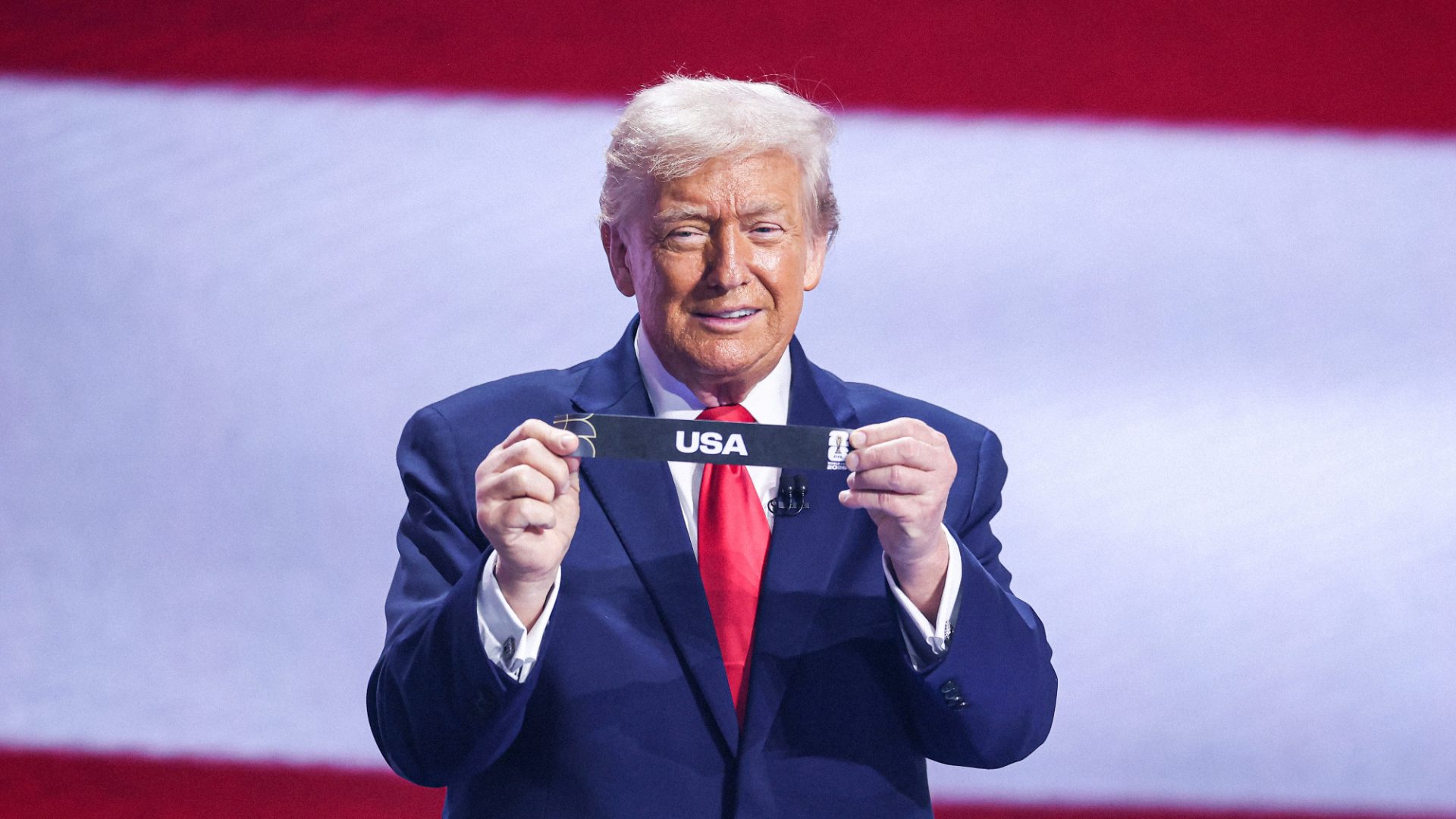
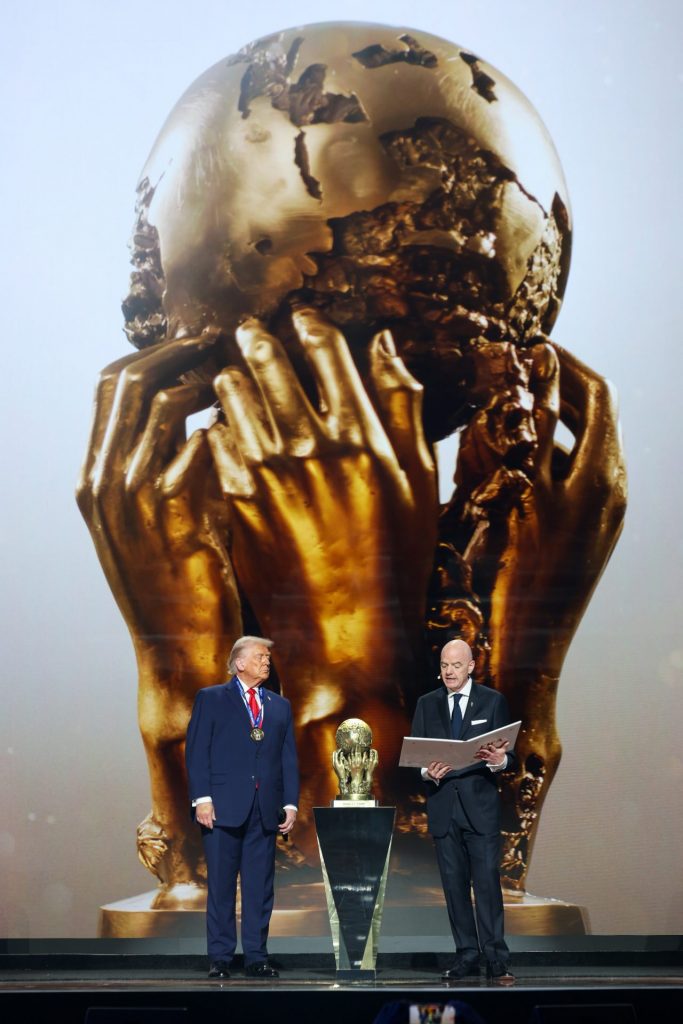
“Keep politics out of sport!” is the cry. But every raising of a national flag is a political act. Besides, the 2026 World Cup has already been flamboyantly politicised: at the draw last year the chief of football’s world governing body Fifa, Gianni Infantino, presented the United States president Donald Trump with the inaugural Fifa Peace prize.
There’s a story that the great American humourist Tom Lehrer gave up writing comic songs when Henry Kissinger won the Nobel Peace prize, on the grounds that he could never top that. He certainly said that at that moment “political satire became obsolete.”
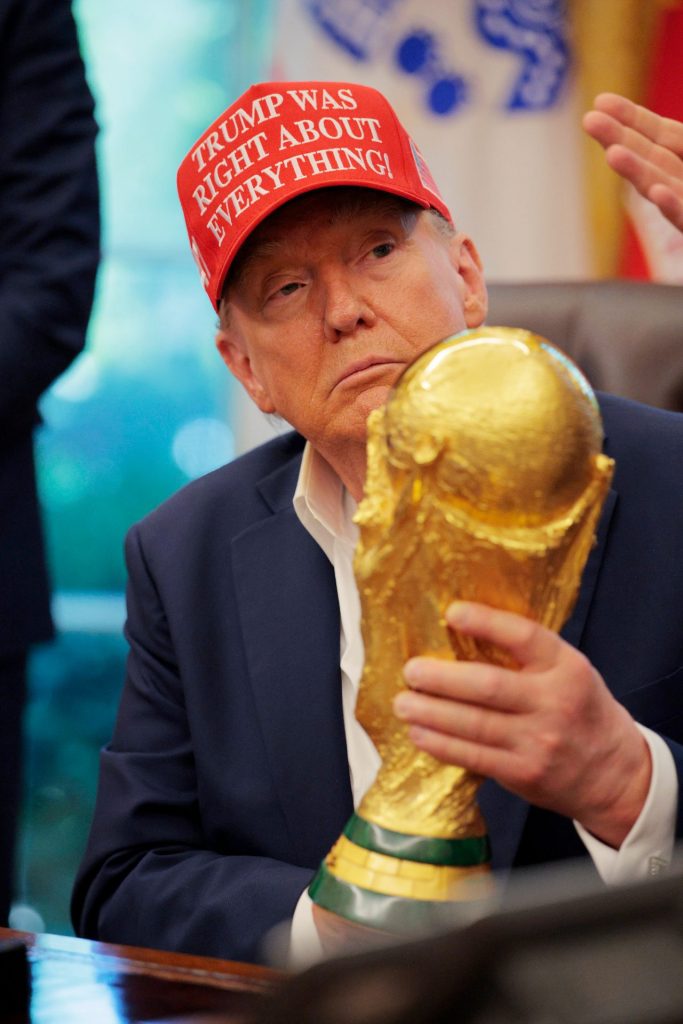
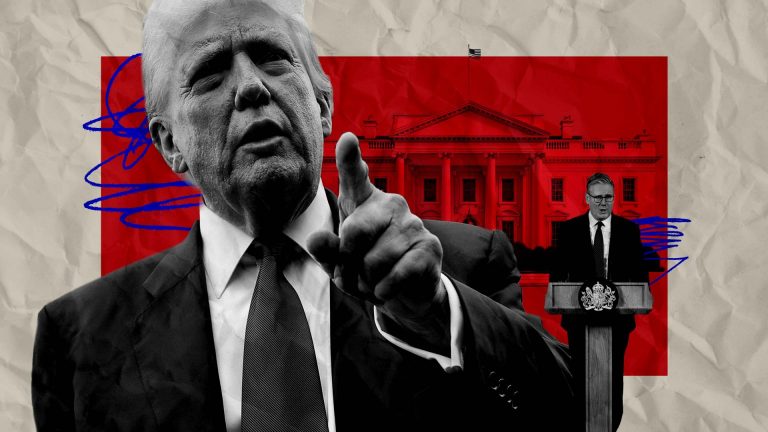
Alas, Lehrer is no longer here to comment. But one thing is clear: the World Cup is now officially the Donald Trump Show. Every ball kicked will be a celebration of his life and works. And who would want to spoil that?
Both of America’s co-hosts have the strongest possible reason to boycott any event dedicated to the greater glory of Trump. Trump has expressed the desire to take over Canada, complaining that the USA is “subsidising” the nation.
“The only thing that makes sense is for Canada to be our cherished 51st state.” He then publicly insulted the Canadian prime minister Justin Trudeau by referring to him as “Governor Trudeau”: as if Canada were already under American rule. “We will never be the 51st state,” Trudeau responded.
Mexico has even stronger reasons for missing the party. Trump’s campaign for his first presidency was based on his hatred of Mexico and the (still unbuilt) wall he was going to build along the border, for which Mexico would pay. He has accused Mexico of deliberately allowing “rapists and criminals” to enter the USA.
He attempted to change the name of a patch of ocean to the Gulf of America, rather the Gulf of Mexico. And he has constantly complained of drugs entering the United States from Mexico: “We’re going to have to do something.”
Like what? The Mexican president Claudia Sheinbaum has rejected his offer of deploying American troops in Mexico: that doesn’t mean American troops won’t be sent in.
Venezuela can’t boycott the World Cup because they failed to qualify, even though they beat Peru and Bolivia. But the American capture of the Venezuelan president Nicolás Maduro has given all Latin America the jitters.
The president of Colombia, Gustavo Petro, said there was now “a real threat” of US military action in his country. Colombia has a good reason to boycott. How many other South American countries feel threatened or angered by Trump’s America? Perhaps countries with the glorious footballing traditions of Brazil and Argentina.
What about Europe? Trump hates the place: countries that measure culture in millennia rather than decades upset him. He wants Greenland, which is Danish and wants to stay Danish.
Trump isn’t interested in what the locals want, and has declared his intention to punish eight Nato allies, including the UK, with extra tariffs for siding with them against him. He’s hinted that he will take the island by force if he can’t buy it: his aide Stephen Miller said: “Nobody’s going to fight the US over Greenland.”
Denmark hasn’t qualified for the tournament as I write, but could yet do via the play-offs in March: they have to beat North Macedonia and then the winner of the other semi-final. If they manage it, will they be keen to take part in the glorification of Trump? Or will they boycott?
If Denmark’s Nato allies feel that the European end should show solidarity against the threat of a Greenland takeover, a boycott would remove a sizeable number of teams, including former winners England, Germany, France, Spain and Italy.
Trump has repeatedly threatened American action in Iran as the disturbances and the killings increase. Iran, Haiti, Senegal and Ivory Coast have all qualified for the World Cup but any fans who turn up will face full or partial travel bans. Will they send a football team in such hostile circumstances?
The United States has also taken military action in Nigeria, which is troubling for other African nations. Maybe all sub-Saharan teams will drop out. Trump’s apparently unconditional support of Israel, his apparent lack of concern about the blockade on international aid and the killing of aid workers, has distressed the world: and perhaps all predominantly Islamic nations might feel solidarity with Palestine would be best expressed by a boycott.
Australia is nicely cut off from many of the world’s troubles: but as the embers of the latest wildfire settle, they may consider Trump’s counterfactual denial of climate change. As the world burns, so Trump and the United States base their policies on oil. Every nation on the planet has reasons to object.
So which nations have sound reasons for boycotting the World Cup? Only those in Central and South America, Europe, Africa, Asia and Australasia. Also all those in North America – including the USA. The Immigration and Customs Enforcement organisation (ICE) is killing people on the streets with official approval. There is increasing civil disturbance. The chances of war advance daily. The country is isolated as never before.
Before Trump there was a sense in which we were all Americans: I am Clint Eastwood, I am Fred Astaire, I love Julia Roberts and I sing with Bob Dylan, Aretha Franklin and Elvis Presley. Naturally I keep all the ironies intact, but I remember that sense of joyous privilege and belonging when I walked the streets of New York on the latest sporting assignment: as if George Gershwin’s music was playing for me as I went from my favourite bookstore to the nearest bar.
Suggested Reading

Trump’s supersized Suez moment
But all that is lost. God knows what it’s like for any American with some kind of international understanding: America was once the sexiest nation on earth and now it’s a pariah.
And everybody knows it. But where is the opposition? There’s a groundswell of opposition at home but no leaders. Across the rest of the world there’s a growing feeling of betrayal, dismay, horror and terror of what will happen next.
But who will give the lead? Everyone is terrified of being the one who stands up and says: “OK people! Let’s go…” and then looking behind to find that nobody has followed.
If there is opposition, it has to be in unity. Silence, appeasement and keeping your head below the parapet: such actions or non-actions merely empower the bully. And that’s global policy right now. Lord knows enough nations have good reason to boycott the summer’s Trumpfest. Will any dare to do so?
Naturally I’m planning to watch the opening match of the 2026 World Cup on television when it takes place on June 11 in Mexico City as Mexico take on South Africa. But I don’t expect that by then the world will have come to its senses at last.
Simon Barnes is an author and journalist who was previously chief sports writer for the Times