I was covering the hockey at the Olympic Games in Seoul in 1988. Great Britain scored from a short corner. My neighbour in the press box asked why the short corner had been awarded. I wasn’t sure: the rules of hockey are arcane.
“Simon, what shall I do?” Her name was Carol Thatcher: loud, cheerful, good company.
“Carol, I advise you to fudge it.” “Simon, I shall take your advice.”
“Carol, that is the first time anyone in your family has taken the advice of a card-carrying Green Party member.”
The British team went on to win the gold medal. Carol’s mother Margaret remained prime minister for another two years.
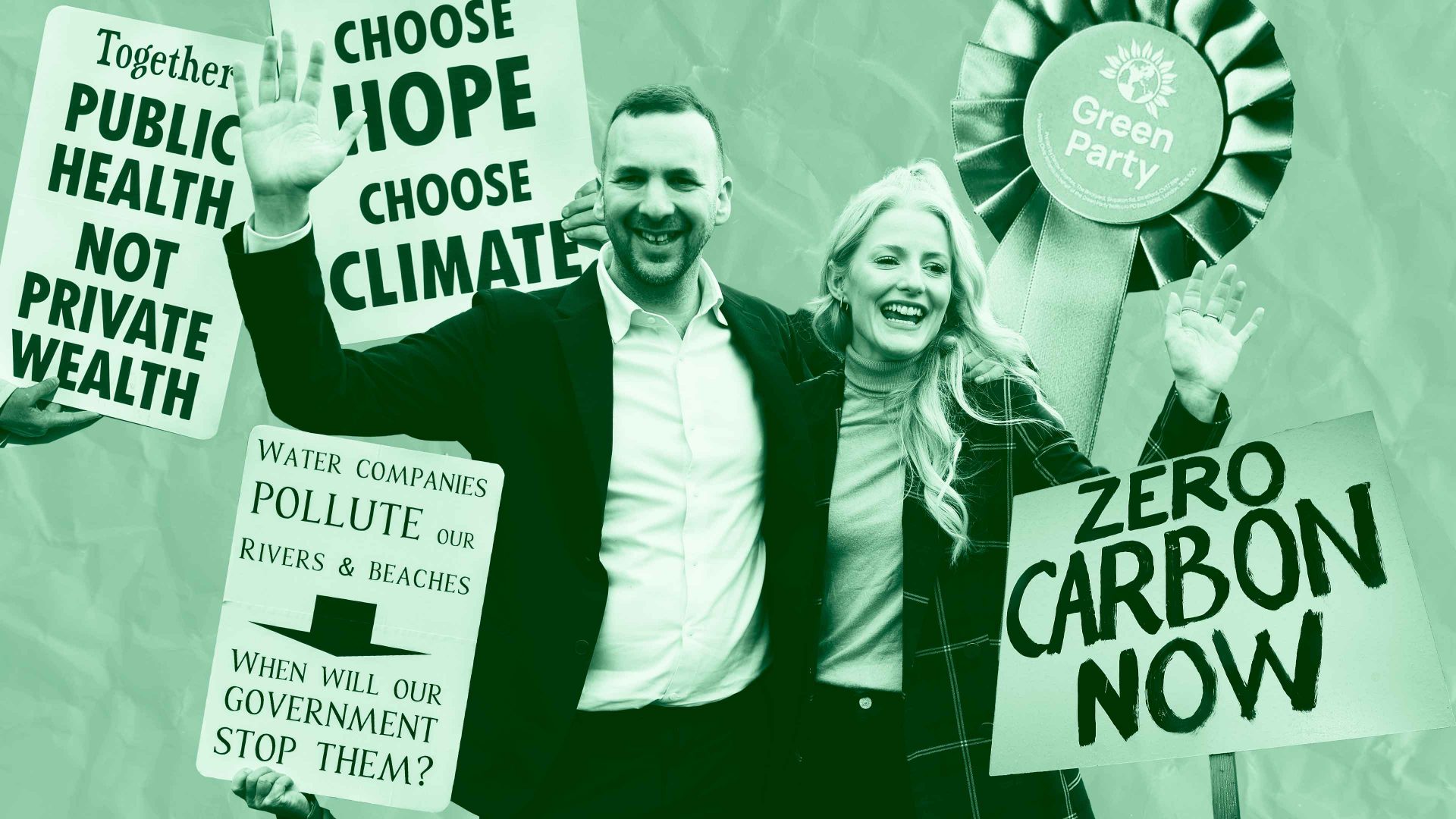
Thirty-eight years later, the Green Party have five MPs, having won the Gorton & Denton by-election a few weeks ago. A seismic result. No other cliché would do, apparently.
The underdog victory of the Greens asked an awful lot of questions that have received an awful lot of speculative answers. What does it mean for the Labour Party, who lost a 15,000 majority? What does it mean to the Conservative Party, who lost their deposit?
What does it mean for Reform, who learned to their bewilderment that not every voter believes that persecuting the out-group is the cure for all ills? What does it mean for the Green Party, who acquired 15,000 new members in the week after the by-election? What does it mean for the future of British politics?
All these questions have their fascination, but as someone who was a supporter of the green movement long before I read Jonathan Porritt’s Seeing Green in 1986, there’s another and rather more interesting question. What does it mean for the environment?
A fascination with politics for its own sake is fair enough, but it’s rather like a fascination with cars. Cars enable you to travel, but ultimately, the mechanism you use to make your journey is irrelevant. What matters is the destination.
And if the Greens continue to attract voters, the direction of the nation’s travel must change. The environment, so long seen as an optional extra, an issue on the second or maybe the third page of the political agenda, is now being pushed towards the top.
Presumably, the voters in Gorton & Denton were not just voting Green in order to tease the government on Gaza or the Conservatives on their 14 years in power or to teach Nigel Farage a lesson about hiring Matt Goodwin. They must also have seen something positive in the Green Party: perhaps hoping that the winning candidate Hannah Spencer would work on ways to improve the environment in her constituency, the country and the world.
There was a time in British and global politics when environmental concern was a non-partisan issue. In 2005, David Cameron, later to be Conservative prime minister, announced that he would be leading “the greenest government ever”. Both Theresa May and Boris Johnson backed the programme for a 100 per cent reduction on CO2 emissions by 2050. Rachel Reeves had said she would be the greenest chancellor in history.
A survey by the Wildlife Trusts a few years ago showed that people who support wildlife charities were equally split between the two main parties. Politicians wanted to look green, no matter what side of the house they sat. They didn’t have to be sincere about it and many weren’t, but it was the right way to look. And then came polarisation.
When Rishi Sunak became prime minister, he started issuing licenses for fossil fuel exploration in the North Sea. He was too tough to worry about climate change. He was too strong to be distracted by do-gooders and worthies. He was not prepared to have “unacceptable costs” paid by “hard-working British people”. Damn the environment: I’ve got voters to woo.
The rejection of environmental concerns had been latent for some time, but it broke cover during Donald Trump’s first term as president. He rejected the Paris agreement. He wrote off climate change as “the greatest con ever” – and that freed everyone else to endorse the same counterfactual nonsense. A rejection of every environmental concern – especially the irrefragable link between fossil fuels and climate change — became the badge of serious right-wing credentials.
COP28 was held in 2023 in the United Arab Emirates, an interesting choice, and Dr Sultan Al Jaber told the assembled company that there was “no science” behind the attempt to phase out fossil fuels in order to limit global temperature rise to 1.5 degrees. Facts are for wimps.
The rejection of climate science, the re-embracing of a future based on fossil fuels, the refusal to deal with what Cameron later called “green crap”, was suddenly a sign of the strong leader: the uncompromising politician with zero tolerance for nonsense of any kind. The road to power was by way of the denial of proven facts.
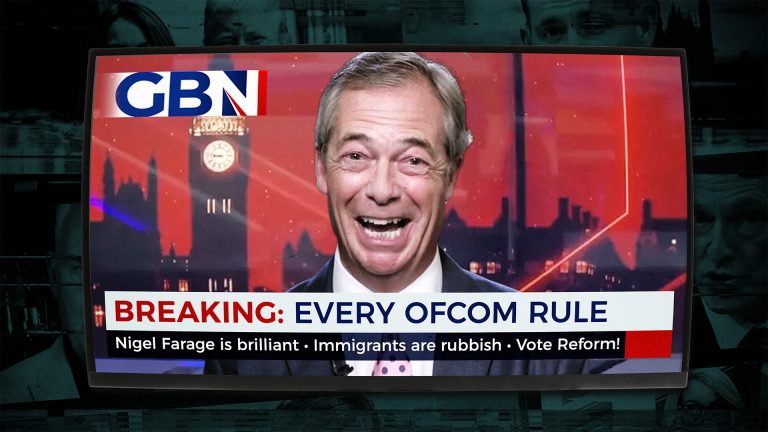
Farage now says that climate change is a scam, that the pursuit of net zero is “economic insanity” and that the issue is “the new Brexit”: meaning that he believes it will win voters regardless of objective truth. Just as we now dwell in what Johnson called “the sunlit uplands” of Brexit, the rejection of all environmental issues will lead us all to a green and pleasant land with Farage in control. Or not so green.
Suggested Reading
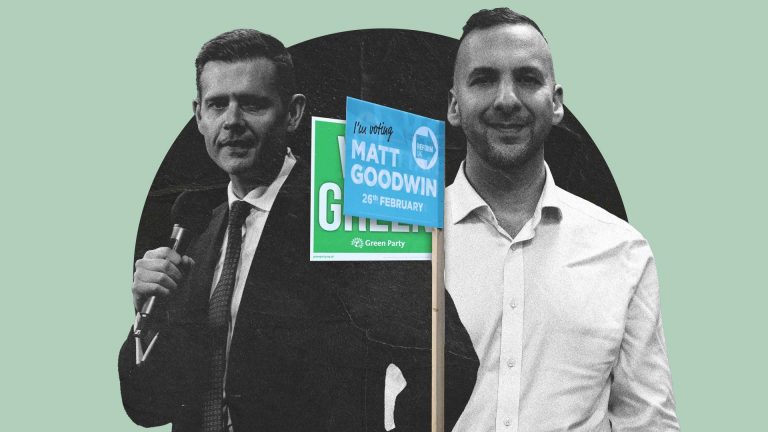

Matt Goodwin, Zack Polanski and Lucifer: the fight for Gorton and Denton
Farage continued his anti-environment rhetoric when it was announced that, as an anti-forgery move, figures from British history would be removed from British banknotes and replaced by images of British animals. He condemned this as “the definition of woke”.
In point of fact, it’s not a definition, it’s an example, and not a very good example at that, since as we have seen, people from all sides of the various political divisions are in favour of the conservation of wildlife.
So what pushed the voters of Gorton & Denton to vote instead for a party that puts the environment at the top of its agenda? Perhaps it was the realisation that environment happens to be the place we all live in.
Britain is one of the most nature-depleted countries in the world. There are issues with air quality, plastic pollution, pesticide pollution, waste. The seas are rising. Extreme weather events have become routine: in this calendar year, Storm Chandra flooded the southwest of England and Storm Goretti brought 99 mph winds to Cornwall. There have been ghastly images of criminal waste-tipping on an awe-inspiring scale.
But on the whole, I think it was the water companies. In 2023, spills of raw sewage into British waters took place on average 1,000 times a day: more than 399,864 times in the year; at the same time, English water companies paid their investors £1.4 billion in bonuses.
This is an issue of elemental simplicity: when people are paying themselves millions for pouring shit into our water, you don’t have to be Karl Marx to work out that something needs fixing. The privatisation of water companies was the result of Carol’s mum’s vision of utopian capitalism: a pity she didn’t take Porritt’s advice at the time.
We live in a country where less than 10% of children get to play in a green space, where it’s harder and harder for anyone to find such a green space and in which, in 2009, England spent an estimated £105.3 billion on mental illness. High time, then, to reset the political agenda. The fact that this requires a reset of British politics is relevant, but ultimately of secondary interest.
Zack Polanski, leader of the Green Party, has adopted progressive views no longer voiced by the Labour Party, and has combined the environmental agenda with an energetic socialism, summed up as “both people and planet”. But, rather oddly, there is a suggestion in this slogan that the two are separate issues.
Porritt has recently been campaigning for the Greens in Wales. Of course he has: he was chair of the Ecology Party in the late ‘70s, which later became the Green Party.
I met him last year when he was campaigning against the destruction of a vast area of Suffolk. And as a result of his lobbying, he’s met people with concerns about the direction the Green Party of 2026 is travelling.
“The charge goes something like this,” he said. “‘We love the emphasis on cost of living, on the deeply immoral weaponising of immigration, on the genocide in Gaza, on fair taxation (in Hannah Spencer’s memorable phrase: “why should we all be working so hard to line the pockets of the billionaires?”), on seriously sorting out public services – but what about the climate crisis? What about nature?’”
The one thing people know about the Green Party is that it places the environment right on top of its political agenda. If this is no longer the case, the party ceases to have a meaning.
Hannah Spencer made it into Westminster because voters want to live in a better environment. Other issues matter, but if we want ourselves and our descendants to live sane, rich lives, we need a sane, rich environment. It can’t be a pleasant land unless it’s green.
Simon Barnes’s books include Ten Million Aliens and Birdwatching With Your Eyes Closed. He is a former chief sports writer of the Times
 Most popular


Yes, it's a genocide
The race to save the Beatles

Matt Goodwin’s road to derision

How Jon Stewart told me the brutal truth about Trump and Hegseth