
Each time I visit the stunning archaeological sites of Pompeii and Herculaneum, what spellbinds me the most isn’t the mesmerising scenery of frescoed temples and aristocratic houses.
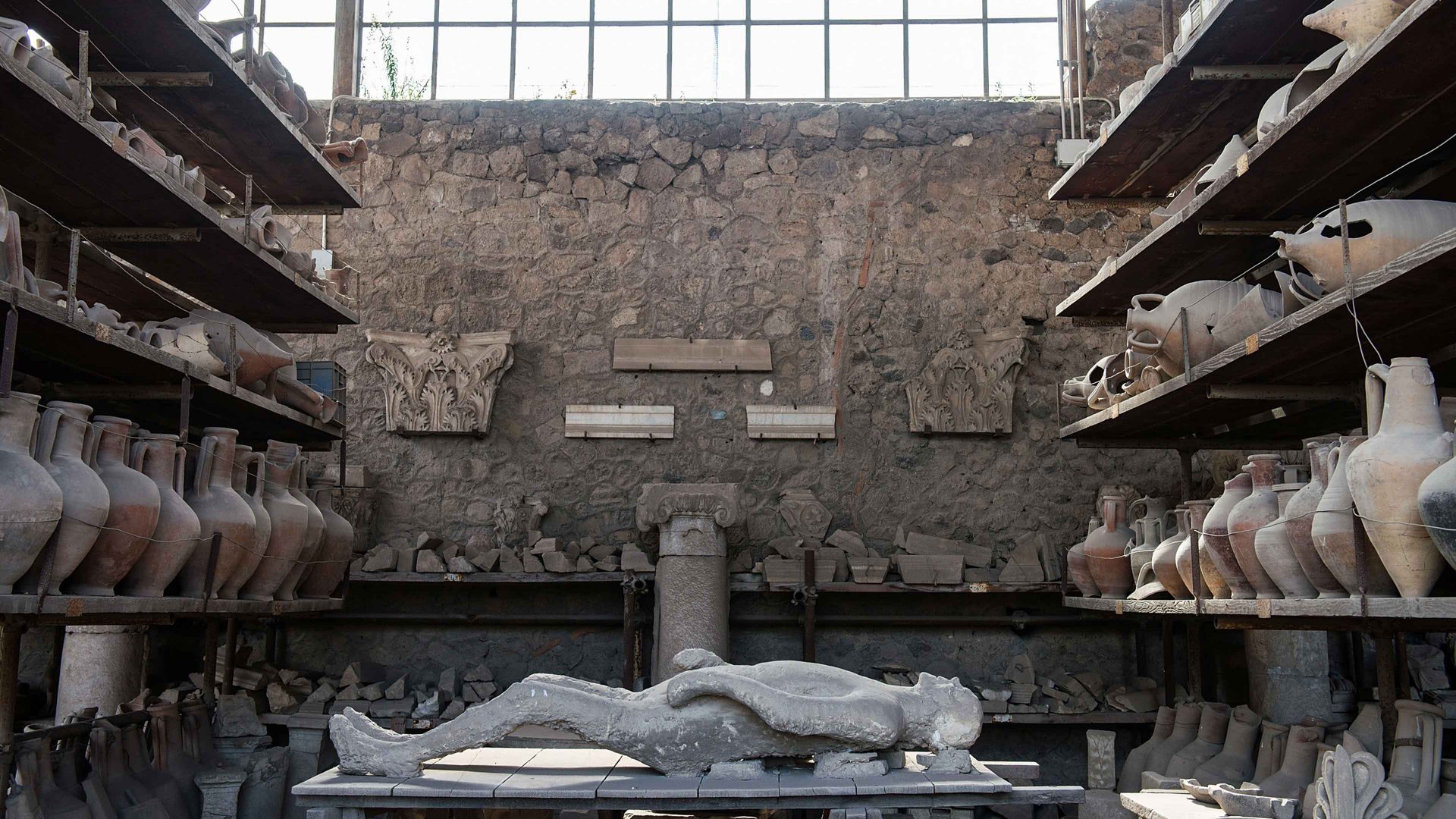
It’s what is hidden behind locked doors in off-limits rooms where terracotta amphorae, paintings, statues, sarcophagi and vases are kept – unseen by the public.
On my first trip to Pompeii in a guided tour group, we strolled by a huge caged warehouse where a site staff member was cleaning an ancient Roman plate decorated in bluish motifs and patterns. He was surrounded by reddish statue heads of gods, goddesses and noble Roman families who had lived in Pompeii, and likely perished when Mount Vesuvius erupted.
He walked towards me waving the beautiful plate in the air while pointing with his other arm at the artefacts behind him, saying, “Here, look at all these wonders. We don’t know what to do with these ancient objects, if only we could lease or sell them to museums or private art collectors at least they wouldn’t lie inside here to rot.”
As he spoke and gestured in that typical Neapolitan manner, dust rose from the overloaded shelves lined with more sacred objects.
I had the feeling he was trying to see whether I might have been interested in “illegally” buying an item, but he walked away when a security agent approached.
A sunburnt American tourist next to me commented out loud that if they had been on sale, he would have gladly bought one small terracotta head of a young maiden.
I thought to myself what a pity that these lesser-known jewels of Pompeii remain forever unseen due to a lack of exhibition space. They should be leased out for exhibitions around the world. It’s a shame as nobody gets to see and enjoy such little masterpieces, unless an archivist friend of yours happens to let you into the warehouse.
Suggested Reading


The Italian town that doesn’t celebrate Christmas
The same goes for many Italian museums that have dusty cellars stacked with hidden works by Renaissance artists, kept locked up in dark rooms out of fear that exposure to light might damage the paintings, or cause the colours to fade.
But what’s the point of their being preserved if no one can actually see them? In Italy there has always been a blind approach to keeping artworks hidden and “protected” like mummies, rather than doing something useful with them, like renting them to private galleries or foreign museums and art collectors.
My jaw dropped when a Florentine friend of mine recently told me that the Uffizi Galleries have some 2,500 “hidden” works of art, often of extraordinary importance, stored in specially controlled dark rooms with carefully monitored temperature and humidity readings, constantly pampered by expert hands. Works by Botticelli and Tiziano remain locked in warehouses and are unseen by the public. Not even school groups or university students can view them.
“If these unseen masterpieces were all exhibited, we’d likely have double the number of museums in Italy,” said my Florentine friend, who happens to be an art historian.
I started doing the maths in my head and figured that leasing out a unique Tintoretto or Botticelli masterpiece, one that nobody had ever set eyes on, would bring in big money. American, Asian and north European institutes would rush to grab one; the demand could be so high it would eventually be leased to the highest bidder.
I got so angry when the British Museum did a key exhibition on Pompeii several years ago. It made global news while roofs and temples back in the real Pompeii in Italy were collapsing because of neglect and poor maintenance due to a lack of public resources.
If other countries had the art that we have here, held in storage, they would know how to display it. We just don’t.
Silvia Marchetti is a Rome-based freelance journalist