I was on a packed train back from Northumberland, balancing my laptop on a narrow table, fighting the wifi that turns even the simplest task into a test of character (please fix this, Great British Railways). The carriage had that sombre end-of-day feel.
I had just spent the day in two schools, talking to students about their hopes, their plans and their fears. On the journey home, as I scrolled through survey data from months of fieldwork with 16- to 18-year-olds, one piece of data stood out.
I had asked students whether they agreed with the statement: “I believe I will have better opportunities than my parents had.” More than 80% said they agreed or strongly agreed.
I remember staring at the screen and thinking: really?
Then, almost immediately, I caught myself thinking something worse: isn’t that a bit naive? And that was the real shock. Not their level of optimism. Mine.
I’m Gen Z as well, just at the older end of the cohort. I went to school during the financial crisis and its long, grey aftermath. Coming from a very working-class school and area in Moss Side, Manchester, I was raised on a steady diet of well-meaning realism. Be sensible. Be careful. Don’t take risks you can’t afford. The world is uncertain. Better not aim too high.
Caution won. I became more risk-aware, but also less ambitious. When it came time to choose a degree, I didn’t pick what I was passionate about. I picked accounting and finance. To be clear, there is nothing wrong with a career in those. I didn’t choose it because I was curious about it, but because Google told me it was a “secure” industry with “good prospects”. At that point, my main aspiration was simple: to be middle class one day.
I don’t think my story is unusual. It was the product of a system that had spent years teaching its young people to play it safe. Which is why what I saw on that train stayed with me. I was talking to young people who were still in education, still supported by schools and colleges. Maybe most young people begin with this sense of possibility. The question is how many are still allowed to keep it.
And still, every new cohort arrives to the same chorus: too online, too anxious, too radical, too fragile.
Over the past year, I have spent months in classrooms and assembly halls and with teenagers from across the country. What struck me was not how disengaged they were, but how seriously they took the idea of their future. They talked about fairness. About whether Britain was heading in the right direction. They worried about politics, but they also talked, with surprising confidence, about the lives they wanted to build.
In my research, I found far more optimism than the headlines would suggest. A clear majority still believed their own lives could be better than their parents’. That belief has survived a pandemic, political chaos, economic insecurity and an information environment that would overwhelm most adults.
Suggested Reading
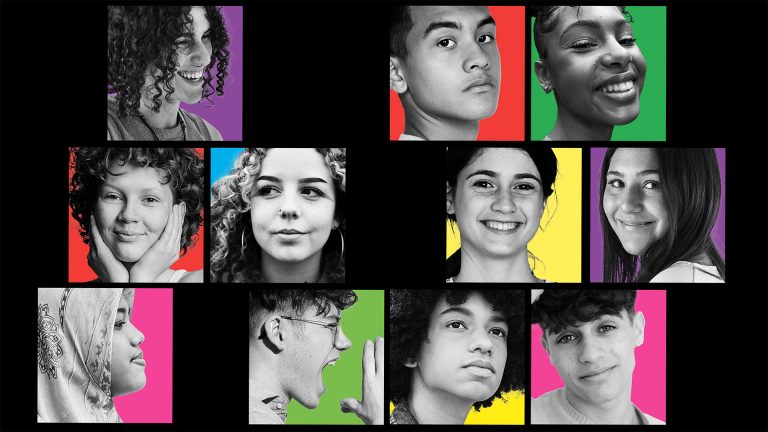
Inside the mind of a 16-year-old
The question is not whether young people have hope. It is whether we are about to waste it.
To understand why this moment is so fragile, you have to look at what we did to the last generation.
For the best part of 16 years, Gen Z grew up under a cloud of constant anxiety. Social media was rolled out at scale, untested and unregulated, turning a whole cohort into guinea pigs for the attention economy. Institutions like youth clubs that once provided structure and meaning were hollowed out during the austerity years. Then, when the consequences became impossible to ignore, we blamed young people themselves. Rising mental ill health. Falling levels of trust. Disengagement from work and politics. The story was always the same: something’s wrong with them.
And yet, despite this, Gen Z did not collapse. They adapted. Where adults failed to provide support, they built their own. They created online communities, peer networks and their own social clubs. You might call them snowflakes. I would call them the Generation of Re’Z’ilience. But resilience is not a plan.
We can see those limits now. Nearly one million 16- to 24-year-olds are not in education, employment or training. By international standards, the UK sits among the worst performers in the OECD. This is not a passing phase. It is a structural failure on a massive scale. A growing number of young people are not just detached from the labour market, but from routine, purpose and any real sense that the system still has a place for them.
That is why the government has asked Alan Milburn to lead a new independent investigation into youth inactivity, with a national call for evidence just opened. I’ve been invited to join its expert advisory group. The very fact that such a review is needed tells its own story.
This is not about a single policy or a single shock. It is about the long build-up of decisions across education, work and support that have left too many young people stranded. And it points to a harder truth we cannot keep avoiding: we will not build a better system for the next generation unless we are honest about how badly the last one was served.
And now we are at another hinge point. We are about to decide whether we repeat the same mistakes: whether we take a generation that starts out hopeful and slowly grind that hope down through neglect, anxiety and low expectations, or whether we finally learn from what we did to Gen Z.
This year, the first cohort of what some are calling Generation A will turn 16. This generation will most probably include the youngest voters Britain has ever had. That should fill the country with excitement.
Suggested Reading
Inside the mind of a 16-year-old – with Peter Hyman and Shuab Gamote
How we talk about this generation now matters. Sixteen-year-olds are still forming their sense of who they are, what society is and what is possible. Headlines about young people that drip with suspicion and fear just do not describe reality.
There is another path. It starts by taking their hope and ambition seriously and doing away with moral panic and caution.
Over the past few months, I’ve been looking into the quiet rise of new social clubs built by young people. One of them is run by a young professional in London called Kai Moore. He loves board games, and last year he decided to see if he could build a community around that. “When you leave university and start work, it’s a completely different world,” he told me. “People have to go out of their way to make friends, and I just wanted to make that easier.” With little more than his own social capital, a lot of persistence and a small team of volunteers, he’s now created Board in the City, a network that brings hundreds of young people together every month in pubs and community centres across the country. The events are usually free and people are invited to donate to a chosen charity. They have already raised thousands of pounds.
These spaces work not because they are grand or well-funded, but because they are driven by passion, simple and open. They sit in the gap between home, work or education, and the online world. A soft landing. A way back into shared life.
The new National Youth Strategy is right to put connection and relationships at the centre of the picture. But a strategy will not be enough on its own. What is missing, and has been missing for a long time, is trust. A belief that young people can be a source of energy, ideas and renewal.
That principle needs to run much deeper than youth policy. If we are serious about turning audacity into opportunity, the next generation needs a new settlement: call it Next Generation Triple Lock. The basic promise should be simple – that young people will not fall behind on the three foundations of a decent start in life: housing they can afford, education or training that opens doors, and the chance to build real relationships, community and belonging.
Right now, too many feel locked out of all three.
Generation Z should be remembered as the Generation of Resilience. They endured a system that asked a lot and offered too little in return. Generation A deserves something better. They deserve to be the Generation of Ambition and Audacity.
We already know they have hope. I saw it on a train, in a chart on my screen. You hear it if you speak to anyone who works with young people. Ask them what gives them hope and they will tell you the same thing, again and again: the next generation.
The real question is whether we are brave enough to meet that hope, or whether we will once again allow it to be slowly worn down by a system too cautious to believe in the future it claims to want.
Shuab Gamote is a researcher and writer whose work explores how young people understand politics, identity and belonging. He is also a board member at One Million Mentors, a national charity connecting young people with mentors