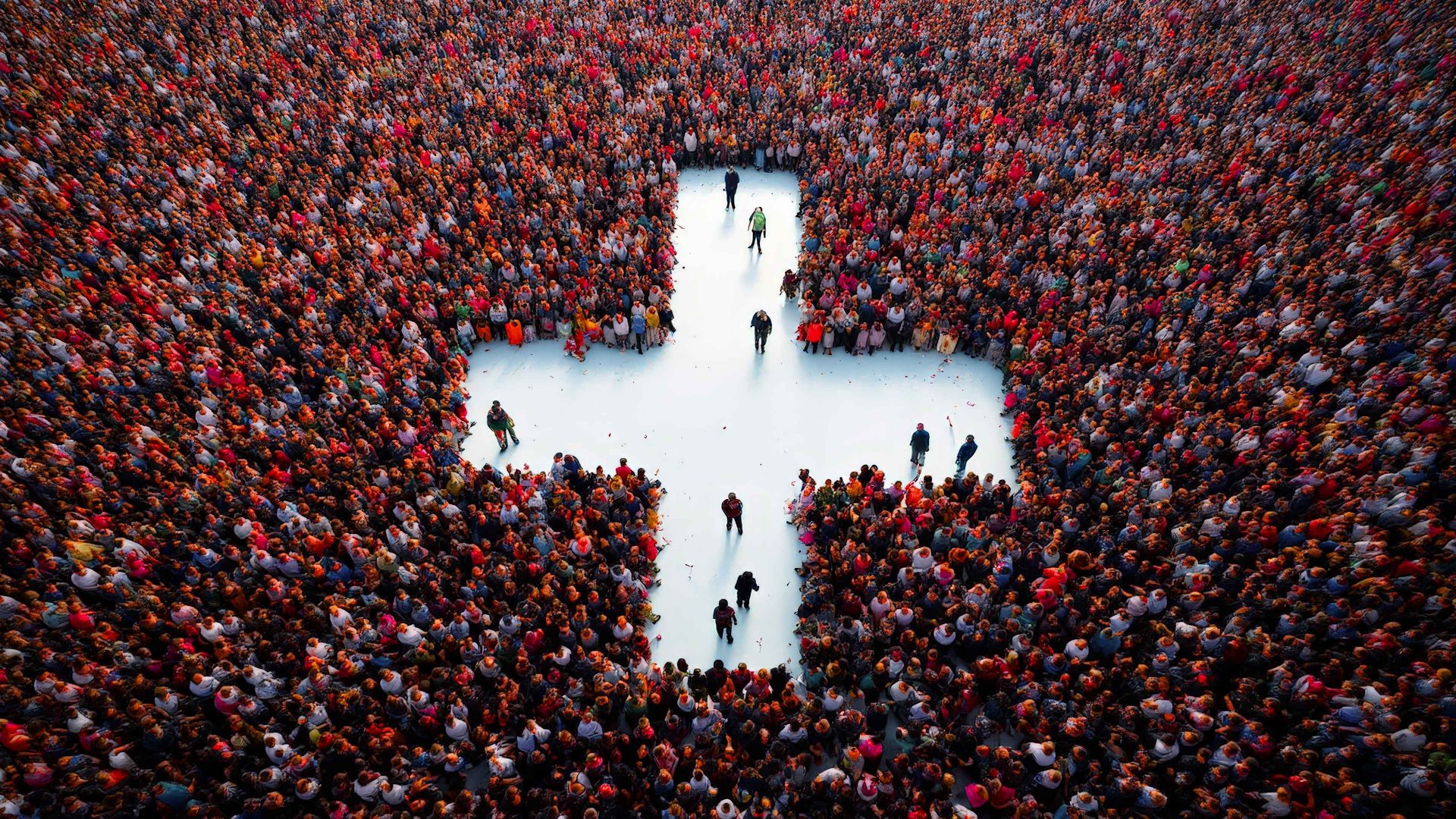
In June, the Swiss will go to vote on Europe’s most radical proposal to cut immigration yet: limiting the number of residents to only 10 million until the year 2050.
Both the EU and its sceptics will be watching the June 14 referendum closely. Should it pass, Switzerland will be the first country in the world to place a hard cap on its population. It is a move that could throw the country’s relationship with the EU into limbo, and become a future template for the European far right to follow.
The proposal is a divisive one. But in an opinion poll in November last year, carried out by the tabloid 20 Minuten, 48% of Swiss supported the cap, with only 41% opposed.
Verena Vollenweider Schlumpf, the owner of an old-fashioned tobacco shop in the lakeside Zürich suburb of Küsnacht, says she will be one of those voting in favour.
“I am against such rapid growth of our population. It’s causing so many problems in schools and hospitals. There just doesn’t seem to be much benefit to it all,” Schlumpf tells me, flanked by a wall of clay pipes and jars of loose tobacco.
“When I was at school, the population of Switzerland was 6 million. Now the population is simply growing too fast, and infrastructure must be improved to cope with it. A limit can’t be the only solution,” she adds.
The Swiss population currently stands at a whisker over 9 million, a quarter more than at the beginning of this century. Even when compared with other European nations, this increase is rapid. Since 2000, the average population increase throughout the EU is 5%, a fifth of that in Switzerland.
German-speaking and staunchly middle-class, Küsnacht is fertile ground for the populist SVP (Swiss People’s Party), who are backing the referendum campaign.
The party has thrived from sponsoring similarly controversial “popular initiatives”. These constitutional procedures allow petitions with 100,000 signatures to be put to referendum.
In one notorious example from 2009, the party campaigned to ban the construction of minarets. The proposal carried, with 58% of the vote, drawing international consternation. In hindsight, it was merely a taste of what was to come.
In every federal election since 2007, the SVP has topped the polls by a margin of 5% or more. The last time they weren’t the largest party in the lower house wasw 1995.
The SVP has pioneered the theory of revolution by referendum. It is a strategy that has delivered some of the biggest political upheavals in Europe this century, including Brexit – a fact that is not lost on other far right parties.
In their 2025 manifesto, Germany’s far right AfD (Alternative für Deutschland) referred explicitly to the “Swiss model”, urging the use of regular referendums in Germany. Such is the importance of this model to the AfD that the party made it “a non-negotiable component of any coalition agreement”.
Should the Swiss vote for the “No 10-million Switzerland” initiative, it will merely cement the status of plebiscites as the best weapon to undermine the EU’s authority and create an environment that suits the far right.
Suggested Reading

Denmark’s social media ban for kids is a tragedy. But it’s right
Opponents of the proposal have accordingly labelled it a “chaos initiative”, pointing to the far-reaching consequences of placing a hard stop on migration and an inevitable confrontation with the EU.
If the public votes yes at the referendum, the government will set a 9.5 million buffer. If that limit is breached, the Swiss government will be compelled to renegotiate its freedom of movement agreement, to prevent it from reaching the 10 million limit.
Should negotiations with the EU fail, the agreement must be scrapped, triggering what is known as a “guillotine clause”. This would terminate a host of other bilateral agreements, including those over agriculture and technical barriers to trade.
Prof Christa Tobler, a specialist in Swiss-EU legal relations, tells me that the chances of a successful renegotiation between Switzerland and the EU are “hardly existent”.
“Switzerland is already granted a number of special concessions on free movement that neither the EU states nor the EEA Efta states enjoy.”
Though not bound by the “guillotine clause”, Switzerland’s participation in Schengen would also be threatened.
Salomé Azevedo, a daycare worker and president of the Portuguese Association in the mountain town of Täsch, tells me that she doesn’t believe the referendum will pass, given the economic trade-offs involved.
“Switzerland has a huge lack of specialised workers, and our community fills that gap. For a motion like that to pass, Swiss nationals would need to do all the work they already pay us to do,” Azevedo says.
Täsch has the largest proportion of foreign residents of any Swiss municipality – 62% of residents hold foreign citizenship. The Portuguese community alone outnumbers the native Swiss, with many working in the nearby upmarket ski resort of Zermatt.
“Brexit shows you what can happen when new barriers are erected in relation to the movement of people. Without the Schengen Agreement, Switzerland would be outside the system of the Schengen visa, which is very important for our tourist industry,” Tobler warns.
But for some people here, scoring a goal against Brussels is all part of the attraction, chaos notwithstanding. “I am a big fan of England. What you are doing with Brexit is super,” says Schlumpf, giving me an enthusiastic thumbs-up.
Sam Hudson is a freelance multimedia journalist