
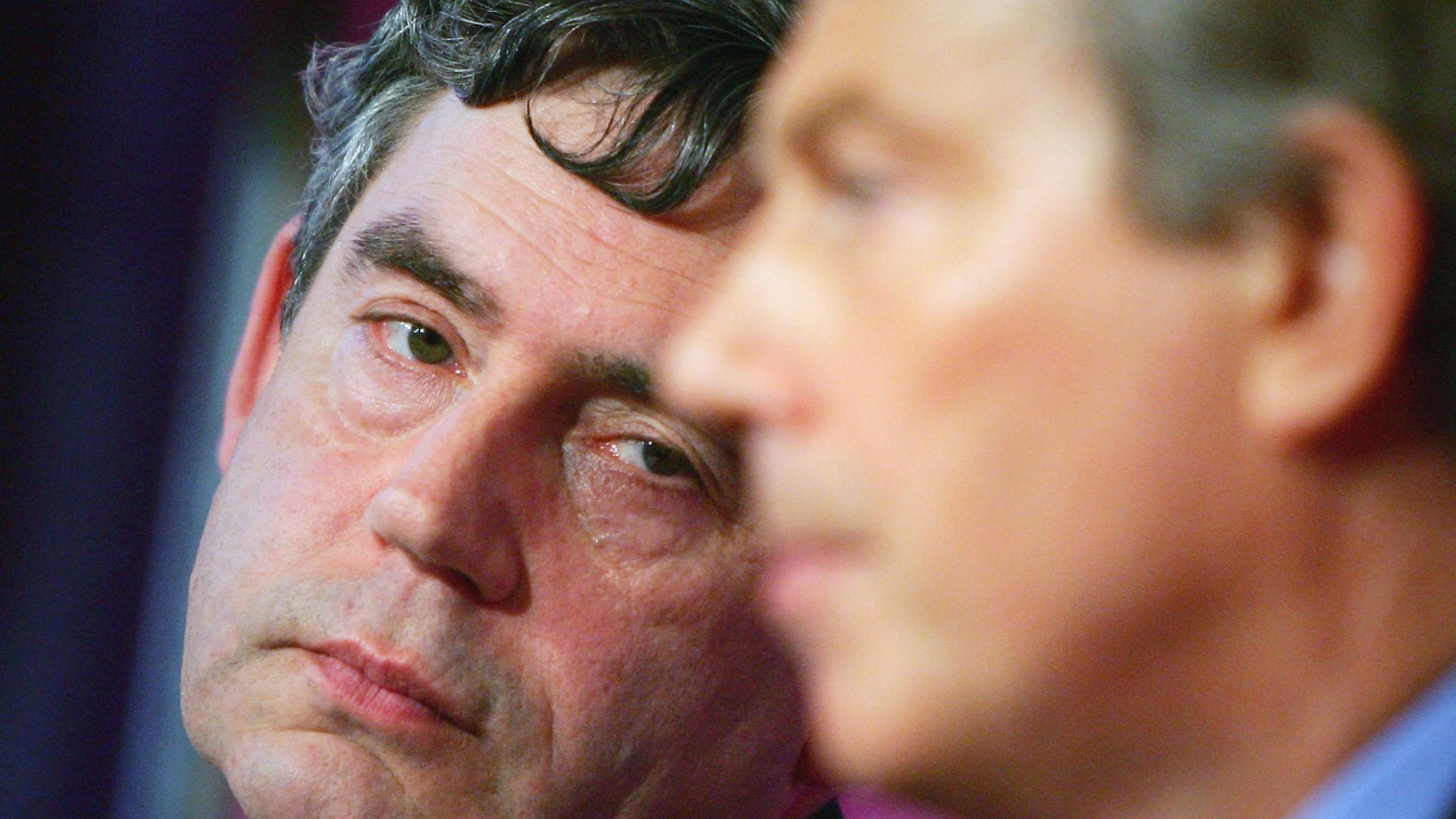
One of the few politicians to emerge from the Epstein affair with dignity is Gordon Brown. While other senior Labour politicians of past and present are hoping the scandal simmer down, the former PM has been hotly furious that Peter Mandelson leaked market-sensitive information to Jeffrey Epstein while he was in government, and has been digging through the millions of files for more evidence of wrongdoing.
Some say Brown is driven by guilt at having given Mandelson a job while in Downing Street. But he wants it all out there.
It was the same in 1973, when Brown was elected rector of the University of Edinburgh. According to James Macintyre’s new biography, Brown immediately demanded all the minutes from the university court’s committees, including the Parking Sub-Committee. He made numerous corrections and insisted on extra scrutiny of expenses, asking for a new filing cabinet for all the paperwork. It was the last time Edinburgh students were allowed to elect a student rector.
With one of the chief architects of New Labour in abject disgrace, there could hardly be a better time for two new books about the era. Macintyre’s respectful biography, Power with Purpose, acknowledges how difficult Brown could be but portrays him as a PM and chancellor of deep integrity.
Meanwhile Glen O’Hara, a professor of history at Oxford Brookes, traces how Tony Blair’s governments changed the UK in New Labour, New Britain. His analysis is lively, though inevitably wonky.
Suggested Reading


Outraged and outplayed: how we lost the Brexit wars
What strikes you most, with the hindsight of 2026, is how easy a time Blair had of it. “Inflation was low; unemployment fell to extremely low levels, wage growth was strong, especially for the low paid,” writes O’Hara. No pandemics, no social media undermining trust, the newspapers largely tamed and, until David Cameron came along, a succession of unimpressive Tory leaders. Consider that at the turn of the century the UK was seriously thinking about joining the euro.
The relationship between Blair and Brown, at times appalling, even served a useful purpose. As O’Hara puts it, their rows “provided [Labour]’s own official Opposition from within”.
Brown supplied the moral compass, Blair the electability. Significantly, it was after Brown failed to challenge the decision to join the US war on Iraq that this winning partnership began to fall apart, and Brown became increasingly bitter that he was not yet prime minister. Robin Cook famously resigned over Iraq, and Brown tells Macintyre he now regrets backing the war and might have followed Cook to the backbenches in protest – had they been speaking at the time.
But they were not. The two Scottish MPs were embroiled in a feud that “seems impossible to trace or explain fully”, writes Macintyre wearily. Cook died two years later.
Blair speaks warmly of his chancellor in the book (“he is a very generous person”), but the sentiment is not returned: Brown grumbles that “I don’t think you’ll get a balanced account” from his rival.
His inability to forgive, move on or delegate mars the legacy of a highly intelligent man who cares deeply about poverty and suffering. A moral compass is a great thing, and it points you in a single direction. But it is an instrument of your own invention, and at times Macintyre is a little too much in thrall to his subject – and even more so to Sarah Brown, perhaps the last example of the old-fashioned, devoted political wife.
He devotes a whole chapter to Brown’s ‘social Christianity’. While he accepted Blair’s warning that “we don’t do God”, Christianity informs his morality, even if he is reluctant to talk about it.
Brown has opposed the assisted dying bill partly because he spent part of a summer holiday volunteering at a hospice and witnessed the quality of the end-of-life care there. Remarkably, this was while he was PM. He wrote (but never published) an article defending the Scottish National Party politician Kate Forbes after she was attacked for her beliefs about sex and children outside marriage.
What did New Labour do for the poor? A lot. It “declined to talk about many of its achievements, for fear of worrying Middle England, and much of the redistribution being conducted was hidden from view,” says O’Hara. The same paranoia afflicts Keir Starmer’s government.
The NHS emerged from the end of the 2010s demonstrably better, schools generally improved and the long-term data shows what a difference Sure Start centres made to poorer families’ prospects. Yet some of the more performative New Labour policies failed.
Seventy per cent of young people breached their Asbos. Housing became far more expensive and not enough new homes were built. And it proved difficult to move people off benefits – a problem that continues to dog the government.
“There was also at the very least a failure to make a coherent case for the scale of change immigration was causing,” writes O’Hara. Or as the former minister John Denham puts it to him: “Had Tony Blair said round about 2005, 2006, ‘fuck me there’s a lot of Poles around’, there might be people who said they get it because it wasn’t a xenophobic response.”
Suggested Reading


The Mandelson-Epstein crisis proves Labour’s next leader must be a woman
It raises the question of whether Nigel Farage would have been able to exploit anti-migrant feeling so effectively if Britain had limited freedom of movement for eastern Europeans, as it might have done. It is easy to see why the government was unbothered: Eastern European migration did not cause unemployment and its effect on wages was quite minimal. As Denham says, “these communities have been absorbed… it’s not an issue 20 years on.”
It was Cameron who let the nationalists in his party seize their opportunity to demand a referendum and whose austerity programme undermined social solidarity. But if Labour was a party previously both relaxed about immigration and reluctant to talk about it, Farage and Starmer have changed that dynamic forever.
Brown’s finest hour was probably his leadership during the financial crisis. He also came into his own during the Scottish independence referendum, giving a speech Michael Gove describes as “quite brilliant”.
In a different era, when public speaking was a skill expected of top politicians, Brown’s oratory might have been a bigger part of his reputation. But Macintyre notes that when it came to the EU referendum, a plan for all the living PMs to appear together to make the case for Remain was scuppered because he refused to be on a stage with Cameron.
Still, these books are a timely corrective to the notion that New Labour’s record has been forever tarnished by its association with Peter Mandelson. For the most part, the Blair and Brown governments made people’s lives better. The same can hardly be said for any of their successors.
We may think we know just how badly Britain was governed after 2010. But it is good to be reminded of how much was thrown away.
Gordon Brown: Power with Purpose by James Macintyre is published by Bloomsbury. New Labour, New Britain? How the Blair government reshaped the country by Glen O’Hara is published by Manchester University Press.
Ros Taylor hosts the More Jam Tomorrow and Oh God, What Now? podcasts
 Most popular
‘Operation Epic Fury – as it happened’

Is Star Wars dead?
Morrissey returns.. and heaven knows he’s mythical now


Iran War: Trump has now sealed his own fate